The Art of the Queue: A Complete Guide to Lining Up at Japan's Popular Ramen Shops
Learn the unwritten rules and even queuing becomes fun. A complete step-by-step guide.


🍜Introduction: Queuing is Part of the Experience
At popular ramen shops in Japan, queues are an unavoidable hurdle. However, it's not simply a matter of lining up. Each shop has its own unique rules, and queuing without knowing them can ruin your visit.
"There isn't just one right way to queue" - this is the starting point of this guide. But don't worry. If you know the "common patterns" and "observation procedures" identified by our local team, you can handle any shop calmly.

Ren's Note
It's a waste to turn back just by seeing a queue! If you know the patterns, all you have to do is line up. If you prepare with this guide, you won't panic on site.
⚡Summary for Busy People
| Point | What to Remember |
|---|---|
| Upon Arrival | Observe people's actions for 30 seconds. Check for 'ticket first' system, waiting list, or numbered tickets. |
| If Staff Speak to You in the Queue | It's part of the operation. You might be handed a menu or guided to buy a meal ticket. |
| If Someone Behind You Enters First | It's not cutting in line. It's an efficiency measure: 1 vacant seat → guide a single customer first. |
| If Asked for Your Order and You Don't Understand | Say 'Futuu de' (standard) for all standard options. If no menu, say 'Menu please'. |
| When Leaving the Queue Temporarily | Tell the people in front and behind you. If you disappear silently, you might not be able to return to your spot. |
🧭The 4 Major Queue Patterns: First, Identify the Queue in Front of You
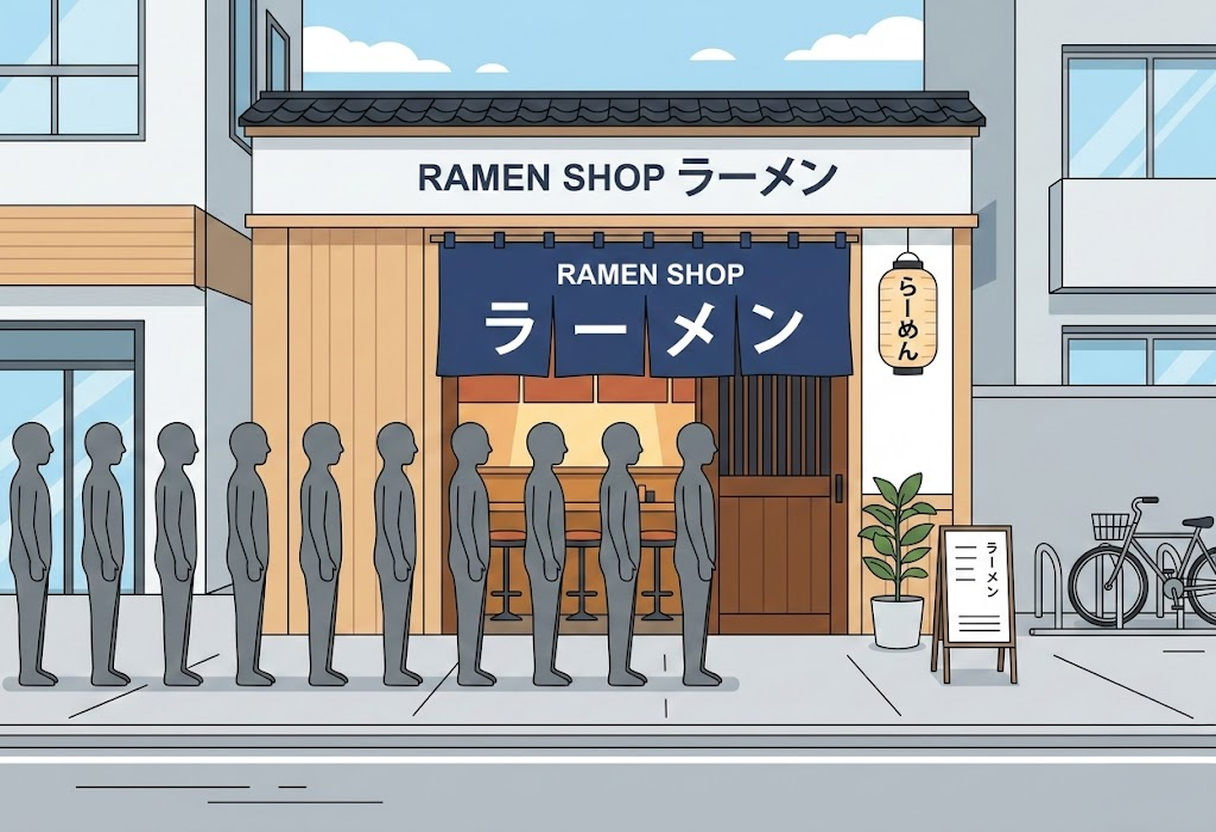
🟢Pattern 1: Standard Line (Just Line Up)
Feature: The simplest method, just line up directly in the outdoor queue.
Strategy: As you approach the entrance, staff will guide you. Sometimes staff will come to the queue and speak to customers; this is explained in detail in the "If Staff Speak to You While Waiting in Line" section below.
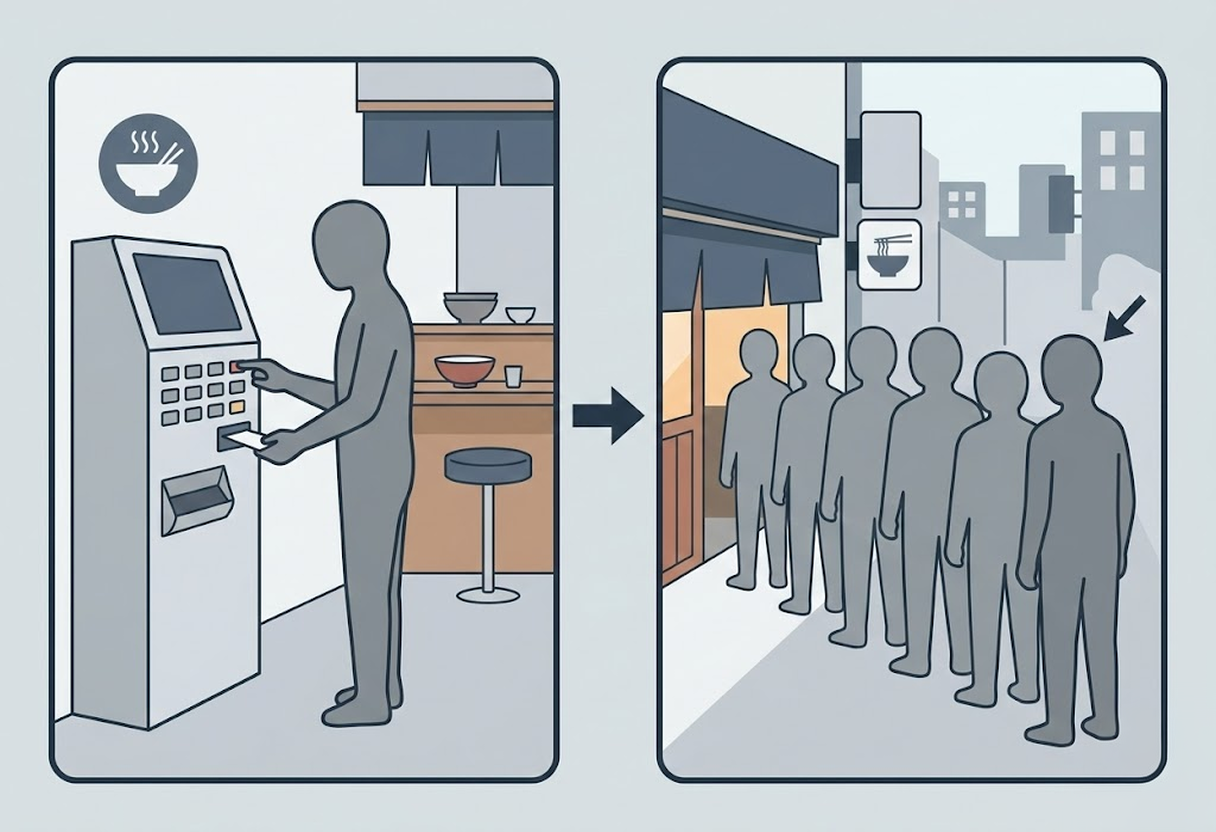
🟡Pattern 2: Ticket First (Buy Meal Ticket First)
Feature: A system where you first enter the shop to buy a meal ticket, and then join the back of the queue. This pattern is common in local famous shops.
Strategy: If you keep queuing without knowing this, you might be told to "re-queue" when your turn comes. If it looks like you can enter the shop, check for a meal ticket machine first.
🔵Pattern 3: The Waiting List (Sign-up System)
Feature: A system where you write your name on a "waiting list for entry" located at the shop entrance.
Strategy: If you wait around without writing your name, you will never be called.
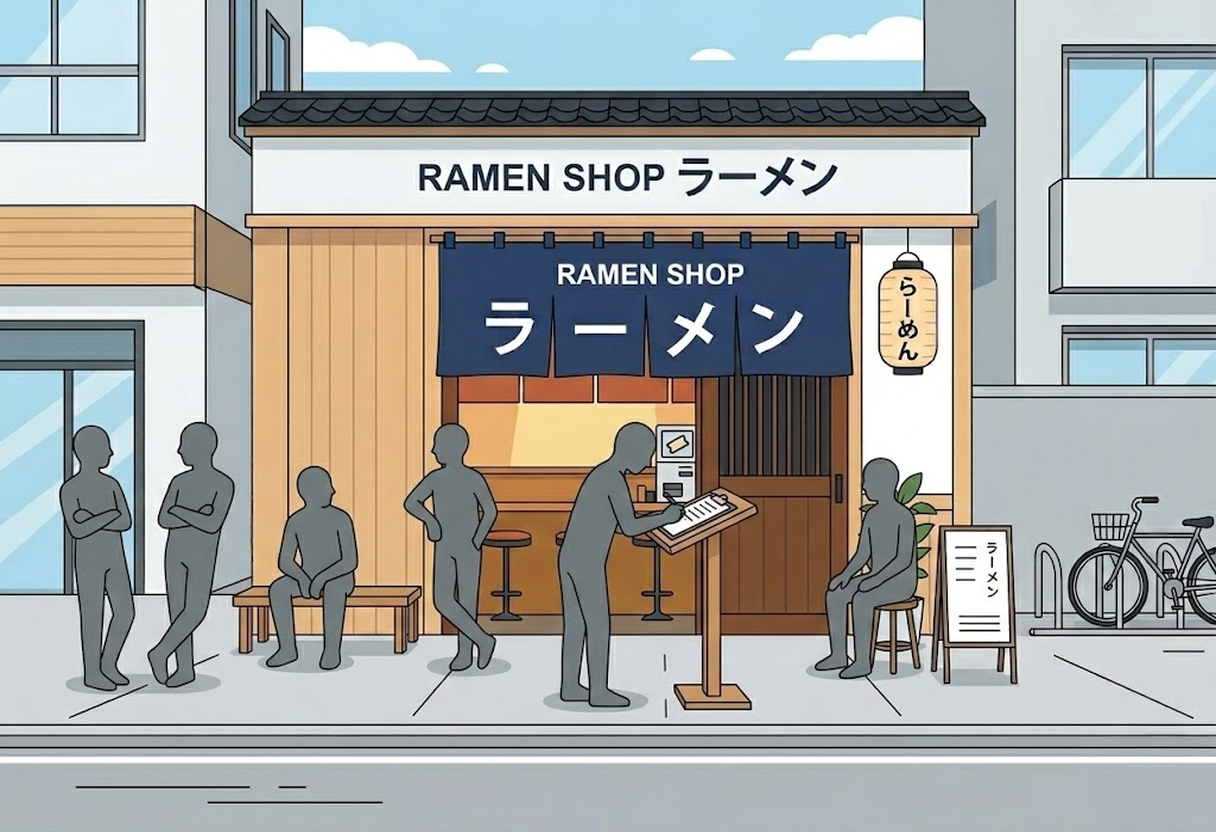
Pay Attention to Overlooks
When people are sparsely gathered and there appears to be no queue, suspect this pattern and check near the entrance.
🔴Pattern 4: Numbered Tickets (Ticket Dispensing System)
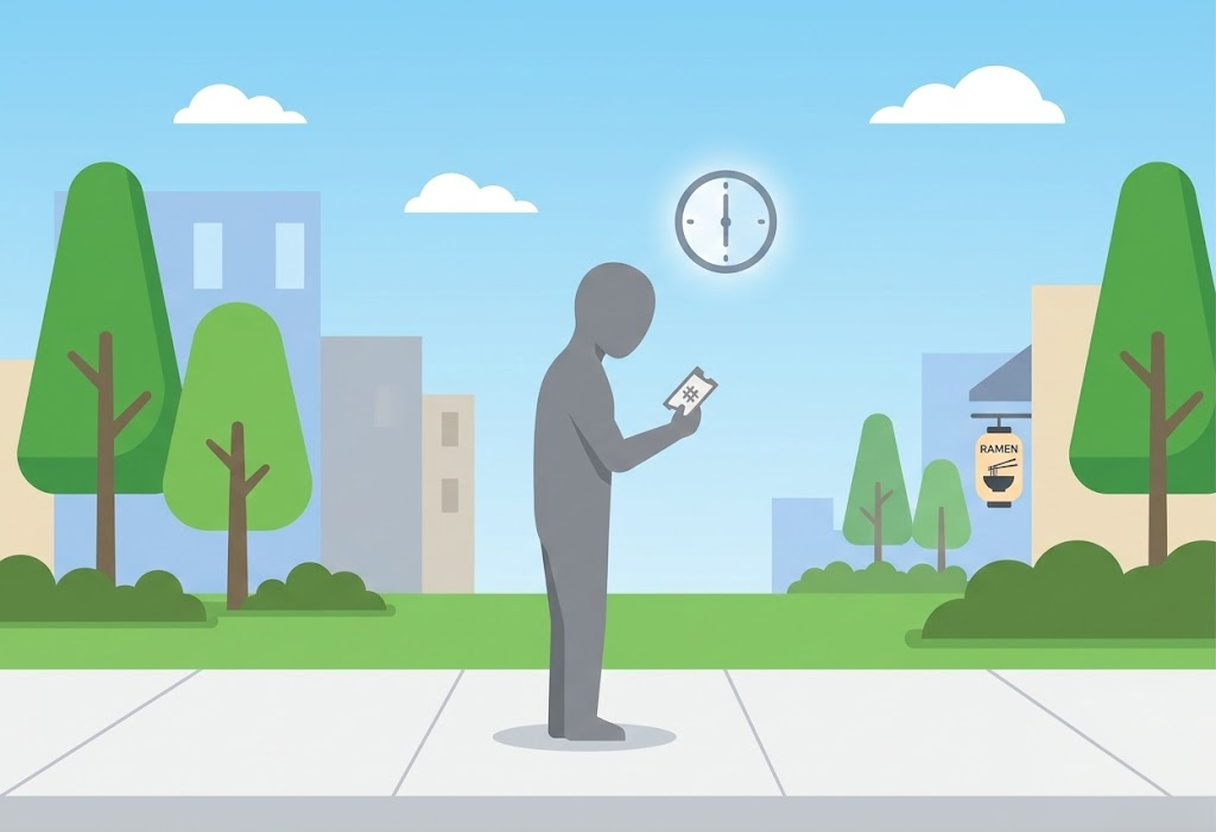
Feature: A system where you receive a numbered ticket and either return at the specified time or wait for an app notification.
Strategy: This style is common in super popular shops in urban centers. Distribution of numbered tickets can sometimes end in the morning, so advance confirmation is essential.

Zack's Note
When you arrive at the shop, first observe "what everyone is doing" for 30 seconds. If people are going inside, that's a sign of the 'ticket first' system. Observation is your best weapon.
⚡Quick Decision Chart: Look Here First Upon Arrival
| What You See Upon Arrival | Pattern | What to Do |
|---|---|---|
| People entering/exiting the shop | Ticket First (2) | Buy a meal ticket inside first |
| Notebook / Clipboard at entrance | Waiting List (3) | Write your name |
| Ticket machine or QR code | Numbered Tickets (4) | Take a numbered ticket |
| None of the above | Standard Line (1) | Just join the back of the queue |
⏱️Estimated Waiting Time
| Number of People in Front | Estimated Waiting Time |
|---|---|
| ~5 people | Approx. 10 minutes |
| ~10 people | 20-30 minutes |
| ~20 people | 45 minutes - 1 hour |
| 20+ people | Be prepared for 1+ hour wait |
Note
The above is just a guideline. Waiting times can vary greatly depending on the number of seats (8 seats vs. 20 seats have vastly different turnover speeds), cooking style, proportion of group customers, etc. Observe how the queue moves to get your own sense of timing.
🔍On-Site Observation Points
- Observe the actions of people who arrived before you — If newly arrived customers are entering the shop, it's a 'ticket first' system (Pattern 2). If they are lining up outside, prior purchase of meal tickets is not required.
- Check for a 'waiting list for entry' near the entrance — If there's a clipboard or notebook, it's a sign-up system (Pattern 3). If you pass by without noticing, you'll never be called.
- Check for a numbered ticket dispenser or QR code — If there's a machine or QR code outside the shop or near the entrance, it might be a numbered ticket system (Pattern 4).

Dr. Hiro's Analysis
The waiting list system (Pattern 3) is common in tenant shops within large facilities, while the numbered ticket system (Pattern 4) tends to be concentrated in super famous shops in urban centers. It's possible to predict the pattern to some extent based on the location of the shop you're visiting.
🗣️If Staff Speak to You While Waiting in Line
If you're waiting in line, staff may approach and speak to you. You might panic if you don't understand Japanese, but this is all part of a "rational operation to increase turnover."
| Situation | What's Happening | What to Do |
|---|---|---|
| Handed a menu or paper | To let you decide your order while waiting | Accept it and decide your order |
| Guided into the shop even if not at the front | To have you buy a meal ticket at the machine first | Follow the staff, buy your meal ticket, and return to the queue |
| Single customers are guided first / You are guided first | Efficiency when only one counter seat is available. It's not cutting in line | If called, enter without hesitation. Conversely, don't mind if someone behind you enters first |
| Asked 'Do you want to sit together?' | Confirming if group customers want adjacent seats | Requesting to sit together might slightly delay your entry. If in a hurry, say 'Bara-bara de OK' (separate is fine) |
| Asked for order or customization while still in queue | Pre-confirmation for quick service after seating. Common in shops where you can choose noodle hardness, soup richness, oil amount (e.g., Iekei ramen) | If there's no menu, it's okay to ask for 'Menu please'. If you don't understand, saying 'Futuu de' (standard) will get you all standard options |
Zack's Note
The first time this happened to me, I totally freaked out. People behind me were going in first. But it basically means "there's one seat open, so a single person can go." If you're in a group, you might get overtaken, but there's no need to get angry.
Not "Cutting in Line"
These are all mechanisms to achieve maximum efficiency with a limited number of seats. Especially in popular shops, queues move smoothly precisely because of these operations. Even if someone is guided in first, your turn hasn't been skipped.
🚫3 NG Actions You Should NOT Do
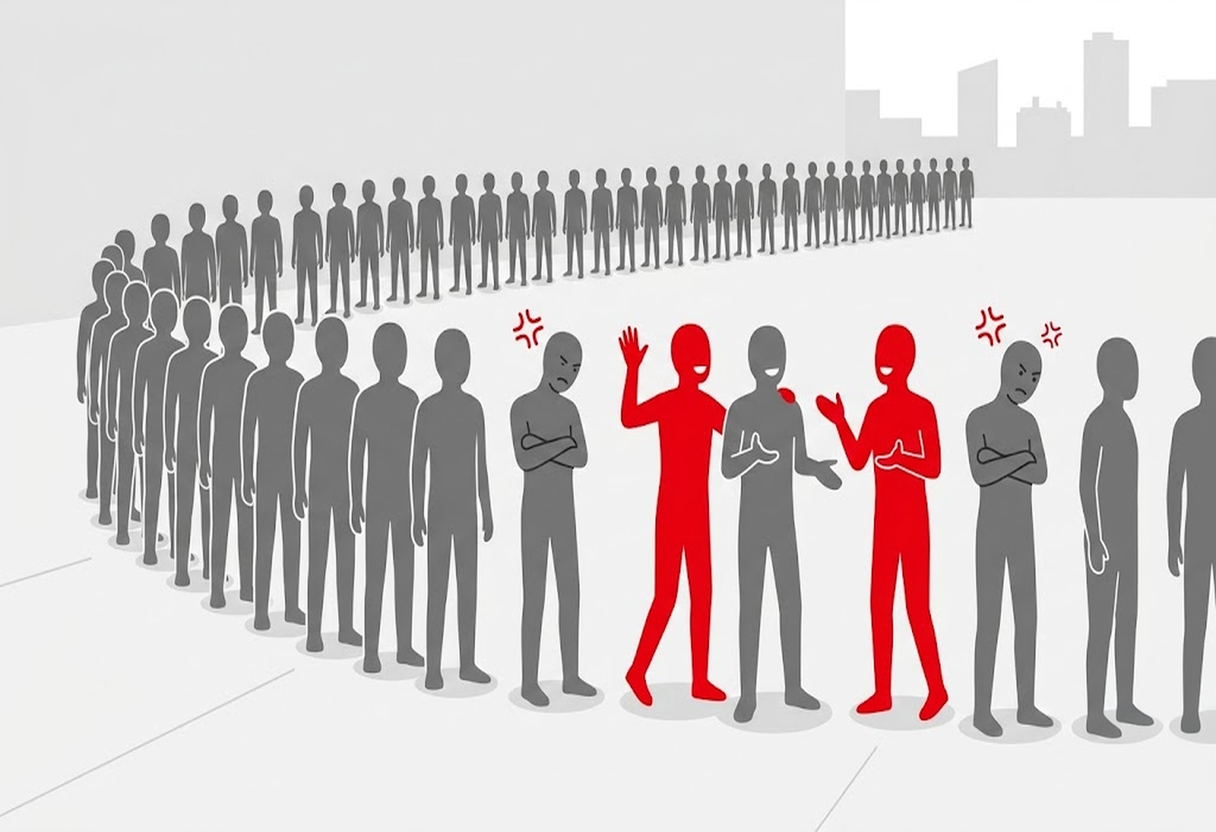
❌ 1. Cutting in Line / Joining a "Placeholder" Queue
"Placeholder queuing," where one person lines up first and friends join later, is absolutely forbidden. It's prohibited in most shops. Ensure everyone is present before joining the back of the queue.
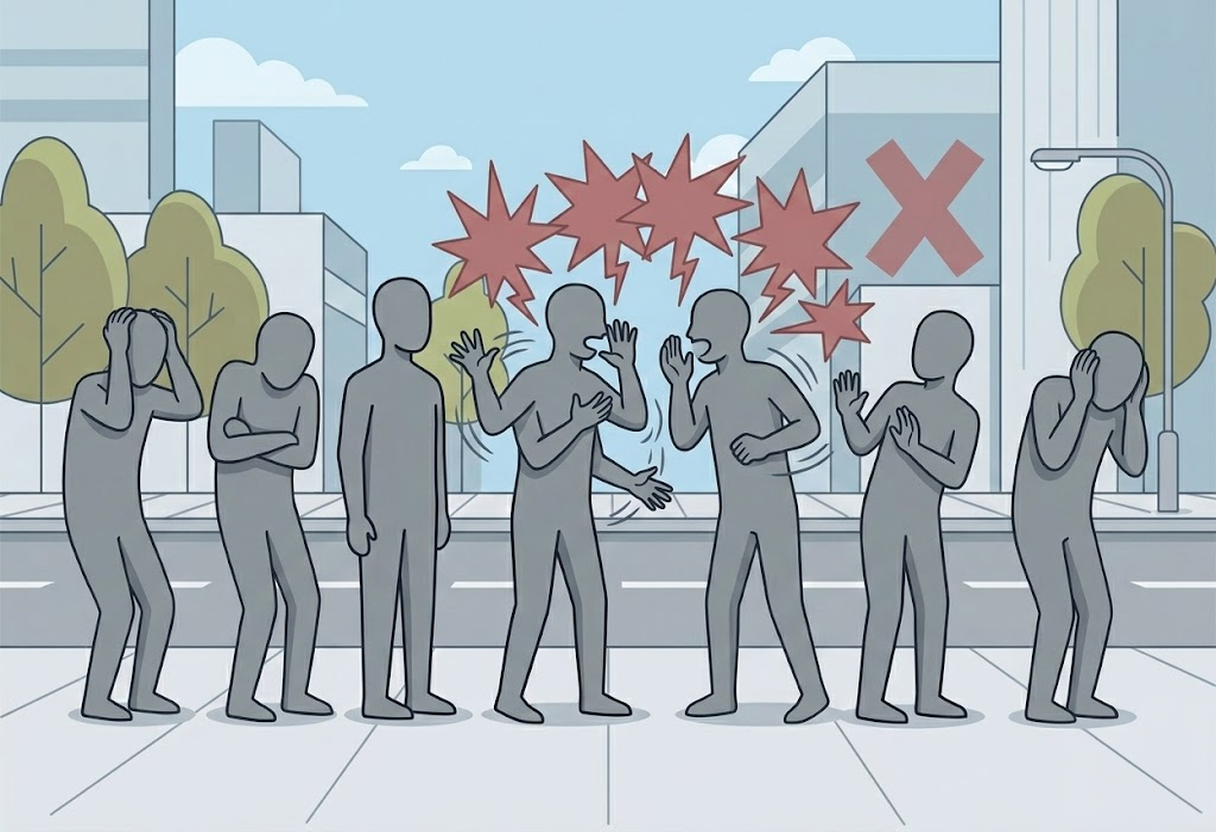
❌ 2. Loud Voices / Noise in the Queue
Many Japanese ramen shops are located in residential areas, so please refrain from loud conversations. It's also smart to keep phone calls brief.
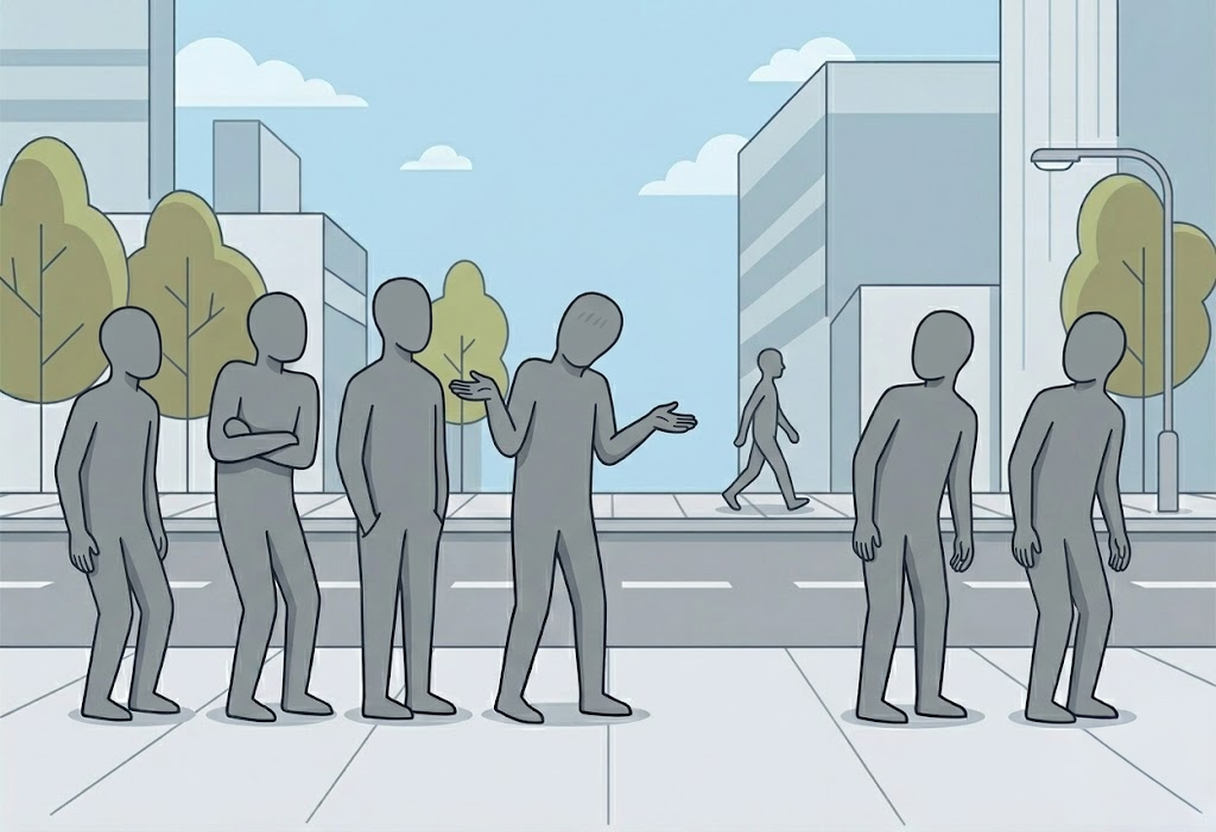
❌ 3. Leaving the Queue Silently
When leaving the queue for the restroom or other reasons, always say a quick word to the people in front and behind you. If you disappear silently, people might think you've given up your spot, and you may not be able to return to your original place.
Zack's Note
If you cut in line, you'll receive intense pressure (stares) not only from the staff but also from the customers waiting behind you.
💬Useful Phrases for When You're in Trouble
🕐 Phrases to Use While Waiting
| Situation | Phrase | Notes |
|---|---|---|
| When asked for number of people | Hitori desu / Futari desu (I'm alone / We are two people) | It's fine to indicate the number with your fingers |
| When you don't understand customization options | Futuu de (standard) | All options like noodle hardness, soup richness, etc., will be served standard |
| When you want to see the menu | Menu please / Menu misete kudasai (Please show me the menu) | If asked for your order in line but you don't have a menu |
🆘 Phrases for When You're in Trouble
| Situation | Phrase | Notes |
|---|---|---|
| When going to the restroom | Toire, ittekimasu (I'm going to the restroom and will be back) | Just tell the person behind you briefly. A smile helps convey the message |
| When you don't know where the list is | Namae, kaku? (Write name?) | Even a short phrase is enough. Staff or other customers will point to the list location |
🛡️Verified by Real Humans
This guide is based on insights gathered by our local team, who have actually spent hundreds of hours queuing, sometimes experiencing the frustration of re-queuing. These aren't manners imagined by AI.
🗺️Now, to the Back of the Line
Knowing the rules, queuing is no longer a "wall," but rather a prologue to build anticipation. Confidently head to the back of the line. Once you enter, the ticket machine awaits.
"We don't let AI eat ramen. We use AI to draw the coolest map so adventurers worldwide can find the real treasure hidden in Japan's back alleys."
Made in Japan — with local knowledge & AI assistance