Chuka Soba Billiken: Duck x Chicken Chintan Shoyu Behind Asakusa's Kaminarimon — Multilingual Touch Panel Makes a First Visit Easy (2021 Tabelog Top 100 Ramen)
A 4-minute walk from Asakusa Station, in the quieter Komagata Bridge area beyond the Kaminarimon crowds. Sister shop to the famous "Ramen Kai," serving duck-and-chicken chintan shoyu (clear soy sauce) ramen with hand-crumpled wavy noodles and a black-truffle-topped duck roast — a 2021 Tabelog Ramen Hyakumeiten (Top 100) selection. With its multilingual touch-panel ticket machine, photo menu, and seat-yourself system, the shop is approachable for first-time international visitors. Based on a real visit on May 1, 2026, at 18:44.


🦆Chuka Soba Billiken at a Glance
| Item | Details |
|---|---|
| Difficulty | ★1 Friendly (Extremely easy for international travelers, thanks to the smooder multi-language touch panel ticket machine, photo-illustrated menu, and self-seating) |
| English Support | Touch panel ticket machine is multi-language compatible (with language switching buttons for Japanese, English, Chinese, Korean, etc.). All items are displayed with photos. |
| Payment | Cash only (Credit cards, e-money, and QR code payments are not accepted) |
| Waiting Time | On our visit, Friday at 18:44, there were only 2 groups ahead, no waiting line. Lunch peak around 12:00 typically sees 3-8 people waiting, but the early to mid-evening (around 18:00) is generally an easier time to get in. |
| Recommended For | Travelers looking to experience authentic shoyu (soy sauce) ramen while sightseeing in Asakusa / Those interested in the delicate flavors of duck and chicken chintan shoyu ramen / Intermediate to advanced ramen travelers who want to experience the prestige of a Tabelog Ramen Hyakumeiten shop. |
| Note | The shop is small with only 11 counter seats, so store large suitcases in a station locker before visiting / Shop closures are announced on Twitter and Instagram, so checking social media before your visit is recommended. |
| First Visit Order | 【Full Experience】Temomi Chuka Soba Zenbu-iri (All Toppings) ¥1,550 + Aezoba ¥280 = ¥1,830 / 【Lighter Meal】Temomi Chuka Soba ¥1,100 or Ajitama-iri (with Seasoned Egg) ¥1,250 / 【Meat Focus】Chashu-zo (Extra Chashu) ¥1,350. Note that Aezoba (mixed noodles) is in the toppings section, and can be enjoyed in two stages by dipping it into your Chuka Soba soup. |
Beyond Kaminarimon: A Deeper Asakusa Experience
While tourists in Asakusa typically flock to Kaminarimon, Nakamise-dori, and Senso-ji Temple, Chuka Soba Billiken is located in a quieter area, two traffic lights south of Kaminarimon, towards Komagata Bridge. It's about a 4-5 minute walk from Kaminarimon, just far enough from the tourist bustle to peacefully savor a bowl from a Tokyo Tabelog Ramen Hyakumeiten (Top 100 Ramen Shops) selection. This article, based on our actual visit on May 1, 2026, at 18:44, provides tips for travelers looking to integrate it into their sightseeing for a deeper Tokyo experience beyond typical guidebooks.
🍜What is Chuka Soba Billiken, the Hidden Gem Behind Kaminarimon?
Chuka Soba Billiken is a specialty shop in Kaminarimon 2-chome, Asakusa, Tokyo, focusing on Chuka Soba (an older term for traditional shoyu (soy sauce) ramen). It opened in 2018 as a sister shop to Akihabara's renowned "Ramen Kai" and was selected as one of Tabelog's "Ramen Hyakumeiten" (Top 100 Ramen Shops) in 2021, representing Tokyo's chintan (clear soup) shoyu ramen (its selection as a Hyakumeiten is currently for 2021 only).
Their signature dish is "Temomi Chuka Soba" (hand-crumpled Chuka Soba). It's a shoyu ramen with a chintan (clear, transparent soup) base made from duck and chicken. A delicate layer of kamo abura (duck oil) and tori abura (chicken oil) floats on the surface, offering a profound umami from duck and chicken that's well-integrated, despite being mukacho (free of chemical seasonings). The noodles are homemade, hand-crumpled wavy noodles (chijire-men) crafted by the owner himself. Toppings include slow-cooked pork chashu and roasted duck with black truffle paste—this two-tiered chashu (braised meat) configuration of duck and pork is Billiken's most significant unique feature.
And here's the most crucial point of this article: Billiken is incredibly friendly to international travelers. Their ticket machine is a smooder-made touch panel multi-language model, allowing language switching between Japanese, English, Chinese, and Korean, and all items are displayed with photos. Furthermore, seating is self-service—you simply pick any open seat—meaning no special etiquette or verbal ordering with staff is required. It's a rare shop where you can experience the prestige of a Tokyo Tabelog Ramen Hyakumeiten (Top 100 Ramen Shops) without any confusion, easily combining it with your Kaminarimon sightseeing.

Ren's Note
Ramen Kai, Billiken's parent shop, is a famous chintan (clear soup) ramen spot in Akihabara's Suehirocho area, specializing in duck-based ramen. It's another Tabelog Hyakumeiten selection and an essential mention when discussing Tokyo's duck-soup ramen. Billiken, opened in 2018 by the Ramen Kai team as a sister shop in Asakusa, carries on the parent shop's duck x chicken chintan shoyu (clear soy sauce) legacy while introducing its own innovations, like truffle duck roast and hand-crumpled noodles. Both Akihabara and Asakusa are easily accessible for tourists, so I recommend planning an itinerary to compare the two shops during your Tokyo stay!
🚶Access — 4-minute walk from Asakusa Station, towards Komagata Bridge from Kaminarimon
Approximately a 4-minute walk (about 234m) from Asakusa Station (Tokyo Metro Ginza Line, Toei Asakusa Line, Tobu Skytree Line). From the Kaminarimon intersection, head south down Edo-dori for about two blocks towards Komagata Bridge, and you'll see it on your right near the Kaminarimon 2-chome traffic light. Since it's slightly removed from the tourist center, foot traffic is considerably calmer compared to Senso-ji Temple and Nakamise-dori, offering a quieter atmosphere different from the main streets geared towards tourists.
【CRUCIAL】The shop next door is larger. Always confirm the sign.
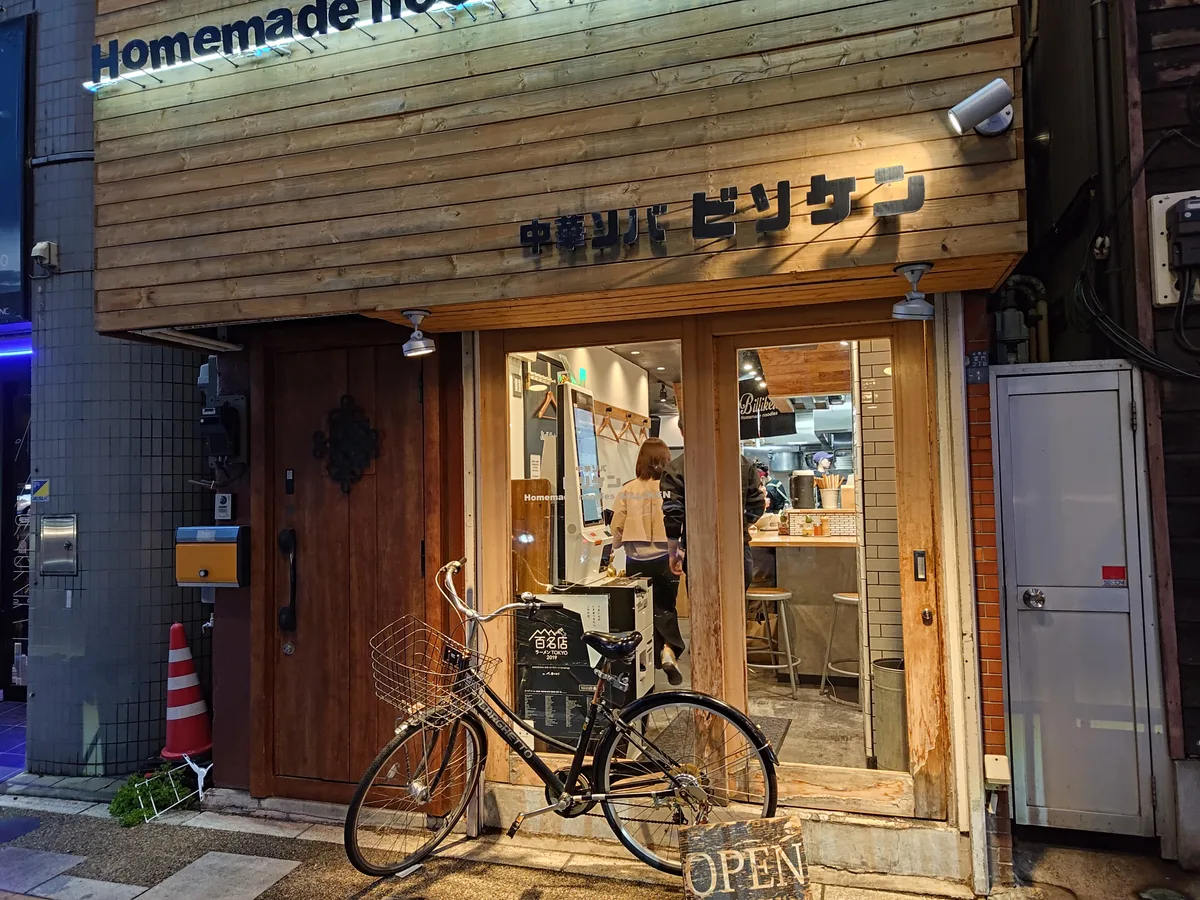
There is another ramen shop right next to Billiken. While their exteriors aren't particularly similar, the neighboring shop is larger and more prominent, whereas Billiken itself has a quite modest facade. Because of this, it's easy to mistakenly assume the larger shop is Billiken at first glance. Always confirm the "Chuka Soba Billiken" shop sign before entering under the noren (shop curtain). Comparing it with the exterior photo in this article will make it clear.
🕔Opening Hours and Crowds — Early to Mid-Evening (around 18:00) is the Best Time to Aim For
Billiken's opening hours are split into two shifts on weekdays (Mon-Fri): 11:00-15:00 / 17:30-21:00. On weekends and holidays, they are open continuously from 11:00-21:00. There are generally no fixed closing days, but any closures are announced on the shop's Twitter and Instagram, so checking social media before your visit is recommended.
The peak congestion is during weekday lunch (around 12:00), where you might find 3-8 people waiting outside. However, during the early evening shift (opening at 17:30)—specifically from 18:30-19:00, right after the first wave of customers has finished—it's often a calm period with only a few groups ahead and no line, even on weekdays. Our visit (Friday at 18:44) was exactly within this timeframe.
- 【Weekday Lunch】Around 12:00 is peak time, typically 3-8 people waiting outside.
- 【Weekday Afternoon】Later lunch after 14:00 is relatively less crowded.
- 【Weekday Evening】Around 18:30-19:00 is the best time to aim for (right after the first wave of customers has cleared out).
- 【Weekend】Open continuously (11:00-21:00), so not as concentrated as weekday peaks, but still prone to crowding during peak sightseeing hours.
- 【Shop Holidays】Occur irregularly and are announced on Twitter and Instagram.
Actual Visit Timeline — Arrived at 18:44, No Wait, Served in 5 minutes
Chronologically, for our visit on Friday, May 1, 2026, we arrived at the shop at 18:44, entered immediately with no line, and the ramen was served in about 5-7 minutes, including ticket machine operation and choosing a seat. There were only two groups already seated, with plenty of open seats, and we were free to choose any available counter seat without staff direction. This is an ideal time to incorporate it as dinner after Kaminarimon sightseeing.
🎫How to Use the Ticket Machine — Smooder-made, Multi-language Touch Panel, with Photos
Billiken's ticket machine is a smooder-made touch panel model located immediately inside the shop's entrance. Its specifications almost completely alleviate the biggest concern for international travelers: "What if I can't order because I can't read Japanese?"
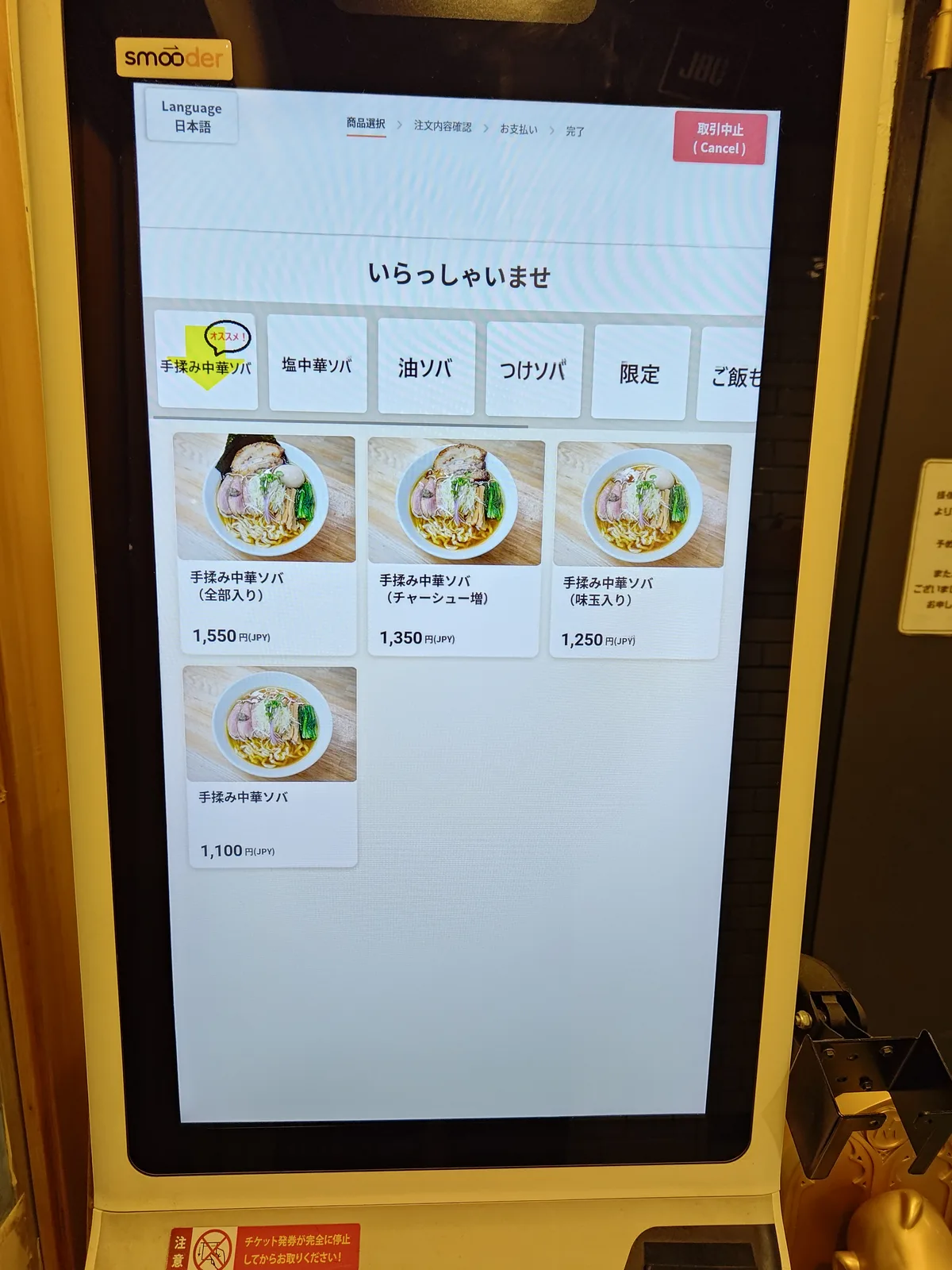
The operation flow is simple:
- Tap the "Language 日本語" button in the top-left corner of the screen to select your language (can switch to English, Chinese, Korean, etc.)
- Progress indicators are displayed at the top of the screen (Item Selection → Order Confirmation → Payment → Complete). You can see at a glance which step you are on.
- Select an item genre from the category tabs on the left side of the screen (Temomi Chuka Soba / Shio Chuka Soba / Abura Soba / Tsuke Soba / Limited / Rice Dishes / Toppings / Drinks)
- Tap the item you want to eat from those displayed in the center.
- If desired, add Aezoba (mixed noodles), Ajitama (seasoned egg), Kamo Chashu (duck chashu), etc., from the "Toppings" tab.
- Proceed to "Order Confirmation", review your order, then go to "Payment".
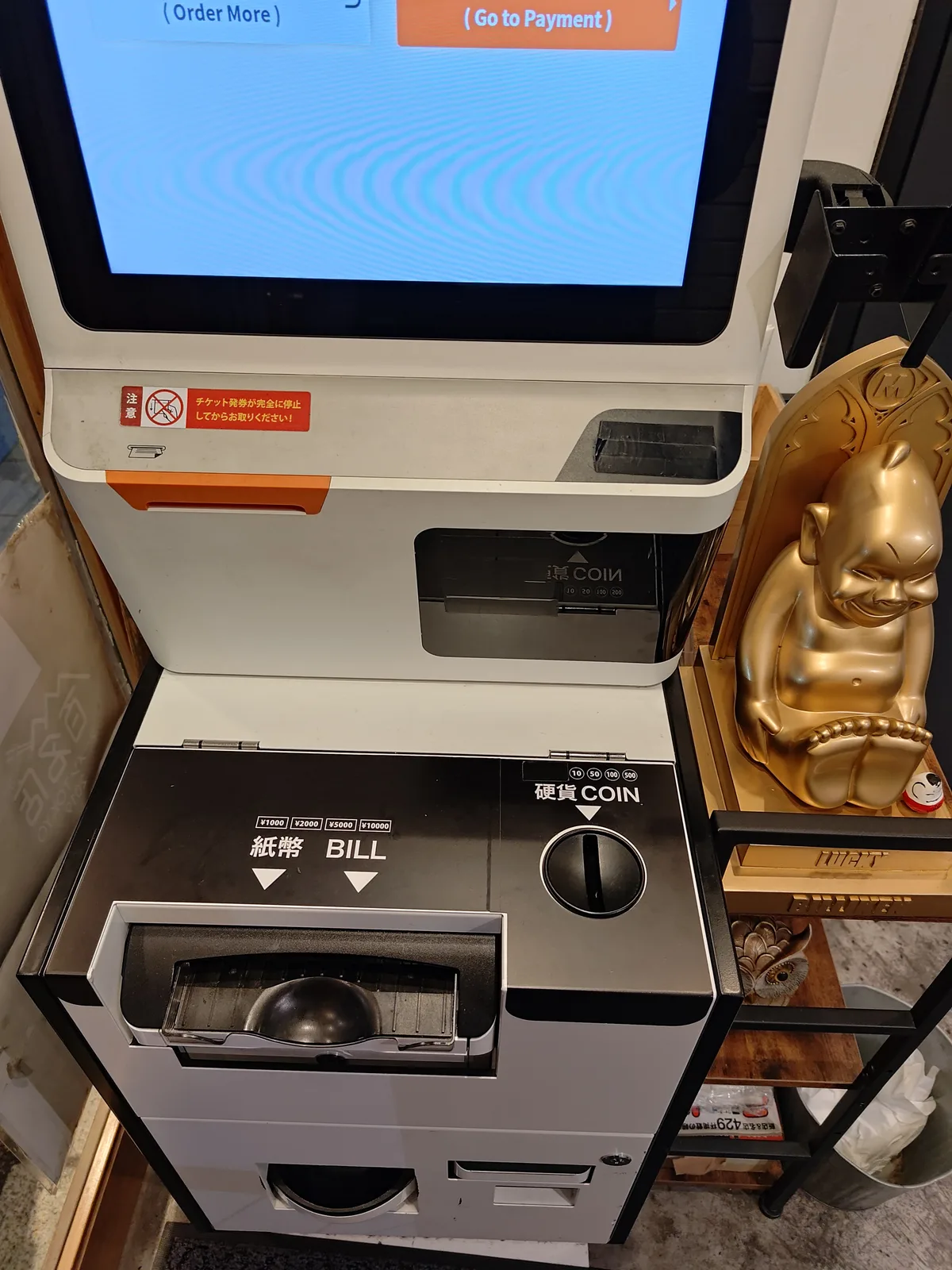
- Insert cash and receive your meal ticket.
【TIP】Select Aezoba (Mixed Noodles) from the Toppings Section
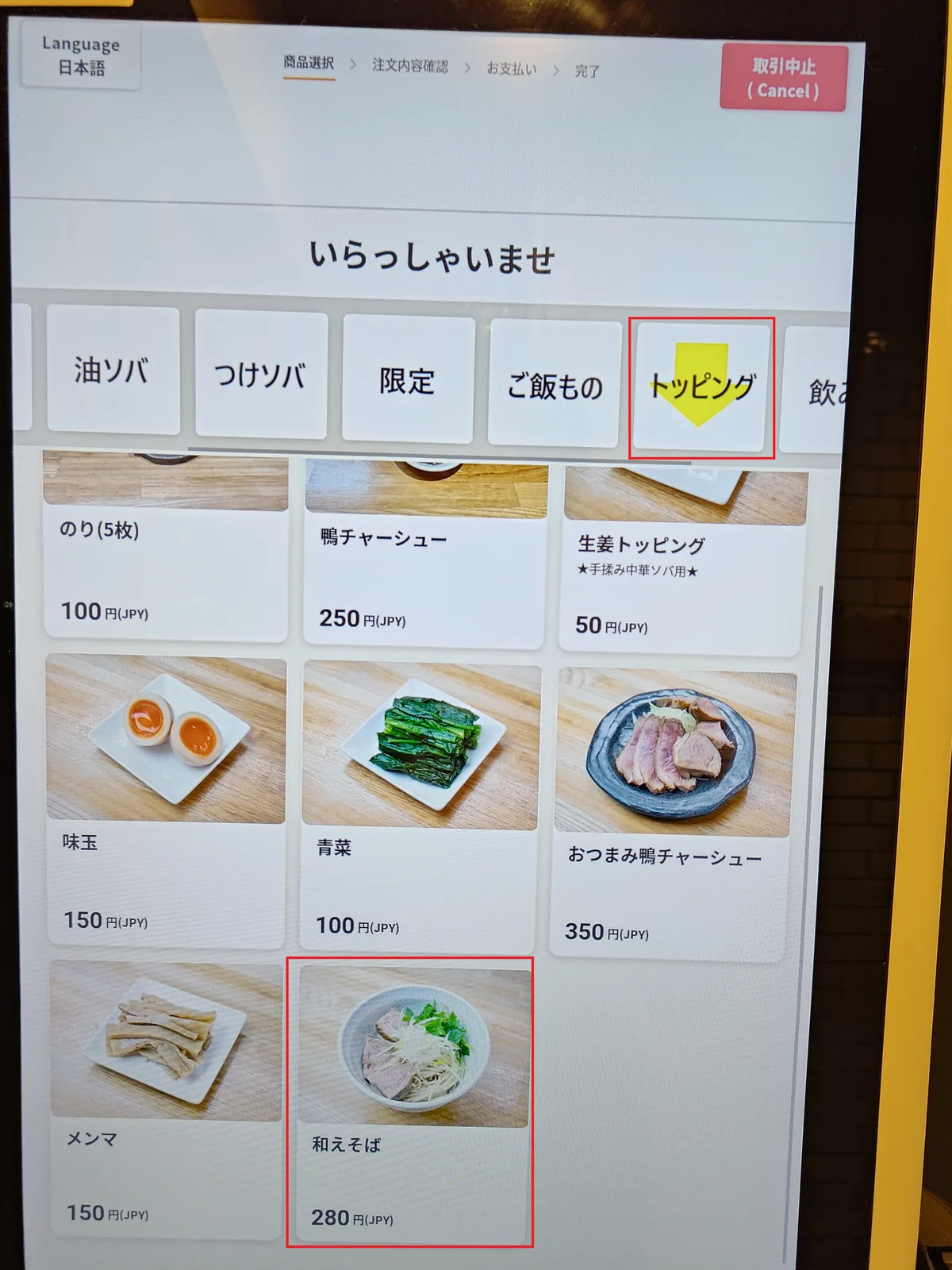
Here's the most crucial tip in this article. Billiken's hidden specialty, "Aezoba" (mixed noodles, ¥280), is not found among the main menu items (Temomi Chuka Soba, Shio Chuka Soba, Abura Soba, Tsuke Soba). Instead, it's located under the "Toppings" tab on the right side of the screen. After ordering your Temomi Chuka Soba, you'll need to select Aezoba from the toppings tab to add it. So, don't give up if you don't see Aezoba on the main screen; always check the toppings section!
📋Menu — Four Main Pillars + Topping Options
Billiken's menu is built around four main pillars: "Temomi Chuka Soba" (hand-crumpled Chuka Soba), "Shio Chuka Soba" (Salt Chuka Soba), "Abura Soba" (Oil Noodles), and "Konbu-sui Tsuke-soba" (Kelp Water Dipping Noodles). Each of these offers four topping levels: "Plain", "Ajitama-iri" (with seasoned egg), "Chashu-zo" (extra chashu), and "Zenbu-iri" (all toppings). For a first visit, the signature "Temomi Chuka Soba (Zenbu-iri)" is the classic choice. Aezoba (mixed noodles) is a hidden specialty that can be added from the toppings section.
Temomi Chuka Soba Series (Signature Menu)
| Menu | Price | Notes |
|---|---|---|
| ★Temomi Chuka Soba (Zenbu-iri) | ¥1,550 | ★Recommended for first-timers. All toppings: duck roast + pork chashu + ajitama + green vegetables. |
| Temomi Chuka Soba (Chashu-zo) | ¥1,350 | Increased duck roast + pork chashu, no ajitama. |
| Temomi Chuka Soba (Ajitama-iri) | ¥1,250 | Added ajitama, regular chashu portion. |
| Temomi Chuka Soba | ¥1,100 | The signature base. The purest form of duck x chicken chintan shoyu. |
Shio Chuka Soba Series
| Menu | Price | Notes |
|---|---|---|
| Shio Chuka Soba (Zenbu-iri) | ¥1,550 | Salt-based with all toppings. Duck x chicken chintan with a salt tare (sauce). |
| Shio Chuka Soba (Chashu-zo) | ¥1,350 | |
| Shio Chuka Soba (Ajitama-iri) | ¥1,250 | |
| Shio Chuka Soba | ¥1,100 | The salt-based plain option. |
Duck and Chicken Abura Soba Series (Mazesoba)
| Menu | Price | Notes |
|---|---|---|
| Duck and Chicken Abura Soba (Chashu-zo + Mini Soup) | ¥1,500 | Mazesoba (mixed noodles) type + separate soup bowl. |
| Duck and Chicken Abura Soba (Chashu-zo) | ¥1,350 | Mazesoba type, increased chashu. |
| Duck and Chicken Abura Soba (Mini Soup) | ¥1,200 | Mazesoba type + separate soup bowl. |
| Duck and Chicken Abura Soba | ¥1,100 | The base mazesoba type. |
Konbu-sui Tsuke-soba Series
| Menu | Price | Notes |
|---|---|---|
| Konbu-sui Tsuke-soba (Zenbu-iri) | ¥1,650 | Noodles chilled in kombu (kelp) water, served with dipping soup. Luxurious toppings. |
| Konbu-sui Tsuke-soba (Chashu-zo) | ¥1,450 | |
| Konbu-sui Tsuke-soba (Ajitama-iri) | ¥1,350 | |
| Konbu-sui Tsuke-soba | ¥1,200 | The base Konbu-sui Tsuke-soba. |
Toppings (Aezoba & Additional Ingredients)
| Topping | Price | Notes |
|---|---|---|
| ★Aezoba | ¥280 | ★Recommended for first-timers. A hidden specialty. Mini mazesoba with thin noodles + duck chashu + duck oil/chicken oil. Add from the toppings section. |
| Kamo Chashu | ¥250 | Additional duck roast. |
| Otsumami Kamo Chashu | ¥350 | Duck roast served as a standalone dish (also good with drinks). |
| Ajitama | ¥150 | Soft-boiled seasoned egg. |
| Menma | ¥150 | |
| Aona | ¥100 | Seasonal green vegetables like kakina. |
| Nori (5 sheets) | ¥100 | |
| Ginger Topping | ¥50 | ★Sign states: For Temomi Chuka Soba ★ |
First-Timer's Choice — Three Paths Based on Appetite and Mood
【For a Full Experience】"Temomi Chuka Soba (Zenbu-iri)" ¥1,550 + "Aezoba" from the topping section ¥280, totaling ¥1,830. This choice allows you to fully savor Billiken in one go: duck x chicken chintan shoyu, hand-crumpled noodles, black truffle duck roast, pork chashu, ajitama, and the experience of dipping aezoba into the soup. / 【For a Lighter Meal】"Temomi Chuka Soba" ¥1,100 or "Ajitama-iri" ¥1,250. This option offers a simple enjoyment of the signature duck x chicken chintan and hand-crumpled noodles, a quantity that won't feel too heavy amidst Asakusa sightseeing. / 【For Meat Lovers】"Temomi Chuka Soba (Chashu-zo)" ¥1,350. This choice allows you to enjoy Billiken's unique character through its meats, with increased portions of both pork chashu and black truffle duck roast.
🏠Shop Atmosphere — Modern, Bright, and Clean 11-Seat Counter
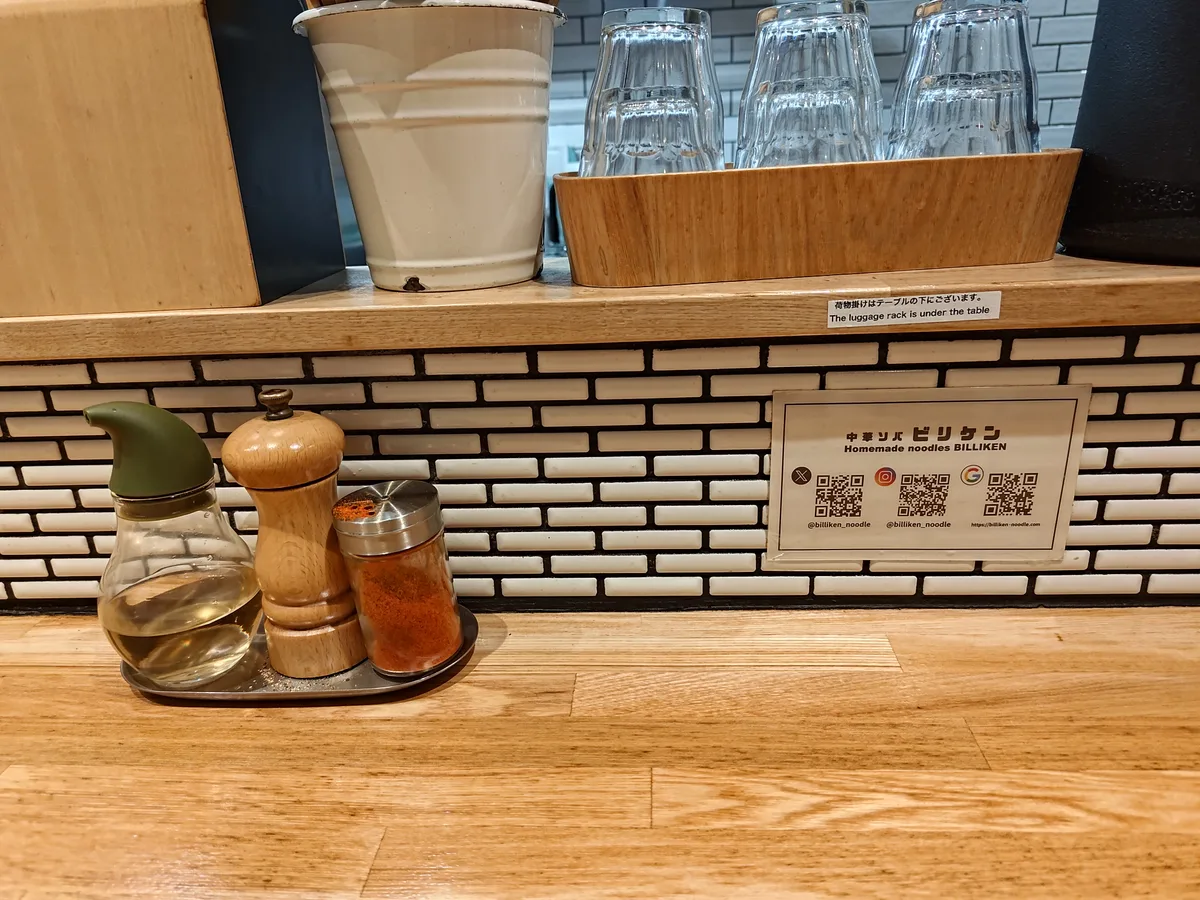
Opening the wooden sliding door reveals a clean, bright, and modern space. There are only 11 counter seats, with no table seating. The calm, wood-grain interior, coupled with Western music playing in the background, gave the impression of a "contemporary and casual specialty shop" rather than a Showa-era (old-fashioned) Chuka Soba establishment.
During our visit, international tourists made up about 60% of the clientele, mainly solo diners or groups of 2-3 people. The gender ratio was roughly even, and ages varied, giving the impression that many visitors combine it with Kaminarimon sightseeing. The staff is a young team, and their efficient operation makes for a pleasant experience.
Water is self-service, drawn from pitchers placed on the upper shelf of the counter. Glasses are also self-service. Hooks under the counter are designed for hanging bags, so small luggage like backpacks is fine. Only three types of condiments—chili pepper, black pepper, and vinegar—are provided on the table, with minimal other decorations. This focused selection of flavor enhancers reflects the high quality and completeness of the soup.
Store Suitcases in Station Lockers
With only 11 counter seats, the shop isn't very spacious, making it impractical to bring large suitcases inside. Asakusa Station and its vicinity have numerous coin lockers, so it's advisable to store your luggage there before visiting, especially if you're sightseeing. Backpack-sized luggage can be stored on the hooks under the counter or behind your seat.
🔥The Tasting — Temomi Chuka Soba (Chashu-zo) + Aezoba
For this visit, we chose "Temomi Chuka Soba (Chashu-zo)" ¥1,350 to focus on the two signature chashu types (pork + duck roast). While "Zenbu-iri" (all toppings) ¥1,550 is recommended for first-timers at the beginning of this article, the ¥200 difference between the two options is merely the addition of ajitama (seasoned egg) and aona (green vegetables). Our chashu-zo ramen also came with green vegetables (spinach) in a different form, so the core experience is largely the same, minus the egg. If you prefer to skip the egg or prioritize meat quantity over the number of ingredients, choosing the chashu-zo, as reported here, will still provide a highly satisfying experience.
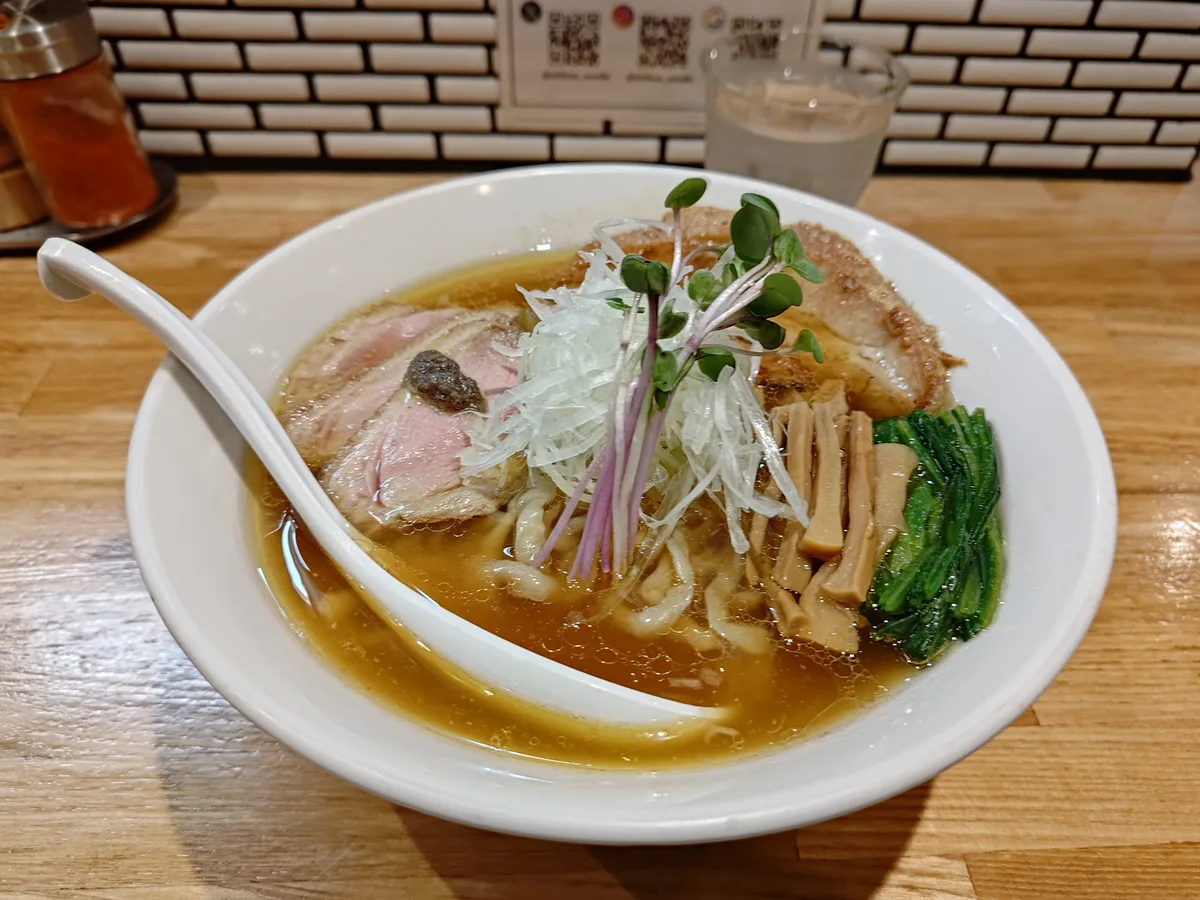

Mei's Note
This bowl truly boasts a beautiful, well-calculated color contrast. The translucent amber soup, the glossy, irregularly wavy noodles formed by hand-kneading, the elegant presentation with a small dollop of black truffle paste atop the roasted duck chashu, the moist and glistening pork chashu, the vibrant green of the vegetables, and the white of the shredded leek—it's a simple yet artfully adorned, truly "picture-perfect" bowl. Combined with the pleasant Western music playing in the shop, I felt it was a composition so beautiful, you'd want to share it on social media.
Soup — Duck x Chicken Chintan Shoyu, Unexpected Punch
The first sip's impression was, "It's clear, yet so flavorful." It's a slightly complex shoyu soup with a chintan base made from duck and chicken, complemented by seafood dashi (broth). Contrary to its light appearance, it has a deep, rich umami. The "wilder" duck flavor is slightly more prominent than the chicken's umami, but it's not as gamey as one might expect, making it palatable for international travelers without any strange taste.
Despite its clear appearance suggesting a light taste, the duck fat was thoroughly dissolved in the soup, providing a satisfying richness that lasted until the very last sip. Later, adding a small amount of vinegar from the table changed the flavor, bringing out a sharper acidity and enhancing the seafood notes.
Noodles — Hand-Kneaded Wavy Noodles, Chewy and Incredibly Satisfying
The noodles are slightly thick, hand-crumpled wavy noodles (temomi chijire-men). They are cooked relatively firm, resulting in a chewy, elastic texture and a distinct wheat aroma. As the name "temomi" (hand-crumpled) suggests, staff manually knead the noodles to create irregular waves just before serving. This unique undulation in each strand ensures the soup clings beautifully to every surface. From a satiety perspective, it's highly satisfying with a generous portion. The noodles are a strong, prominent component within the overall Chuka Soba.
Chashu — Two-Tiered Duck and Pork, Truffle Accent
Billiken's greatest originality lies in this two-tiered chashu (braised meat) composition.
- 【Pork Chashu】 Soft, melt-in-your-mouth roasted pork, slow-cooked at low temperature. It's well-seasoned, and a bite releases a burst of umami—a classic perfection.
- 【Duck Roast】 Fragrantly roasted duck meat, topped with black truffle paste. The truffle's saltiness and aroma enhance the duck's umami, offering a delicate finish with notes of berry-like acidity and sweetness.
This is Billiken's unique design, allowing you to simultaneously experience "different meats: pork and duck," "different textures: melt-in-your-mouth and fragrant," and "different flavor profiles: marinated and topped (truffle)" all in one bowl. For a difference of around ¥200 with these toppings, it's definitely worth choosing "Zenbu-iri" (all toppings) or "Chashu-zo" (extra chashu) for your first visit.
Menma, Aona, and Yuzu Aroma
Menma (fermented bamboo shoots) and aona (seasonal green vegetables like kakina) serve as classic toppings for traditional shoyu ramen, providing color and textural accents. Furthermore, the subtle yuzu (Japanese citrus) aroma that occasionally wafts from the served ramen—originating from yuzu zest garnishing the rim of the bowl or some ingredients—acts as a hidden flavor enhancer, elevating the delicate complexity of the Japanese shoyu ramen.
Aezoba — The Supporting Star, Enjoyed in Two Stages
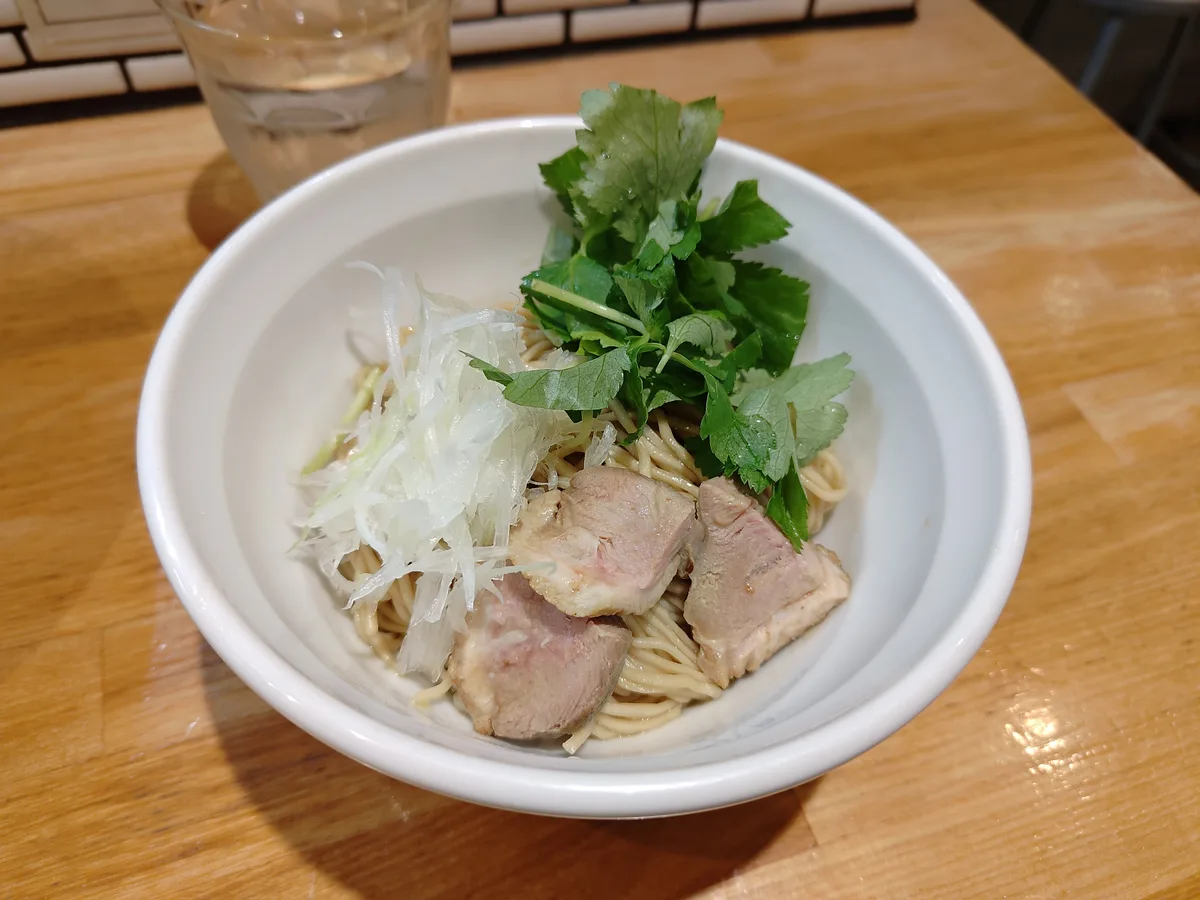
Aezoba (mixed noodles) is a ¥280 side dish ordered from the toppings section. It's like a "mini mazesoba" featuring a thin noodle version of the Chuka Soba (low-hydration noodles with a firm bite), tossed with kamo abura (duck oil) and tori abura (chicken oil), topped with chunky duck chashu scraps, long green onions, and mitsuba (Japanese parsley).
For its ¥280 price point, it offers an unexpectedly high level of satisfaction, with a generous portion of noodles and plenty of chunky duck chashu. The cost performance is outstanding.
And the true value of Aezoba lies in its "two-stage enjoyment." First, savor its fragrant taste on its own, enriched by the duck oil and chicken oil. Then, in the latter half, gradually dip the aezoba into your main Chuka Soba's soup. The chintan shoyu (clear soy sauce) flavor will infuse the aezoba, transforming it into a completely different dish. This composition, where a topping-priced ¥280 offers an experience akin to "another whole bowl," is a combination too good to skip and just have the main ramen.
📍Asakusa Model Itinerary Including Billiken
While the Asakusa area may not boast a huge number of ramen shops, it's home to some of Japan's top tourist attractions: Kaminarimon, Senso-ji Temple, and Nakamise-dori. Billiken is conveniently located just a 4-5 minute walk from these sights, making it a natural fit for a half-day sightseeing itinerary.
Recommended Model Itinerary (Asakusa Half-Day Course: Afternoon to Evening)
- Around 15:00 — Head from Asakusa Station to Kaminarimon. Stroll down Nakamise-dori to Senso-ji Temple.
- Around 16:00 — Visit Senso-ji Temple and the Five-Storied Pagoda. Explore the temple grounds.
- Around 17:00 — Wander towards Asakusa Shrine and Sumida Park (enjoy cherry blossoms in spring, stunning views with Skytree in summer).
- Around 17:30 — Head south on Kaminarimon-dori towards Komagata Bridge, arriving at Billiken to coincide with their evening opening (17:30).
- Around 18:30-19:00 — Enjoy your meal at Billiken (Temomi Chuka Soba Zenbu-iri + Aezoba, total ¥1,830).
- Around 19:30 — Cross Komagata Bridge for night views of Tokyo Skytree, or take the Toei Asakusa Line from Asakusa Station towards Ginza.
Access to Major Tourist Spots and Areas
| Destination | Route | Travel Time |
|---|---|---|
| Kaminarimon / Senso-ji Temple | Walk | Approx. 4 min |
| Tokyo Skytree | Walk → 1 stop on Tobu Line OR Walk only | Approx. 15-20 min |
| Ueno | 2 stops on Tokyo Metro Ginza Line | Approx. 5 min |
| Akihabara | Tokyo Metro Ginza Line → Suehirocho | Approx. 10 min (Ramen Kai's main shop is also here) |
| Tokyo Station | Direct on Tokyo Metro Ginza Line | Approx. 20 min |
| Ginza | Direct on Tokyo Metro Ginza Line | Approx. 15 min |
❓Frequently Asked Questions
QIs there an English menu?▼
Yes. The ticket machine is a smooder-made touch panel, and you can switch languages to English, Chinese, Korean, and others from the "Language 日本語" button in the upper left corner of the screen. Furthermore, all items are displayed with photos, so even if you can't switch the language, you can order visually. The biggest concern for international travelers—"I can't order if I can't read Japanese"—is almost completely eliminated.
QCan I use a credit card?▼
No, you cannot. Payment is cash only; credit cards, e-money, and QR code payments are all not accepted. For a Temomi Chuka Soba Zenbu-iri (all toppings) + Aezoba (mixed noodles), the total is ¥1,830. If you add more toppings or drinks, prepare around ¥2,500 in cash. There are convenience store ATMs within and around Asakusa Station.
QHow long is the wait?▼
When we visited on a Friday at 18:44, there were only 2 groups ahead and no waiting line. Generally, during the lunch peak (around 12:00), there are 3-8 people waiting. In the early evening (17:30-18:00), there might be 5-6 people waiting, but from 18:30-19:00, after the first rush, it becomes an easier time to get in. The best times to aim for are "weekdays 18:30-19:00" or "late lunch after 14:00 on weekdays."
QHow do I distinguish it from the ramen shop next door?▼
Billiken itself has a modest facade, while the shop next door is larger and more prominent, so it's possible to mistakenly assume the larger one is Billiken at first glance. Their exteriors aren't particularly similar, so the distinguishing point is the "Chuka Soba Billiken" shop sign. Please compare it with the exterior photo in this article and always confirm the shop name before entering.
QWhere do I order Aezoba (mixed noodles)?▼
You order it from the "Toppings" tab on the ticket machine. Aezoba does not appear in the main menu list for "Temomi Chuka Soba / Shio Chuka Soba / Abura Soba / Tsuke Soba," so after selecting your main dish, always open the "Toppings" tab to add Aezoba (¥280). Referring to the ticket machine photo in this article (where Aezoba is highlighted in a red box) will make it clear.
QIs it vegetarian/vegan friendly?▼
Billiken's signature dishes are based on animal-derived broths from duck and chicken, so there are currently no vegetarian or vegan menu options. If you wish to avoid animal products, please consider other shops from the "Vegan Friendly" shop page on this website.

Sophia's Note
If you're looking for vegetarian or vegan-friendly ramen in the Tokyo/Asakusa area, it's best to choose a specialty shop where the entire main menu is free of animal products. Our website allows you to filter shops by "Vegan Friendly" and "Animal Product-Free" under dietary restrictions, so please check that before your visit. For first-time visitors, a major reassuring point about Billiken is its smooder-made multi-language touch panel ticket machine. With language switching between Japanese, English, Chinese, and Korean, plus photos for all items, concerns about not being able to read the menu are significantly reduced. No verbal ordering with staff is needed, and the process from entering to seating is simple. It's an easy place to visit, even as a "practice run" for your first Japanese ramen shop experience.
QIs the main shop, "Ramen Kai," also nearby?▼
The main shop, "Ramen Kai," is located in the Akihabara/Suehirocho area, about 10 minutes from Asakusa Station by Tokyo Metro Ginza Line. It's also a famous duck-soup ramen shop with a history of being selected as a Tabelog Hyakumeiten, serving as Billiken's parent shop. For advanced ramen travelers who want to organize a "duck ramen comparison" during their stay in Tokyo, we recommend an itinerary visiting both shops.
🚃Access
Located about a 4-minute walk (234m) from Asakusa Station (Tokyo Metro Ginza Line, Toei Asakusa Line, Tobu Skytree Line). From the Kaminarimon intersection, head south on Edo-dori for two blocks towards Komagata Bridge, at Kaminarimon 2-4-1, Okayasu Building 1F.
From Tokyo Station, it's about 20 minutes on the Tokyo Metro Ginza Line. From Ueno, it's about 5 minutes on the Ginza Line. From Akihabara (Suehirocho, where the main shop "Ramen Kai" is located), it's about 10 minutes on the Ginza Line. Direct visits from Haneda or Narita Airports involve multiple transfers, so it's generally best to travel from your accommodation.
📋Shop Information
| Item | Details |
|---|---|
| Shop Name | Chuka Soba Billiken |
| Genre | Chuka Soba (Duck x Chicken Chintan Shoyu, Homemade Hand-crumpled Noodles) |
| Difficulty | ★1 Friendly (Multi-language touch panel, with photos, self-seating) |
| Ordering System | Touch panel ticket machine (smooder-made, multi-language, with photos) |
| Seating | 11 counter seats only (no table seating) |
| Price Range | ¥1,100〜¥1,830 (Temomi Chuka Soba Zenbu-iri + Aezoba totals ¥1,830) |
| English Menu | Available (can switch to English, Chinese, Korean, etc. on the ticket machine touch panel) |
| Payment Method | Cash only (Credit cards, e-money, and QR code payments are all not accepted) |
| Nearest Station | Asakusa Station (Tokyo Metro Ginza Line, Toei Asakusa Line, Tobu) 4-minute walk, 234m |
| Address | Okayasu Building 1F, 2-4-1 Kaminarimon, Taito-ku, Tokyo |
| Opening Hours | Mon-Fri 11:00-15:00 / 17:30-21:00, Sat/Sun/Holidays 11:00-21:00 (Please check before visiting) |
| Closed | Generally none (Shop closures are announced on Twitter and Instagram) |
| Awards | Tabelog Ramen Hyakumeiten (Top 100 Ramen Shops) 2021 Selection |
| Affiliation | Sister shop of "Ramen Kai" (Akihabara / Suehirocho) |
🎯Who This Shop Is For / Not For
| Recommended For | Might Not Be For You |
|---|---|
| You want to experience authentic shoyu ramen as part of your Asakusa sightseeing. | You're in the mood for rich tonkotsu or a hearty Jiro-style ramen. |
| You're interested in the delicate world of duck and chicken chintan shoyu. | You're looking for vegetarian or vegan menu options. |
| You want to order with peace of mind using a multi-language touch panel and photo menu. | You want to pay with credit card or e-money. |
| You want to experience the caliber of a Tabelog Ramen Hyakumeiten selection combined with Tokyo sightseeing. | You're uncomfortable with small shops that only have counter seating. |
| You want to plan an itinerary to compare two duck ramen shops (Ramen Kai + Billiken). | You want to enter with a large suitcase. |
Summary
Chuka Soba Billiken's greatest appeal lies in its balance of "convenience near a tourist spot × the quality of a Tabelog Ramen Hyakumeiten (2021 selection)." It's located just a 4-5 minute walk from Kaminarimon, easily integrated into Asakusa sightseeing. With traveler-friendly features like a smooder-made multi-language touch panel ticket machine, a photo-illustrated menu, and self-seating, it offers a taste of duck x chicken chintan shoyu ramen directly descended from Akihabara's famous "Ramen Kai"—truly a shop where you can experience the "modern pinnacle" of Tokyo's Chuka Soba.
There are only three key tips for navigating your visit: "Arrive on weekdays between 18:30-19:00 (or for a late lunch after 14:00) to avoid queues," "Switch the language on the ticket machine to the right of the entrance, select Temomi Chuka Soba Zenbu-iri, and then add Aezoba from the toppings section," and "Have ¥1,830 in cash ready." Just make sure to confirm the "Chuka Soba Billiken" sign so you don't mistake it for the ramen shop next door, and the multi-language touch panel will guide you the rest of the way without confusion.
As dinner after finishing your Kaminarimon and Senso-ji Temple sightseeing, step into the world of Tokyo's duck x chicken chintan shoyu ramen. This is an experience you won't find in typical guidebooks, yet it's an authentic bowl just behind the tourist area, sure to remain a long-lasting highlight of your Tokyo ramen memories.
Visited & Verified by Our Team
This article is brought to you by the Ramen Gateway editorial team, based on our actual visit to the shop on Friday, May 1, 2026, at 18:44, where we ordered and tasted the Temomi Chuka Soba (Chashu-zo) + Aezoba. All photos were also taken during this visit. Information regarding queues, the shop's atmosphere, and the tasting report are all based on our firsthand experience during the visit.
If you visit, we'd love to hear your review!
"We don't let AI eat ramen. We use AI to draw the coolest map so adventurers worldwide can find the real treasure hidden in Japan's back alleys."
Made in Japan — with local knowledge & AI assistance