The Counter Code: All Etiquette from Entry to 'Gochisousama!'
From entering to leaving — every step you need to feel confident at the counter.


🍜Introduction: Once You're Seated, It's a 'Dojo'
You've got your meal ticket from the vending machine, and you've finally been guided to your seat. But don't relax just yet! Japanese ramen shops, especially local famous spots (Level 2-3), are 'public spaces' where everyone shares limited room. Let's master the 'unspoken rules' to enjoy your meal comfortably and smartly.
Armed with this knowledge, you too can become a true 'Ramen Warrior'.
🧭Maneuvering After Entry: Securing Your Personal Space
Japanese ramen shops are often very compact.
🟢The Baggage Puzzle (Baggage & Space)
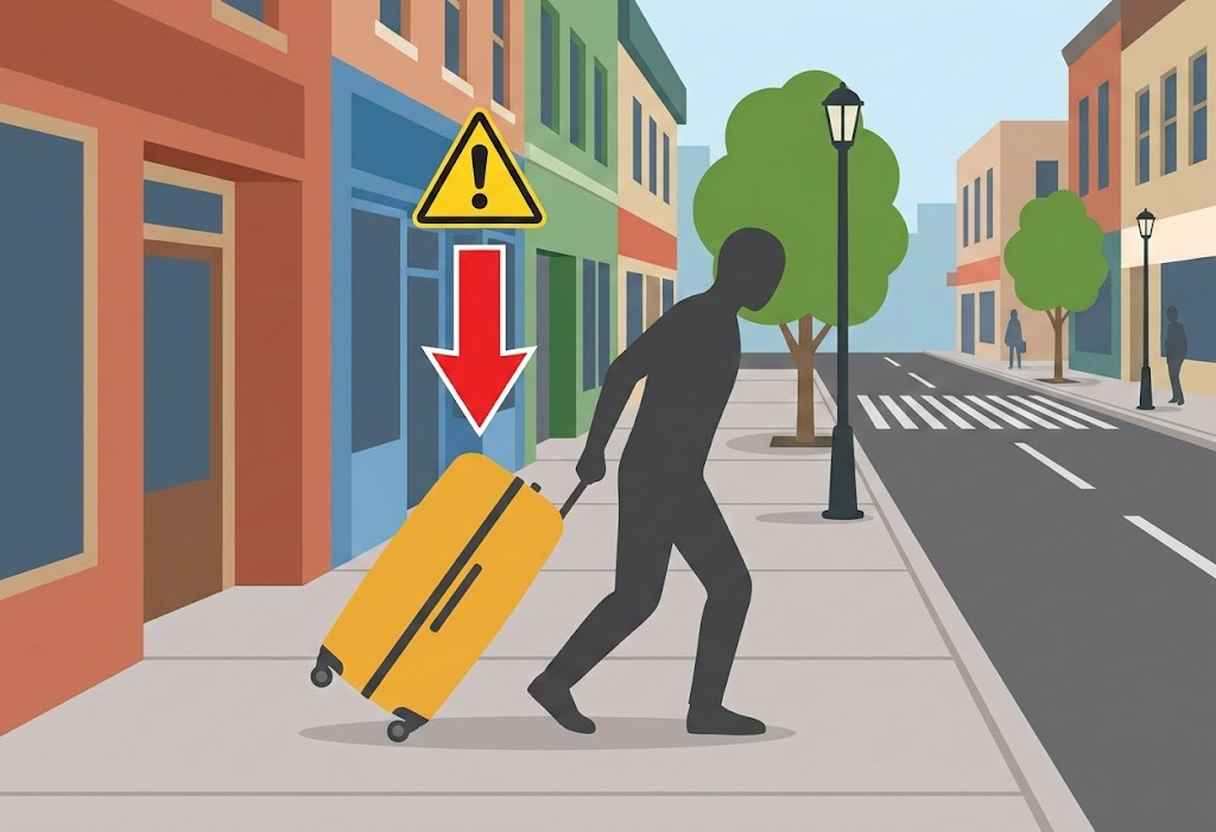
- Storage Techniques: Use the basket under your chair, or hooks on the back of the chair or wall projections for your belongings.
- Large Luggage: Many shops do not allow large items like carry-on suitcases. A true professional adventurer will store them in a station locker beforehand.
🟡Exploring Self-Service (Self-Service Habits)
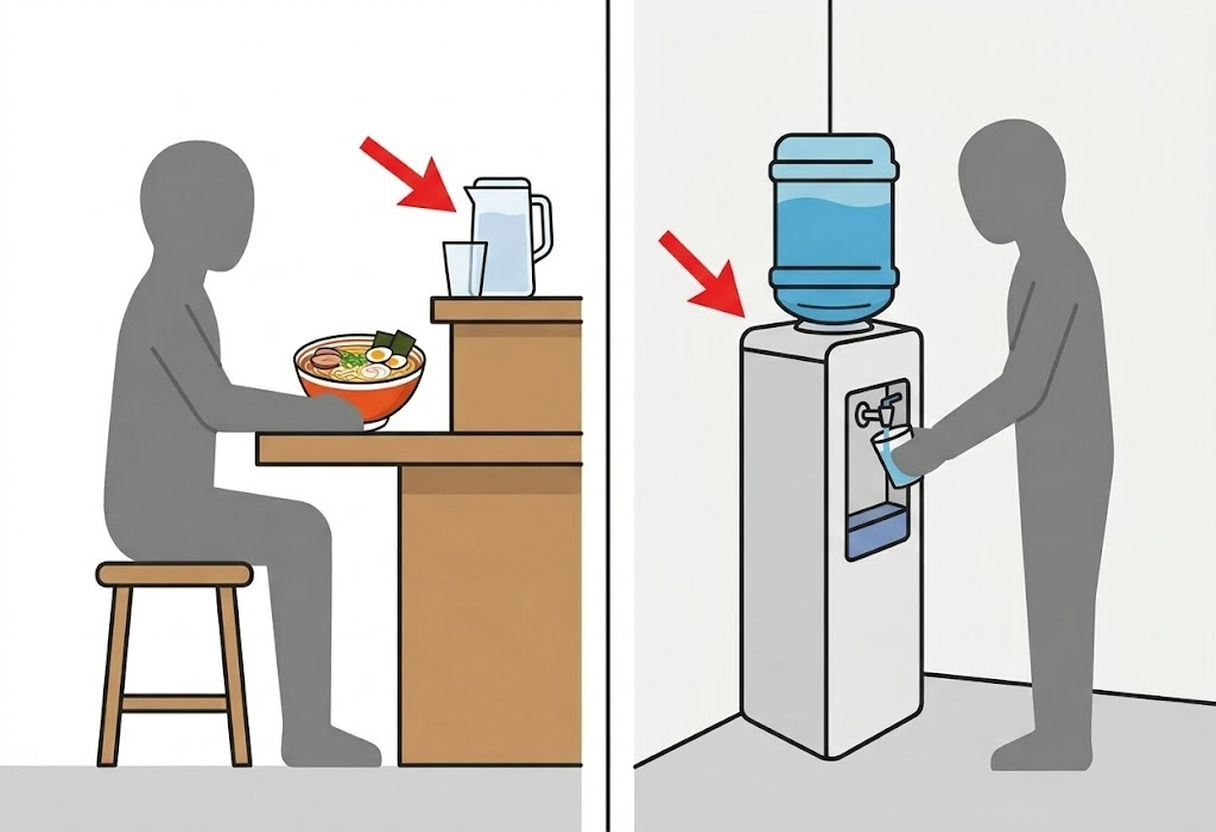
- Water is Self-Serve: If the staff doesn't bring you water, look around. There's likely a pitcher in front of you or a water dispenser in a corner of the shop.
- Paper Apron: If you're worried about splashes, check for a 'Kami Apron' (paper apron). It might be on the counter, or you can ask the staff for one.

Sophia's Note
If you have food allergies or dietary restrictions, let the staff know before you order. If Japanese is a barrier, just show them an allergy card or a translation on your phone — that's enough to get the message across. This is about your safety, so never hesitate.

Zack's Note
In a cramped shop, being 'compact' is the ultimate virtue. Hindering your neighbor with a large bag is strictly forbidden on the battlefield, you know.
🗣️Ordering Style: Not Always a Ticket Machine
Most Japanese ramen shops use ticket machines (kenbaiki) for ordering, but some shops take orders directly at the counter. The owner or staff will speak to you after you sit down — just look at the menu and order then.
Payment is either upfront when ordering or after the meal, but it's almost always after. If you're unsure, just say "Okaikei" (check, please) when you're done.
Actually easier
Counter-ordering shops are less common than ticket machine shops, but they're actually easier for foreigners — you can communicate directly with the owner through pointing or simple words. When in doubt, just say "Osusume?" (What do you recommend?) and the owner will serve their signature bowl.
🥢Dining Etiquette: Deliciously and Logically
Once your ramen arrives, it's finally time to dig in!
| Etiquette | Key Point |
|---|---|
| Chopsticks or Fork | Not great with chopsticks? Just ask for a fork. It's smarter to eat comfortably than to struggle and drop noodles |
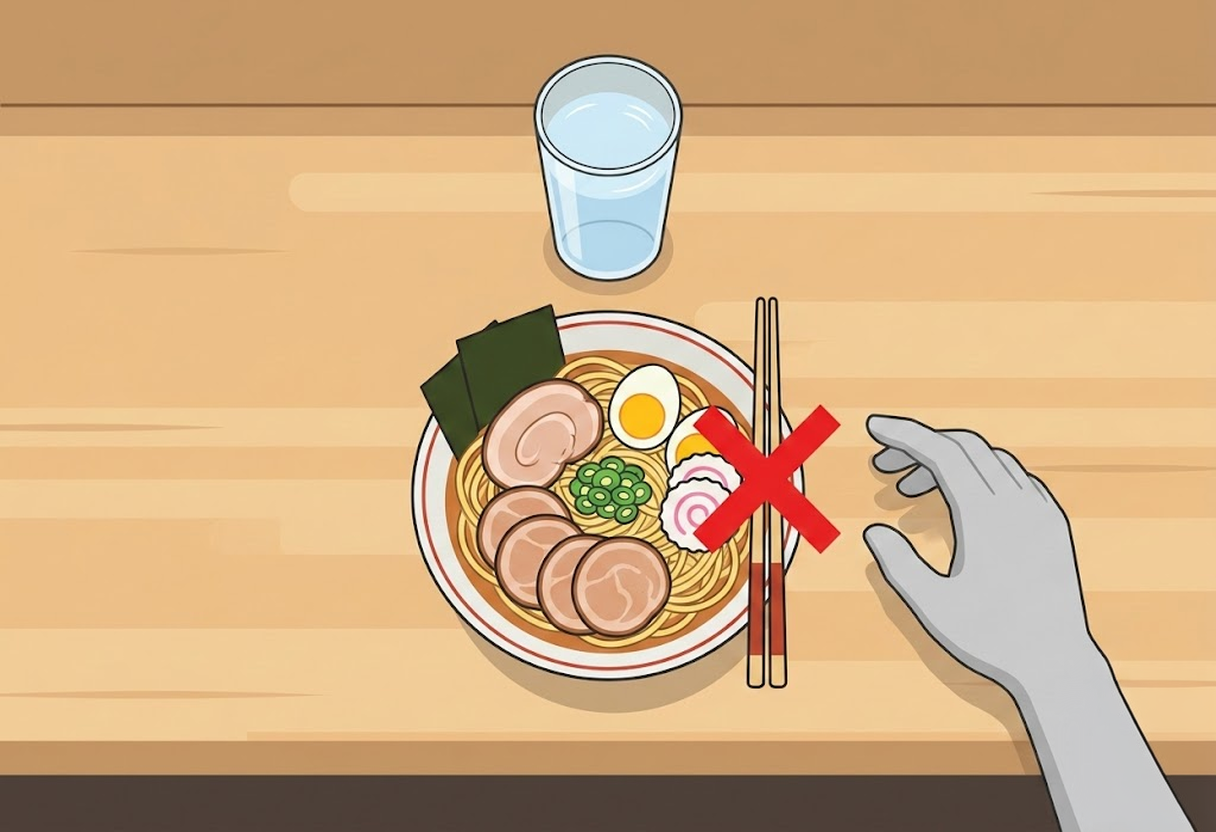
| Where to Place Chopsticks | Place them on the opposite side of your dominant hand. Reaching for water with your dominant hand can knock them off the counter |
| Slurping | Slurping noodles is totally OK in Japan — it even enhances the aroma. But you don't have to force it. Eat your way |
About slurping
In Japan, slurping noodles is completely normal. Slurp or eat quietly — both are perfectly fine. For the science behind it, practical tips, and common questions, check out our dedicated guide.

Dr. Hiro's Analysis
According to data, accidents caused by chopstick misplacement are prone to occur in cramped counter seats. Placing them on the opposite side of your dominant hand is a highly effective logic for physical risk hedging.
🏁The Finish: Express Gratitude and Pave the Way for the Next
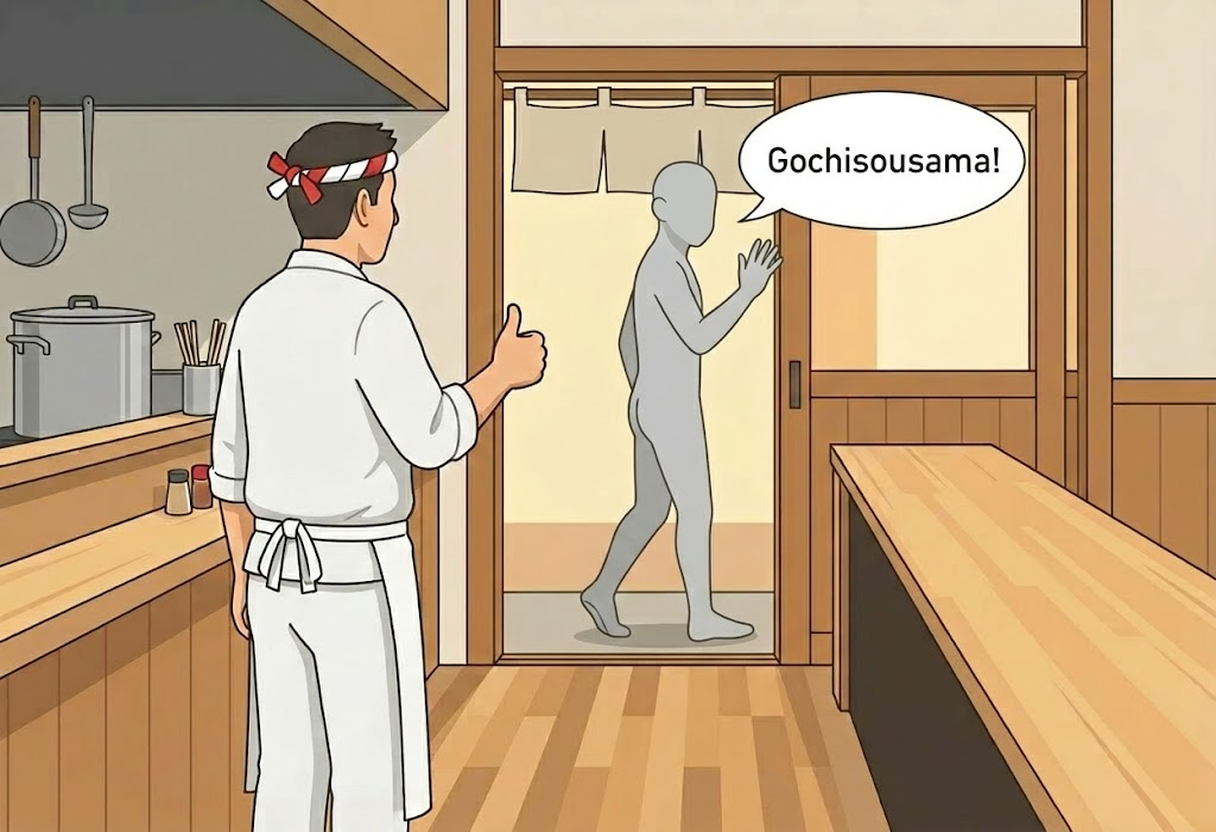
Your behavior after finishing your meal shows respect to the next adventurer.
| Situation | Etiquette |
|---|---|
| Finish the soup? | Drinking every last drop shows respect, but leaving some for health reasons is perfectly fine |
| After eating | Get up promptly. Lingering to chat is a no-go, especially when there's a line outside |
| Tipping | Japan has no tipping culture. The best reward is a smile and "Gochisousama!" as you leave |
🧹Leaving Your Seat: Return the Bowl? Wipe the Counter?
"Place your empty bowl on the upper counter and wipe down your spot" — this is a common practice at Japanese ramen shops. Many shops appreciate it, but some actually prefer you leave everything as is. There's no universal right answer.
If there's a cloth on the counter, giving your area a quick wipe after eating is a nice touch. No cloth? Don't worry about it.
So what should you do? The answer is simple.
- Watch the regulars — if they're lifting their bowls up, follow suit. If nobody is, don't bother
- If there's a cloth, give your spot a quick wipe. If not, just leave it
- When in doubt, just get up and leave. You'll never get scolded for NOT moving your bowl

Mei's Note
The real answer is "follow the shop's lead." Observe, imitate, and finish with a smile and "Gochisousama!" — that's all it takes to be a true local.
🛡️Verified by Real Humans
This etiquette is 'living knowledge' learned by our local Japanese team through actual interactions with shop owners and regular customers. These aren't rules imagined by AI.
🗺️Quest Complete. Now, On To The Next Shop!
With this, you've mastered all aspects of Japanese ramen culture, from queuing to eating. Having 'graduated' from Ichiran, a stage of over 30,000 adventures awaits you.
"We don't let AI eat ramen. We use AI to draw the coolest map so adventurers worldwide can find the real treasure hidden in Japan's back alleys."
Made in Japan — with local knowledge & AI assistance