The Art of Toppings and Aji-hen: Designing Your Own Perfect Bowl
Master the condiments and seasonings on the table to customize your bowl.


🍜Introduction: Beyond the Default
To truly savor ramen to its fullest, 'toppings' and 'condiments' are your best allies. Adding ingredients when you order and altering the flavor as you eat – just knowing this way to enjoy ramen will give you a different experience every time, even at the same shop.
First, let's understand the difference between these two.
| Type | Ordering Method | Price |
|---|---|---|
| Toppings (Ingredients) | Order via vending machine button or verbally | Paid (some may be free) |
| Condiments (Flavor Change) | Placed on the counter | Free to use |
🧭Toppings: Adding Your Favorite Ingredients
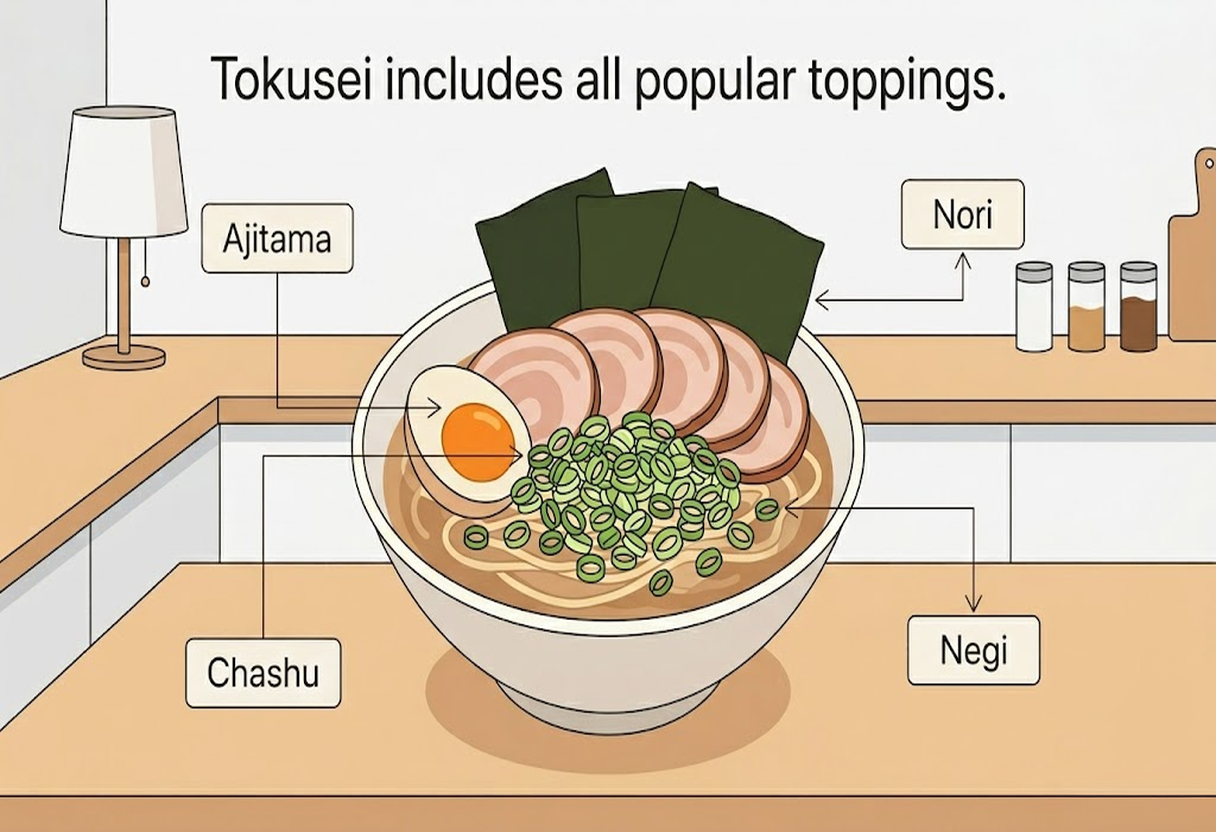
You can place additional orders using the ticket machine buttons or verbally. To help when you're undecided, remember the classic items.
| Topping | Reading | Feature |
|---|---|---|
| 味玉 | Ajitama | When in doubt, go for this! A seasoned soft-boiled egg. Its runny yolk adds depth to the soup. |
| チャーシュー | Chashu | The go-to choice when you want more meat. This is where each shop's unique character shines most. |
| 海苔 | Nori | Dark seaweed that soaks up the soup. Enjoy its unique aroma and texture. |
| ねぎ | Negi | Aromatic vegetable (green onion/scallion). Sometimes you get more than you expect when you order it! |
| 特製 | Tokusei | A deluxe version featuring a collection of popular toppings. The ultimate choice when you can't decide! |

Mei's Note
Dipping Nori (seaweed) in your soup and eating it with rice is a uniquely Japanese luxury! You should definitely try it!
🍚Rice (White Rice): The Ultimate Filling Side Dish
If you want to feel truly full, rice is an indispensable side dish. You can press the "Rice" button on the vending machine, or if it's a counter-order restaurant, "Rice, please" will work.
Free? Paid? It Varies by Restaurant
Rice is a paid menu item costing around 100-200 yen at many restaurants, but it's not uncommon for Iekei (Iekei) ramen shops to offer "free, all-you-can-eat rice." Check for signs or vending machine labels that say "Free Rice" inside the restaurant.
Ways to Enjoy Rice
- Eat alternately with ramen: Taking a bite of ramen, then a bite of rice ("alternate eating") pairs perfectly with rich-flavored soup. It serves as a palate cleanser for rich miso or tonkotsu soups.
- Dip in soup and eat: Adding rice to the leftover soup to make it "ojiya-style" is a secret trick to enjoy the soup until the very end. This is a particularly popular way to eat with tonkotsu and Iekei varieties.
- Nori + Rice: Wrap rice with Nori dipped in the soup. A classic combo for Iekei ramen.

Zack's Note
If you go to an Iekei place with "free rice," there's no reason not to try it. Dip the Nori in the soup, wrap it around the rice, and eat it—you'll get hooked.
🍜Noodle Refill (Kaedama): Extra noodles only
Mainly found with Tonkotsu ramen, there is a system called 'Noodle Refill (Kaedama)' where you can order only extra noodles in a bowl after you've finished eating. It's a profound culture with unique ordering methods and timing, so we will explain the details in a dedicated guide.
🧪Aji-hen: The Joy of Changing Flavors Mid-Meal
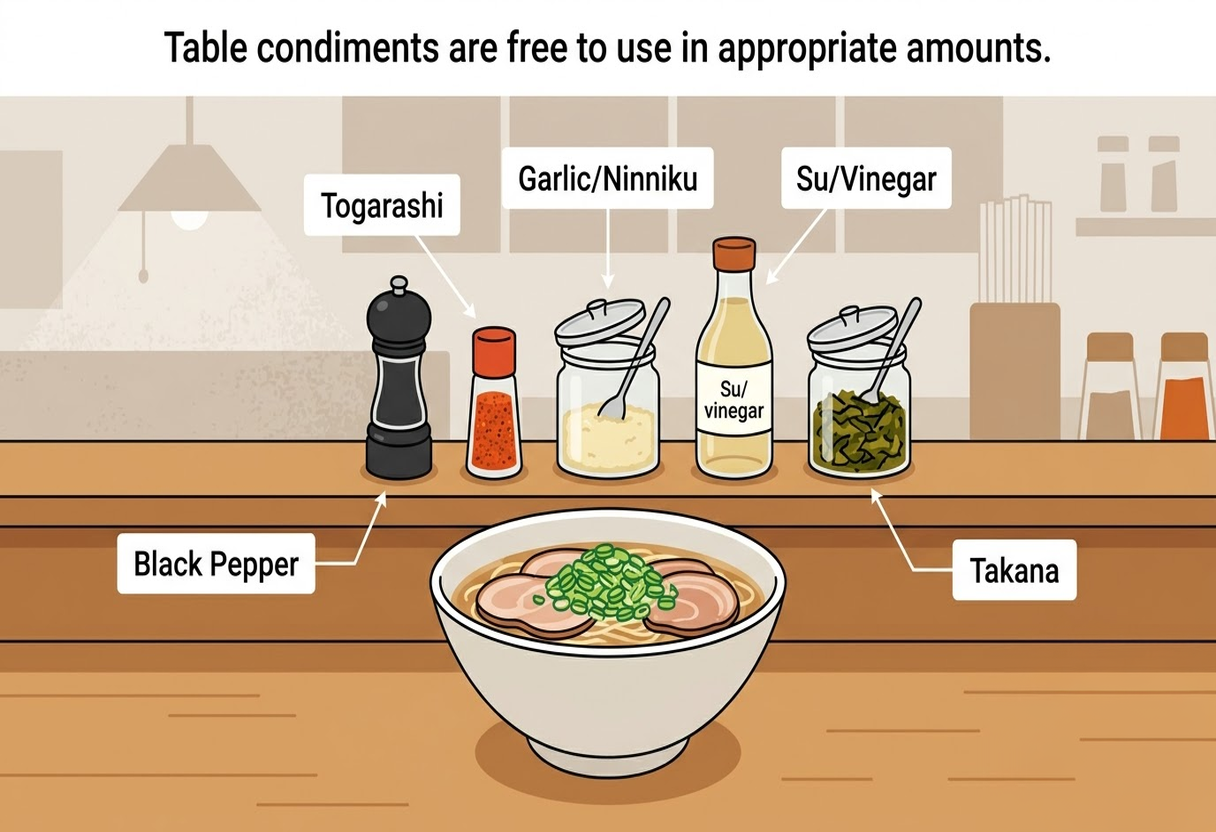
Japanese ramen counters often have various condiments available for free. Adding these partway through your meal to change the flavor is called 'Aji-hen' (flavor change).
First, Eat It As Is
Don't add condiments from the start. The custom for Japanese ramen lovers is to first enjoy a few bites of the bowl as the chef intended.
| Condiment | Reading | Effect |
|---|---|---|
| 黒胡椒 | Black Pepper | Adds a spicy kick and sharpens the flavor. |
| 唐辛子 | Togarashi | Especially good with Miso Ramen. Adds a zesty spiciness. |
| おろしニンニク | Garlic / Ninniku | A classic choice for when you want a strong kick. Be mindful of the amount if you have plans in the afternoon! |
| お酢 | Su / Vinegar | Adding a small amount towards the end makes the soup refreshing and easier to drink to the last drop. |
| 高菜 | Takana | A staple for Tonkotsu ramen. It can be quite spicy, so start with a small amount. |

Dr. Hiro's Analysis
It's most logical to perform Aji-hen after consuming about two-thirds of your bowl. This way, you can preserve the memory of the original flavor while preventing palate fatigue in the latter half, maximizing your satisfaction.
⚠️Strong Condiments: Start Small
In shops for advanced ramen eaters, such as 'Iekei' (Yokohama style) or 'Jirou-kei' (Jirou style), you might find Tobanjan (chili bean paste) or Kizami Shoga (chopped ginger) available for free. These are very strongly flavored, and adding too much will completely overpower the original soup. It's wise to first try a small amount on your spoon before adding it to your bowl.
Zack's Note
Even a small amount of garlic or Tobanjan can have a big impact. Start sparingly. If you like it, you can add more next time.
🛡️Verified by Real Humans
This guide is based on insights gained from countless bowls of ramen where we've added condiments, sometimes succeeding, sometimes failing!
🗺️To the Next Step
Once you master toppings and Aji-hen, you'll discover a different way to enjoy the same shop every time you visit.
"We don't let AI eat ramen. We use AI to draw the coolest map so adventurers worldwide can find the real treasure hidden in Japan's back alleys."
Made in Japan — with local knowledge & AI assistance