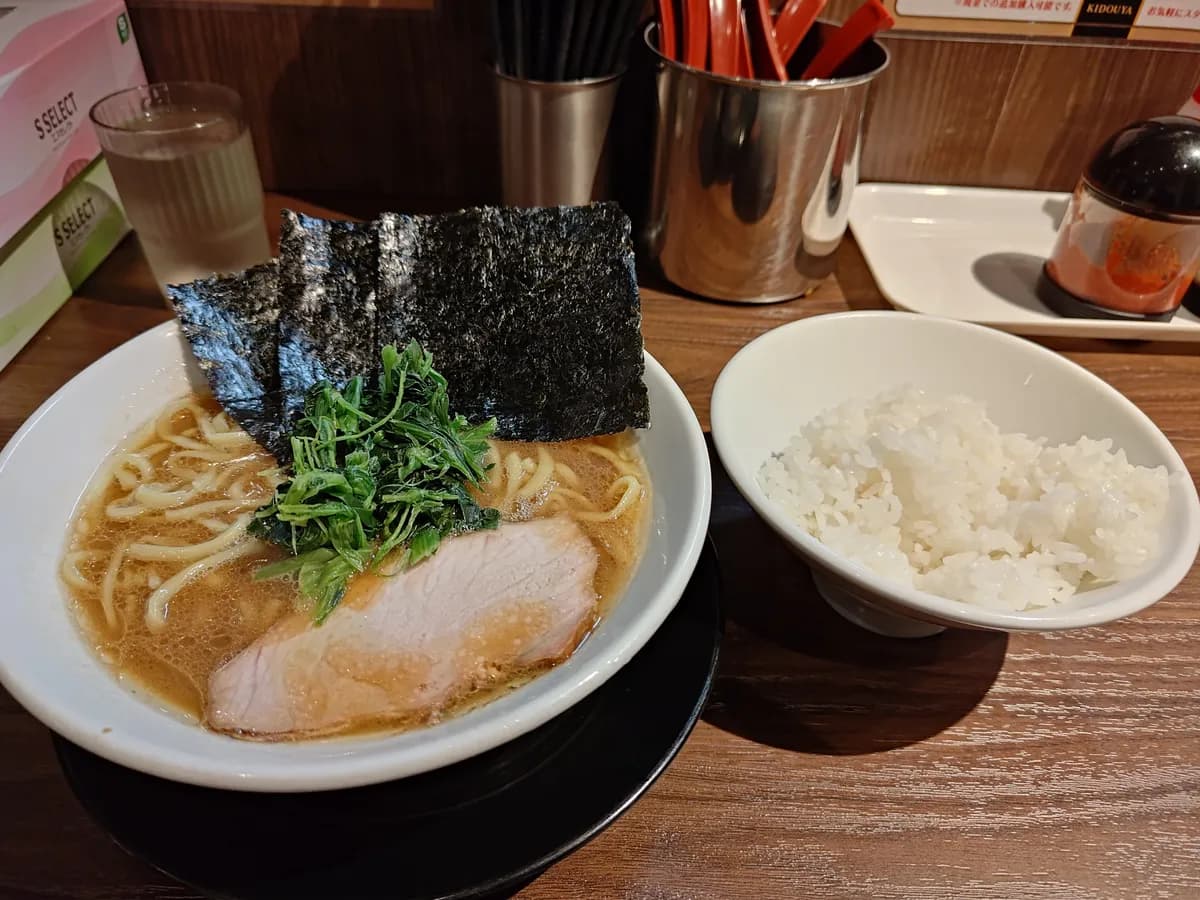
Kidouya Suidobashi
輝道家 水道橋駅前店
Overview
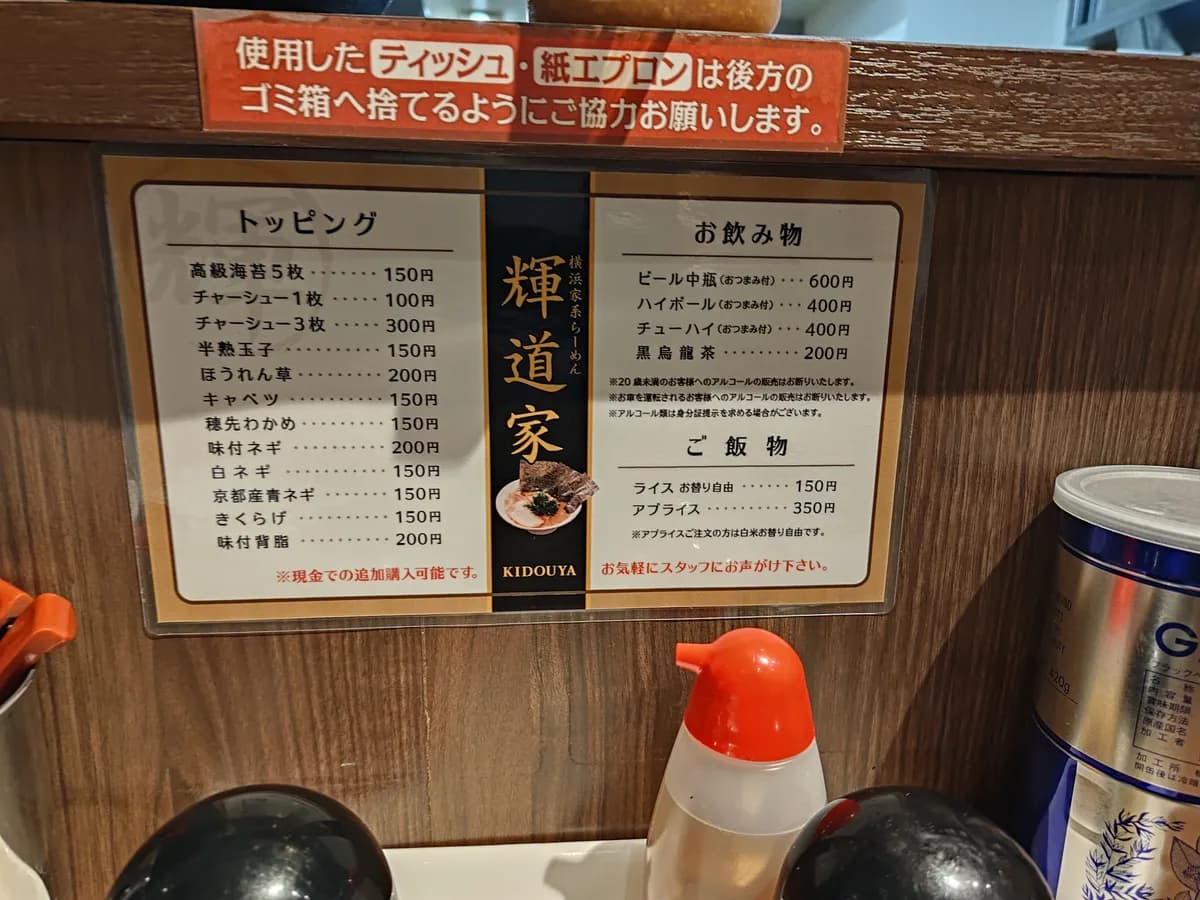
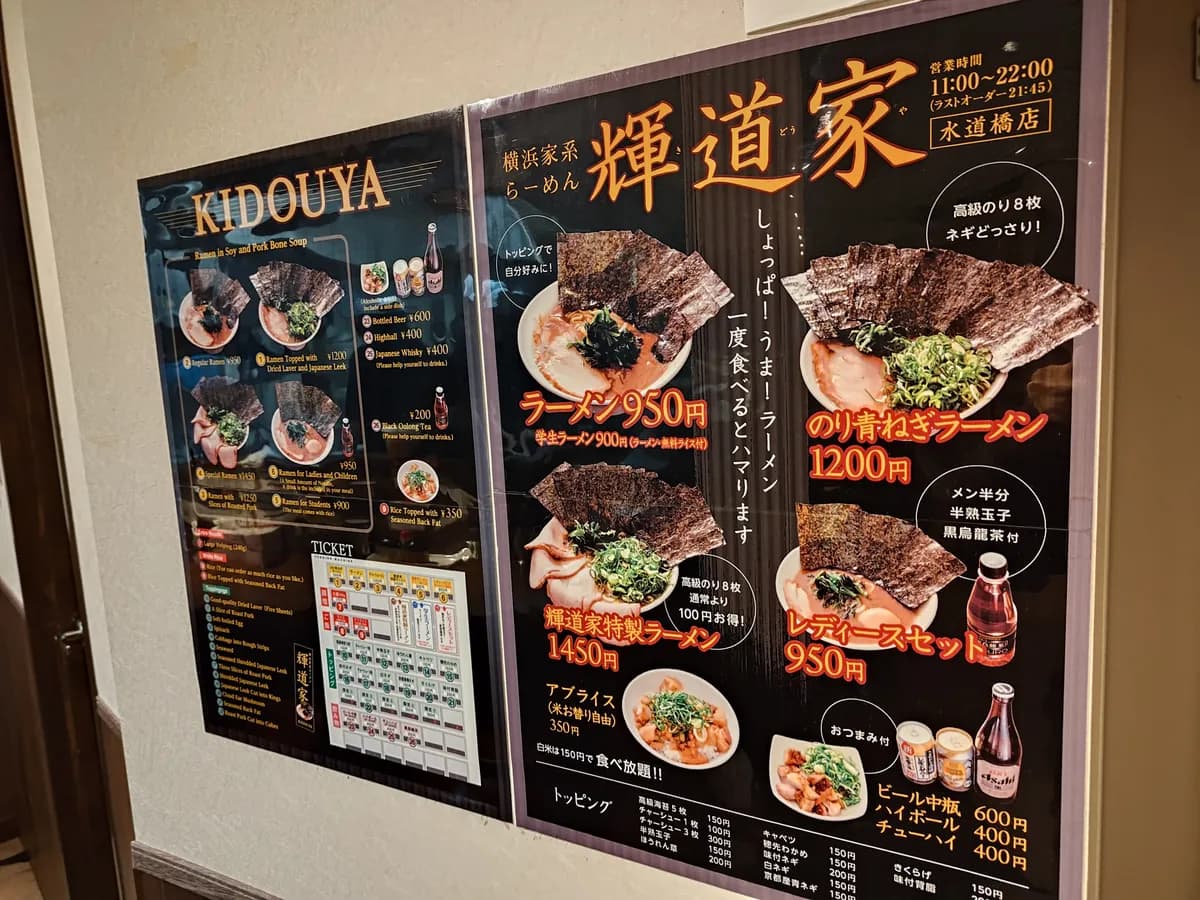
Kidoya Suidobashi Jinbocho is a branch of the "Kidoya" group, located in Tokyo's Jinbocho/Suidobashi area, just a 4-minute walk (307m) from Suidobashi Station. It is a "chokkei (direct-line branch)" of "Musashiya," which inherits the lineage of "Yoshimuraya," the originator of "iekei (Yokohama-style Tonkotsu Shoyu)" ramen. While faithfully preserving the essence of iekei umami, the shop is designed to be easily accessible even for iekei beginners. The soup, a traditional iekei blend of tonkotsu (pork bone) and torigara (chicken bone), has its characteristic animal odor carefully suppressed, resulting in a balanced flavor that even first-time visitors can enjoy without hesitation. The shoyu tare (soy sauce seasoning) has a slightly strong saltiness, maintaining the distinctive iekei punch, but for those who find the default "koime (stronger)" setting too intense, specifying "usume (lighter)" is an effective option. The noodles are the standard medium-thick straight iekei type, following the Kidoya group's house-made noodle approach. The chashu (braised pork belly slices) is smoked, a hallmark of the Kidoya group, and its aromatic flavor harmonizes with the iekei soup, setting it apart from other iekei establishments. The menu features ramen (¥950) as its centerpiece, alongside a standard iekei lineup including ajitama (seasoned soft-boiled egg), chashu-men, rice (¥150/free refills), and various side dishes. A traditional iekei way of eating involves placing nori (dried seaweed) on rice, dipping the nori into the soup to soften it, and then wrapping the rice with it – a style highly recommended at this shop. Utilizing table condiments such as tobanjan (chili bean paste), oroshi ninniku (grated garlic), vinegar, and pepper in the latter half of your meal allows you to experience a full range of iekei ajhen (flavor variations). With its simple 12-counter seat configuration, high patronage from solo diners, and convenient station-side location, this shop is well-regarded as an introductory iekei destination.
How to Order
1Before entering the restaurant
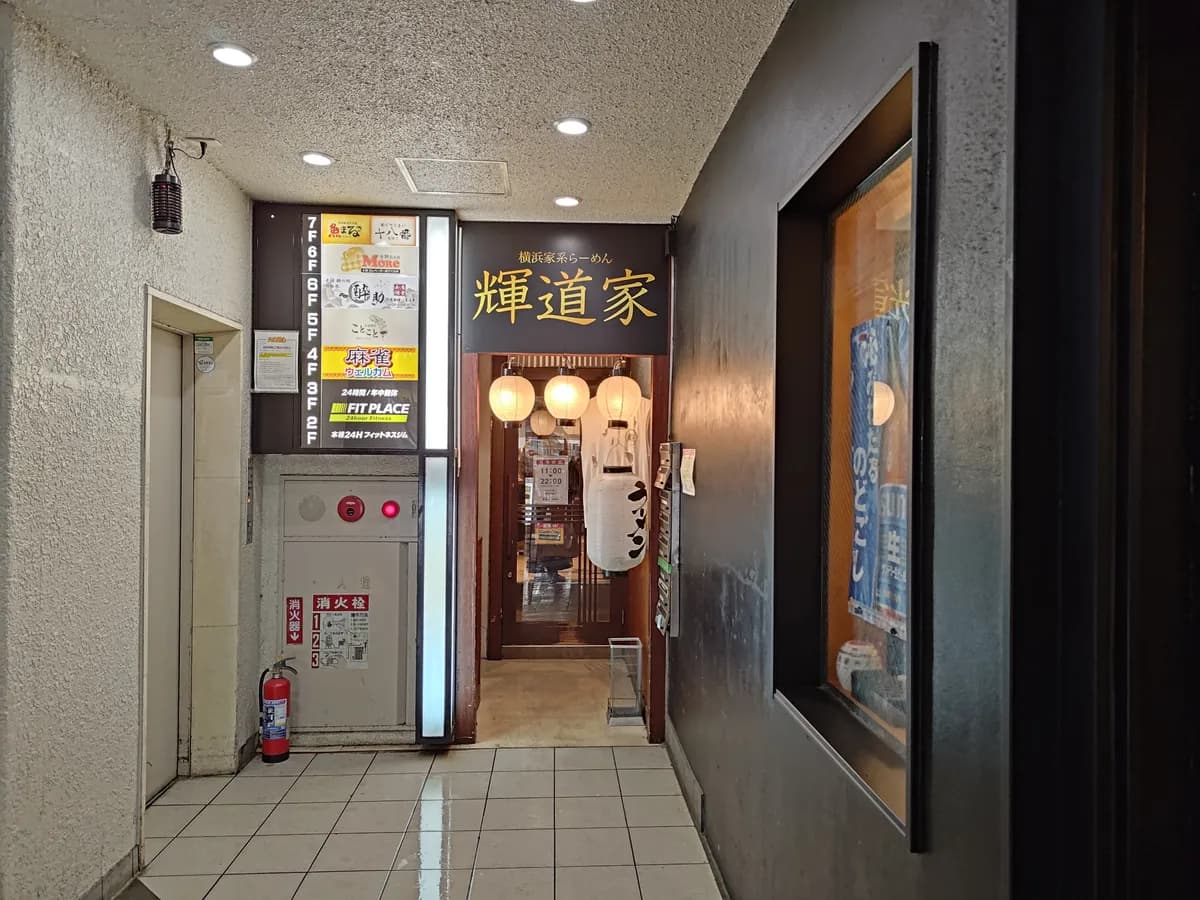
Located a 4-minute walk (307m) from JR Suidobashi Station, or within walking distance from Toei Mita Line Suidobashi Station and Tokyo Metro Hanzomon Line/Toei Mita Line Jinbocho Station. Situated in an office and university area near the station, it gets crowded with students and office workers during weekday lunch and dinner. If there's a queue outside on the sidewalk, join the end of the line. Opening hours are 11:00 AM to 10:00 PM, with no break. It's a small shop with only 12 counter seats.
2Purchasing meal tickets / Ordering
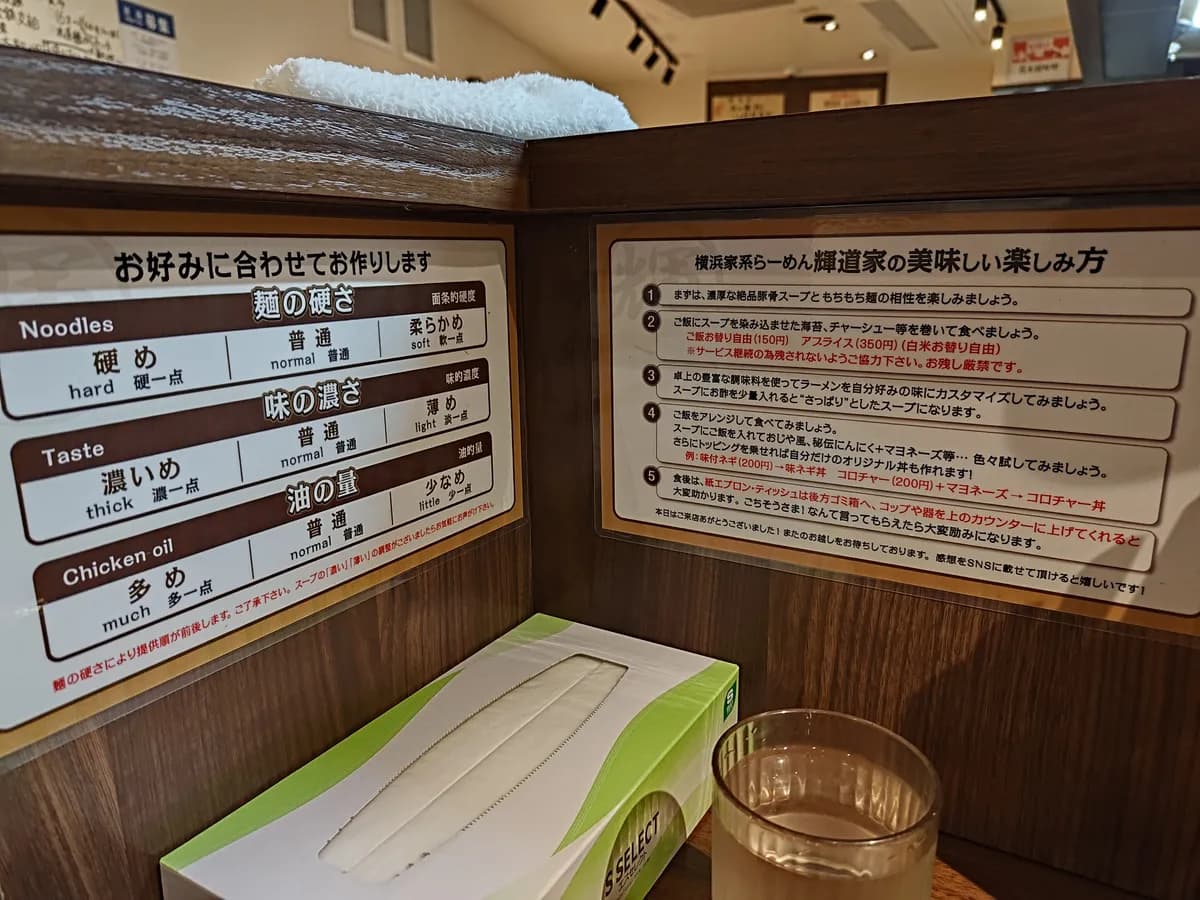
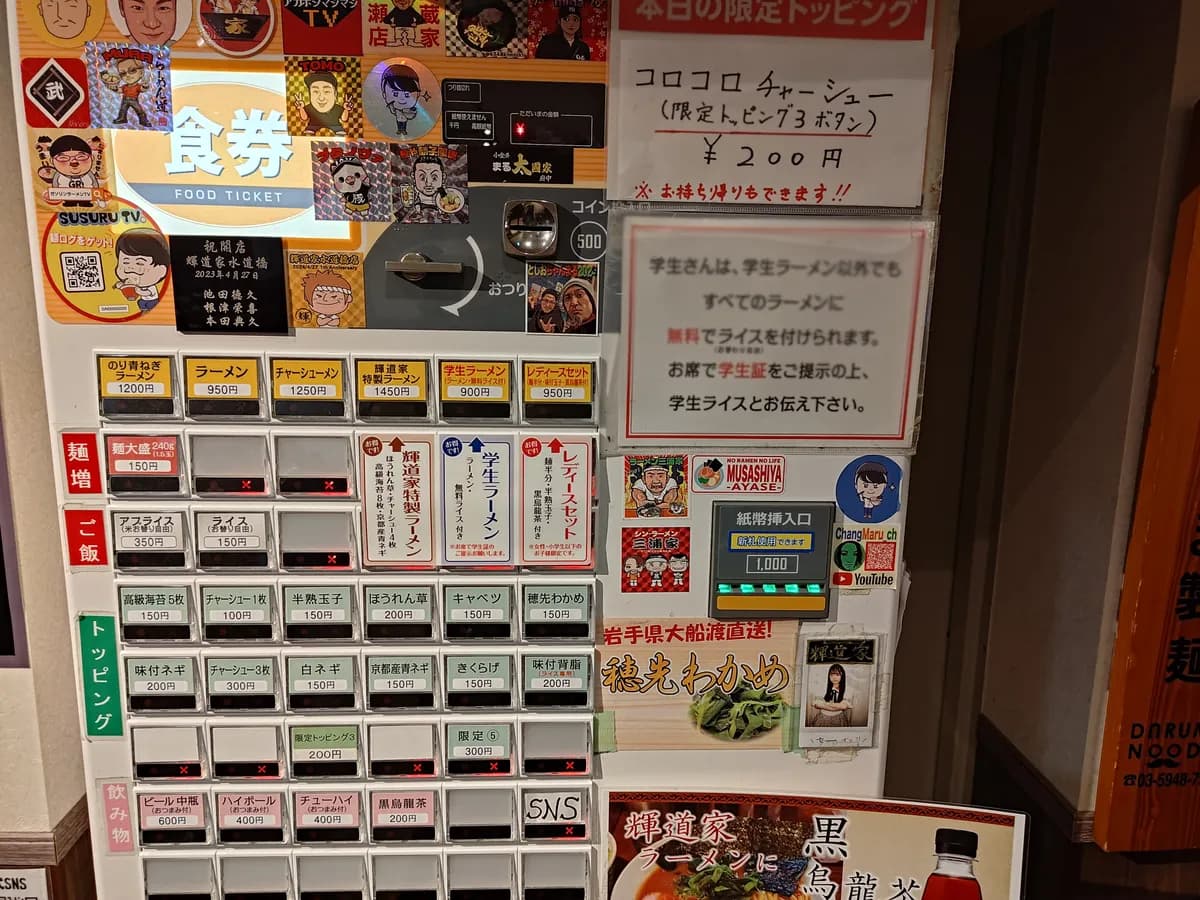
Upon entering, a ticket vending machine is immediately to your right. If there's a line, enter and purchase your meal ticket from the machine when it's your turn. The vending machine displays customization options in English and a preference chart (noodle firmness, flavor richness, oil amount). The classic Iekei combination is the signature Ramen (¥950) with Rice (¥150 / free refills). Payment is cash only; QR code, e-money, and credit cards are not accepted. Buttons with red text are student discount menus, so do not press them unless you can present a student ID.
3Seating and receiving your order
There are only 12 counter seats (no table seats). Once seated at an empty spot, when a staff member comes to collect your meal ticket, you need to make the "Iekei call" by verbally stating your preferences for noodle firmness (kata (firm) / futsu (regular) / yawa (soft)), flavor richness (koime (rich) / futsu (regular) / usume (light)), and oil amount (oome (more oil) / futsu (regular) / sukuname (less oil)). The default is designed to be rich, so for your first visit, "futsu" (regular) or "usume" (light) is recommended. If you're unsure, just say "Futsu de" (meaning "everything regular") and they will accommodate you. Water and paper aprons are self-service.
4Other information
The classic Iekei way to eat is to first enjoy the soup and noodles as they are, then later order rice (free refills), dip the nori (seaweed) into the soup to soften it, and wrap it around the rice. You can also enjoy changing the flavor with table condiments like tobanjan (chili bean paste), grated garlic, vinegar, and pepper, but adding too much can disrupt the original balance of Iekei, so use them sparingly. They do not offer soup-wari (soup dilution) or extra noodles (tsuimen) at the end.
Notice something different? Let us know in a review!
Seating
Voices
横浜家系らーめん 輝道家@水道橋駅前店
— 赤池洋文 (@ekiaka) February 20, 2024
チャーシューメン
武道家出身の店主お店
武道家よりは濃度を抑えた
でも充分濃厚なスープに
直系のような醤油の雑味を加えた感じ
チャーシューもしっかり燻製され
しっとり柔らかくて美味い
麺は新宿だるま製麺
ライスマストの味
若者には堪らんだろうなー pic.twitter.com/35xyezTJgH
【新店】横浜家系らーめん輝道家(きどうや) 水道橋駅前店 ~JR水道橋駅西口から徒歩5秒の場所に4月27日にオープンした家系ラーメンの新店で「ラーメン」+「コロコロチャーシュー」+「白米」~https://t.co/Cq6EFoTEG5 pic.twitter.com/Nr4mUZTB2s
— ラーメン一期一会 (@ramen151e) May 14, 2023
Photos
Reviews
Share your experience
No one has reviewed this shop yet. Only the first reviewer earns the 🏅Pioneer badge.
Business Hours
Crowd Calendar
No crowd data yet
Dietary Notes
No dietary data yet
This information is based on user reports and is not official information from the shop. Cross-contamination in the cooking environment cannot be guaranteed. If you have severe allergies, please confirm directly with the shop.
Animal-free menu available
Reports received (1)
Halal options available
Reports received (1)
Gluten-free menu available
Reports received (1)
No MSG
Reports received (1)
Dietary information is verified through blind consensus. Reports become public when 3 or more independent users agree.
Ingredients & Allergens
Allergen info coming soon
Recommended Articles


Tokyo Station Ramen Guide for Travelers: Where to Eat Before or After the Shinkansen
From Rokurinsha to Station Concourse & Marunouchi. Includes 'Where to Eat During Your Shinkansen Layover' by Ticket Gate (Inside/Outside) and Distance. A Practical Guide So You Don't Get Lost Even with Short Transfers.
Structured by our team / Written by Ren, Dr. Hiro, Sophia, Zack & Mei (AI Editors)
King Seimen in Oji: Tokyo Shirodashi Ramen and Wonton Ordering Guide
A hands-on guide to King Seimen (Kingu Seimen) in Oji, north Tokyo. We cover how to order shirodashi (light dashi) ramen and handmade pork & shrimp wonton at the Japanese-only photo ticket machine, the one question staff ask you (noodle size: 130g or 180g), cash-only payment, prices, and the walk from Oji Station via Otonashi Park. A first-hand visit on June 5, 2026 (Fri).
Structured by our team / Written by Ren, Zack, Sophia & Dr. Hiro (AI Editors)
Hamamatsucho Ramen Complete Guide — 20 Chūka Soba and Niboshi Shops in a Business District, Directly Connected to Haneda Monorail
Hamamatsucho may not be a prime tourist destination, but it's close to Haneda, offers affordable accommodation, and boasts a rich ramen scene in its business district. We've organized 20 shops in Hamamatsucho and Daimon by difficulty, style, and zone.
Structured by our team / Written by Ren, Dr. Hiro, Zack, Sophia & Mei (AI Editors)