King Seimen in Oji: Tokyo Shirodashi Ramen and Wonton Ordering Guide
A hands-on guide to King Seimen (Kingu Seimen) in Oji, north Tokyo. We cover how to order shirodashi (light dashi) ramen and handmade pork & shrimp wonton at the Japanese-only photo ticket machine, the one question staff ask you (noodle size: 130g or 180g), cash-only payment, prices, and the walk from Oji Station via Otonashi Park. A first-hand visit on June 5, 2026 (Fri).


👑King Seimen at a Glance
| Item | Details |
|---|---|
| Difficulty | ★2 Standard (Easy to choose from the photo-ticket machine, but text is Japanese-only. Rated ★2 instead of ★1 because staff verbally confirm noodle size in Japanese when you hand over your ticket.) |
| English Support | Ticket machine and in-store menus are Japanese only (ticket machine has photos; menu explanation cards are on tables). Noodle size can be communicated by saying '130g' or '180g' or pointing to numbers. |
| Payment | Cash only (credit cards, e-money, QR code payments not accepted). The ticket machine accepts high-denomination bills. |
| Wait Time | Small shop with counter seating, relatively fast turnover. During our visit (weekday 5:50 PM), we were seated immediately and served in about 7 minutes. |
| Recommended For | Those who prefer delicate, light, Japanese-style dashi ramen / Those who want to enjoy handmade wontons / Those looking for a local ramen experience slightly off the main tourist route. |
| Things to Note | The shop is small and not suitable for large suitcases / The path from Oji Station involves walking through Otonashi Shinsui Park and climbing stairs over a pedestrian bridge (can be slippery in rain). |
| First-Time Order | "Chotto-zutsu Shirodashi Ramen" (a little of each topping). This includes a bit of each topping, allowing you to enjoy the delicate shirodashi flavor and handmade wontons all at once. The standard noodle size of 180g is recommended (130g is sufficient for lighter eaters). |
A Local Bowl Worth the Detour
King Seimen is a neighborhood ramen shop that might appeal to those who have already explored the ramen scene in popular tourist areas like Asakusa, Shibuya, and Shinjuku, and are looking for their next step. Oji is an area off the main tourist route, but Otonashi Shinsui Park, right by the station, is a pleasant green space perfect for a stroll before or after your meal. While not a shop built specifically for tourist convenience, it's easy to enjoy with a little preparation on how to order and eat.
You can find the latest operating hours, map, payment information, and difficulty rating for travelers on the shop's dedicated page. It's always a good idea to check for any changes to their regular holidays or hours before your visit.
If you visit, we'd love to hear your review!
👑What is King Seimen (Oji, Tokyo)?
King Seimen is not heavily advertised to tourists, but it's a shop highly regarded among Japanese ramen fans. It has also been selected for Tabelog's 'Ramen Hyakumeiten (Tokyo Top-100 ramen list)', making it a worthwhile reason to make the short detour to Oji.
Located in Oji, Kita-ku, Tokyo, King Seimen's signature dish is its 'shirodashi ramen'. This ramen features a delicate, clear broth (shirodashi) infused with traditional Japanese ingredients like niboshi (dried sardines), konbu (kelp), and katsuobushi (bonito flakes), akin to a refined soba broth. In contrast to rich, heavy ramen styles, this type emphasizes the umami and elegance of the dashi, making it a beloved local favorite in the residential Oji area.
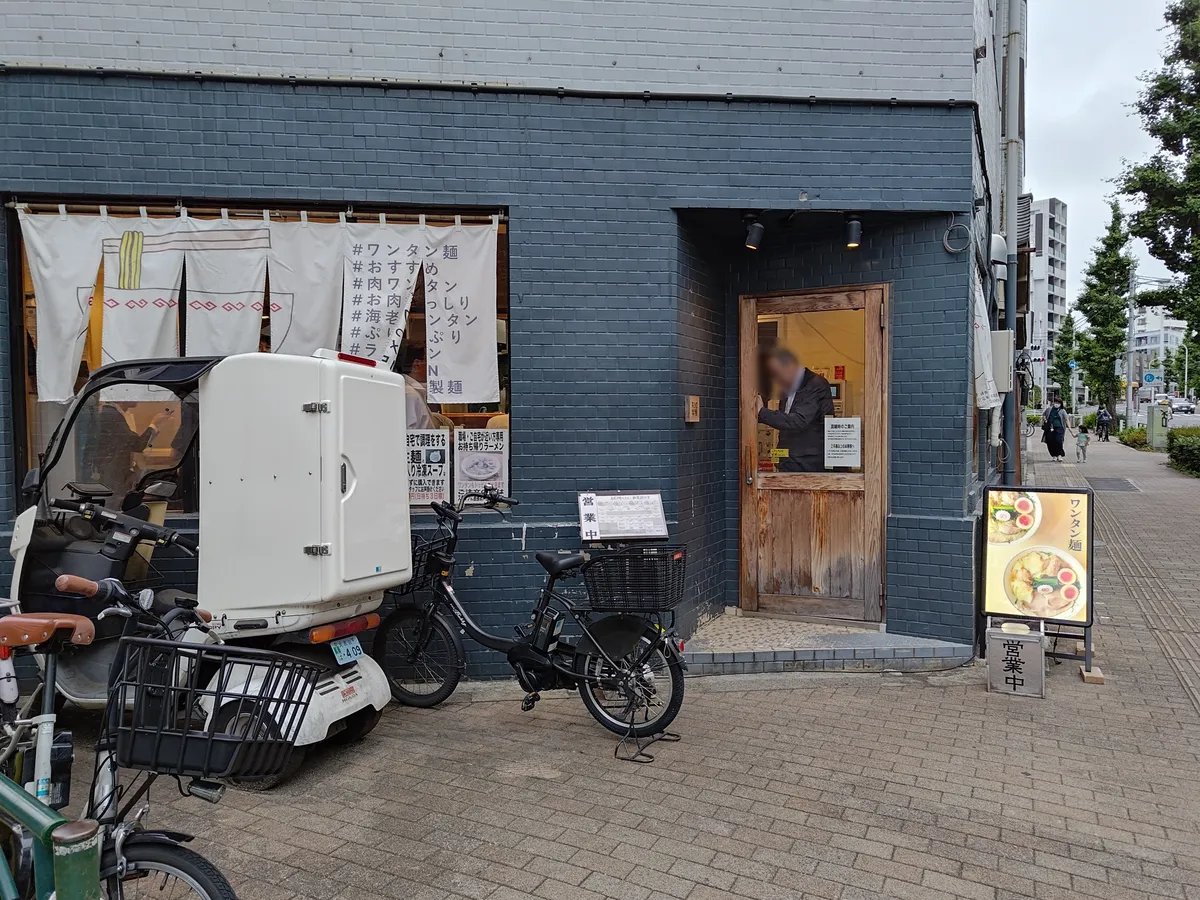
As the name 'King Seimen' (King Noodle-making) suggests, the shop is dedicated to its homemade noodles. Their shirodashi ramen is paired with chewy, medium-thick wavy noodles (chijire-men) that perfectly complement the broth. Besides shirodashi ramen, they also offer 'sansho ramen' (featuring the fragrant, aromatic Japanese pepper rather than numbing spice), tonkotsu-gyokai (pork bone and seafood) tsukemen (dipping noodles), and tantan mazesoba (soupless tantan noodles). They also put great effort into their handmade wontons (pork and shrimp). The shop is also known to be part of the same group as popular ramen shops like 'Raamen Koike' and 'Chukasoba Nishino'.
While Tokyo boasts many ramen shops serving clear, Japanese-style dashi broths, King Seimen distinguishes itself with its combination of delicate shirodashi soup, meticulously handmade wontons, and homemade wavy noodles. Rather than relying on a strong, impactful broth, this dish is designed for you to savor the subtle nuances of the dashi and each individual topping.

Ren
Oji (pronounced oh-jee) is an area on the north side of Tokyo, with a bit of a retro, 'shitamachi' feel. It's a little off the main tourist routes, but Otonashi Shinsui Park, right by the station, is a lovely green space, especially beautiful during cherry blossom season or when the new leaves emerge. King Seimen is located past that park and over a pedestrian bridge. It's a great spot to visit if you've had your fill of ramen in the main tourist areas and want to experience Tokyo's everyday streetscapes.
🎯Who King Seimen is For, and What to Note
This Shop is Recommended For
- Those who enjoy delicate, light, Japanese-style dashi ramen.
- Those who want to savor handmade wontons (pork and shrimp).
- Those looking to make a short detour for a local ramen experience in an area slightly off the main tourist spots.
- Those who want to enjoy ramen as part of a stroll through Oji's Otonashi Shinsui Park.
- Those who want to casually enjoy ramen alone.
- Those who prefer to know how to order and eat before visiting.
Things to Note (Situational)
- If you have large suitcases (the shop is small, and storage space is difficult to manage).
- If English menus or ticket machine prompts are essential (all text is Japanese only; the ticket machine has photos, and there are Japanese menu explanation cards on the tables).
- If you're in the mood for rich, heavy ramen or a Jiro-kei style (delicate shirodashi ramen is the star here).
- If you prioritize direct, easy access from the station (the route involves walking through a park and climbing stairs over a pedestrian bridge, which can be slippery in the rain).
- If you want to avoid being affected by changes in operating hours or holidays (checking the latest information before visiting is recommended).
🚶How to Get There: Through Otonashi Shinsui Park & Over the Bridge
The closest station is Oji Station, served by the JR Keihin-Tohoku Line, Tokyo Metro Namboku Line, and Toden Arakawa Line (tram). Exit the North Exit and turn left, walking through Otonashi Shinsui Park (Kita City Otonashi Shinsui Park) in front of the station. The park features a pleasant stone-paved walkway with lush greenery.
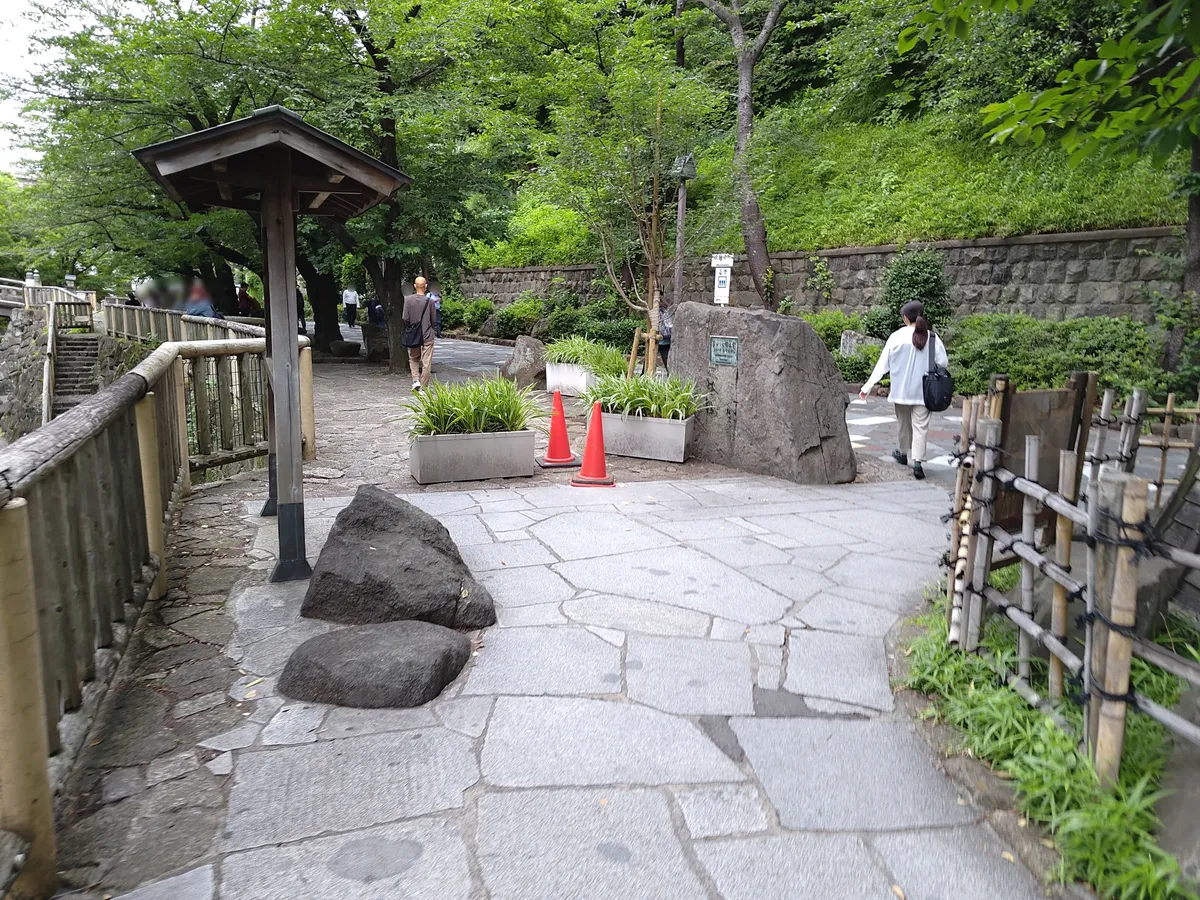
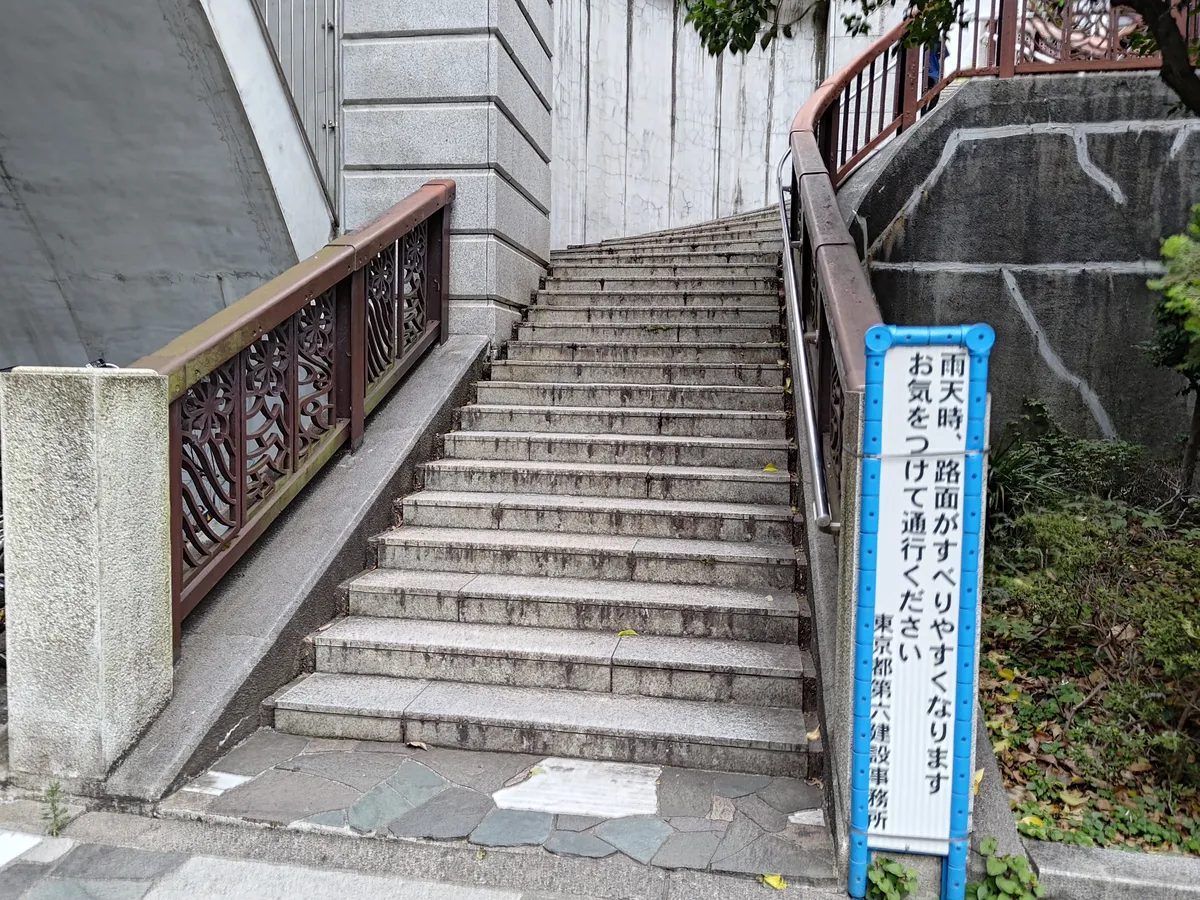
Partway through the park, you'll find a pedestrian bridge. Climb the stairs to reach the main street. Then, walk straight north for about 3-4 minutes, and King Seimen will be on your left. The total time from Oji Station's North Exit, walking at a relaxed pace, is approximately 7 minutes.
Travel Light
Due to the route involving a park walkway and pedestrian bridge stairs, it can be a challenging walk with large suitcases or strollers. On rainy days, the stairs and stone pavement can become slippery. We recommend wearing comfortable shoes and leaving any heavy luggage in a coin locker at Oji Station, traveling light to the shop.
📝What to Know Before Ordering at King Seimen
The ordering process at King Seimen involves a few steps: 'Buy a ticket from the ticket machine → Hand the ticket to the staff → Staff will ask about noodle size → Take your seat.' The only part that might cause slight confusion for foreign tourists is the noodle size question when you hand over your ticket. Since the question is simple, you can feel confident if you've decided on the following points beforehand:
- 【Menu】Start with the signature 'shirodashi ramen'. The 'Chotto-zutsu Shirodashi Ramen' (a little of each topping) allows you to enjoy the shirodashi flavor along with wontons, ajitama, and chashu all at once.
- 【Noodle Size】You can choose between 130g or 180g for free (a larger portion of 230g costs +¥120). 180g is generally a good amount, while 130g is sufficient for lighter eaters.
- 【Flavor Enhancers】In addition to the vinegar, pepper, and chili flakes on the table, the shop recommends 'Over Drive' (a spicy blend of 5 seasonings) specifically for the shirodashi ramen.
🎫How to Order: Ticket Machine & Queue at King Seimen
The ticket machine (券売機, `ticket vending machine`) is a touch-panel type located near the entrance. While all text is in Japanese, each button has a photo of the dish, which helps immensely with selection. We rate the difficulty as ★2 rather than ★1, despite the photo-equipped machine, because the language is Japanese-only, and staff will verbally confirm your noodle size when you hand over your ticket. However, the question is simply '130g or 180g?', so there's no need to be overly concerned.
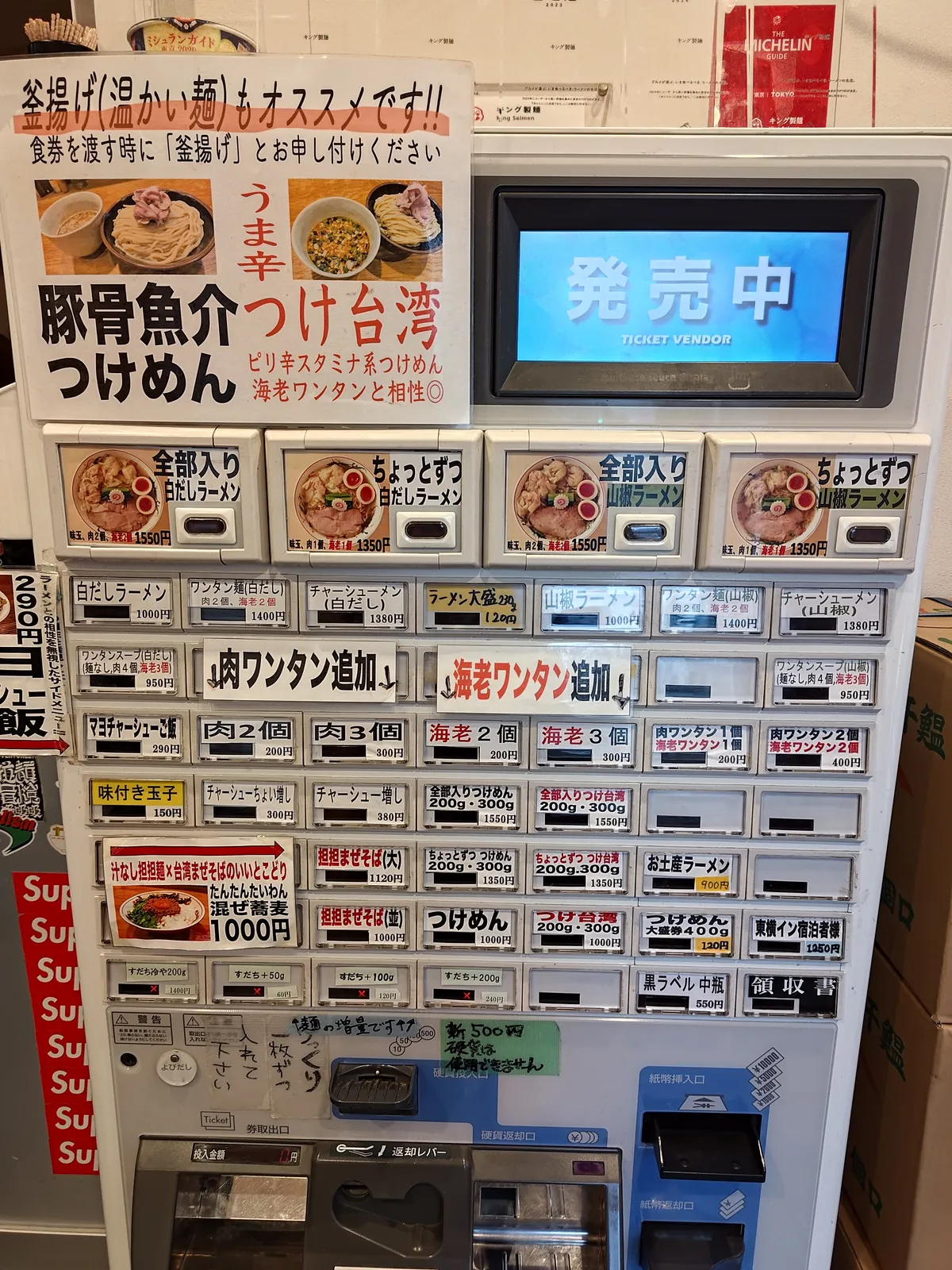
King Seimen Menu & Prices (As of June 5, 2026 Visit)
| Menu Item | Romaji | Price | Description |
|---|---|---|---|
| Shirodashi Ramen | Shirodashi Ramen | ¥1,000 | Signature dish. Delicate Japanese-style clear broth (shirodashi) with niboshi, konbu, and katsuobushi. |
| Chotto-zutsu Shirodashi Ramen | Chotto-zutsu Shirodashi | ¥1,350 | Includes one ajitama, one pork wonton, and one shrimp wonton. Recommended for first-timers. |
| Zenbu-iri Shirodashi Ramen | Zenbu-iri Shirodashi | ¥1,550 | All toppings: ajitama, 2 pork wontons, 2 shrimp wontons. |
| Wonton-men (Shirodashi) | Wantan-men | ¥1,400 | Includes 2 pork wontons and 2 shrimp wontons. |
| Chashu-men (Shirodashi) | Chashu-men | ¥1,380 | Extra chashu (braised pork). |
| Sansho Ramen | Sansho Ramen | ¥1,000 | Features the fragrant, aromatic sansho (Japanese pepper), not numbing spice. |
| Chotto-zutsu Sansho Ramen | Chotto-zutsu Sansho | ¥1,350 | Includes one ajitama, one pork wonton, and one shrimp wonton. |
| Zenbu-iri Sansho Ramen | Zenbu-iri Sansho | ¥1,550 | All toppings, with extra of each. |
| Wonton-men (Sansho) | Wantan-men (Sansho) | ¥1,400 | Includes 2 pork wontons and 2 shrimp wontons. |
| Chashu-men (Sansho) | Chashu-men (Sansho) | ¥1,380 | Extra chashu (braised pork). |
| Large Noodles (230g) | Omori | +¥120 | Increase noodles to 230g. 130g/180g can be chosen for free. |
| Wonton Soup (No Noodles) | Wantan Soup | ¥950 | No noodles; includes 4 pork wontons, 3 shrimp wontons (shirodashi or sansho broth). |
Prices as of June 5, 2026 Visit
The prices listed above were displayed on the ticket machine during our visit in June 5, 2026. Prices may change, so please confirm the latest amounts at the shop's ticket machine. Other menu items include Tonkotsu-Gyokai Tsukemen (200g/300g noodles, kamaage option available), Tantan Mazesoba, and side dishes like Mayo Chashu Gohan (rice with chashu and mayonnaise).
How to Queue During Busy Times at King Seimen
The interior is compact, primarily featuring counter seating. During busy periods, please follow the queuing instructions posted at the entrance. Key points are to 'buy your ticket only after the previous customer has been seated' and for 'groups of two or more, please enter and queue only when all members are present'.
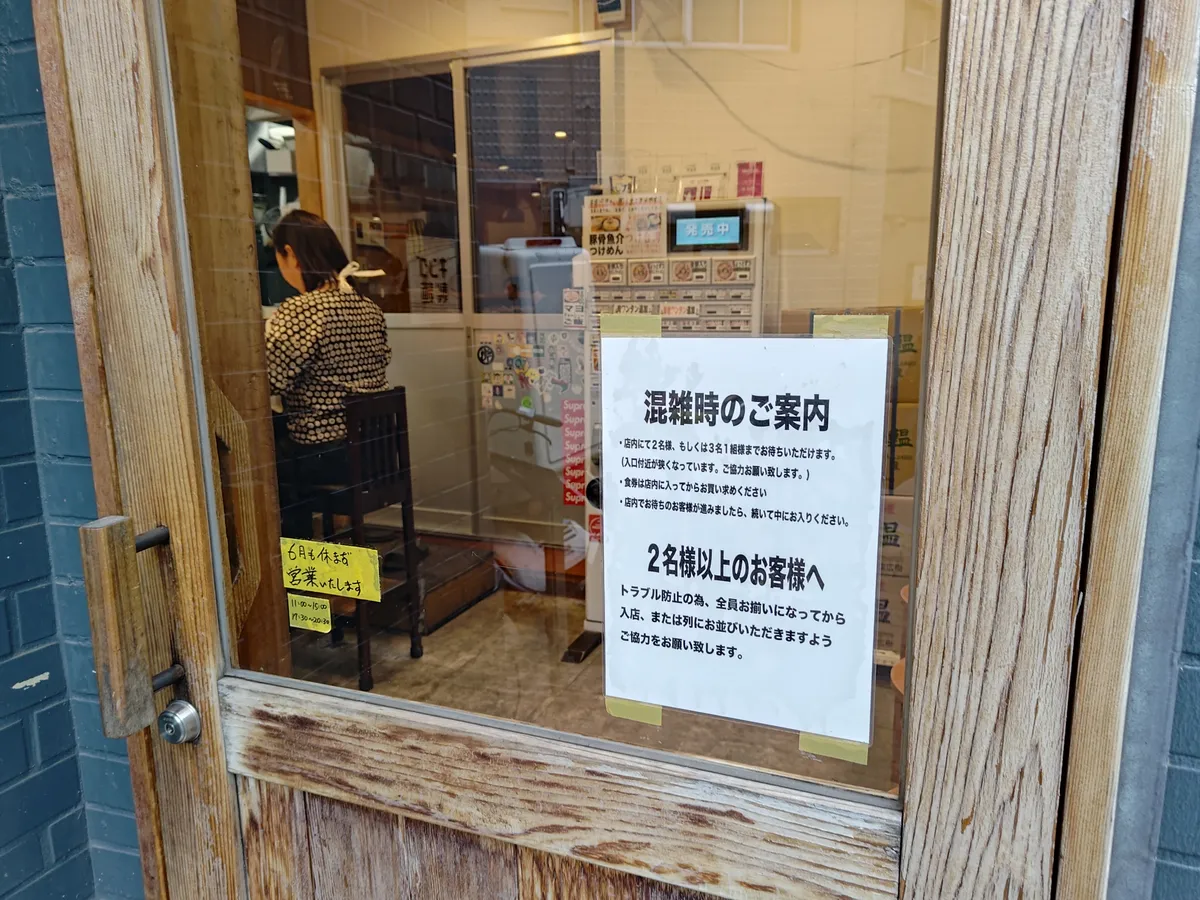
- During busy times, purchase your ticket from the ticket machine inside the shop only after the previous customer has been seated (if it's not busy, you can purchase immediately).
- Hand your ticket to the staff. At this time, you will be asked about your noodle size (130g or 180g), so please answer.
- Take the seat you are guided to. Turnover is relatively fast; during our visit, the ramen was served about 7 minutes after we were seated.
- For groups of two or more, please enter and queue only when all members are present (avoid trying to secure seats in advance).

Sophia
The ticket machine has photos, so you can simply select the picture of the ramen you want. The only question you'll likely be asked is about noodle size, and you can simply say '130g' or '180g' (or point to the numbers) to communicate your choice. 180g is usually a good portion, but 130g is fine for lighter eaters. There are also Japanese explanation cards on the counter, so you can browse those while you wait.
📖The Menu: Shirodashi, Sansho & Handmade Wonton at King Seimen
On the counter, you'll find Japanese menu explanation cards detailing the shop's commitment to quality. Knowing the concept behind each dish can help you choose.
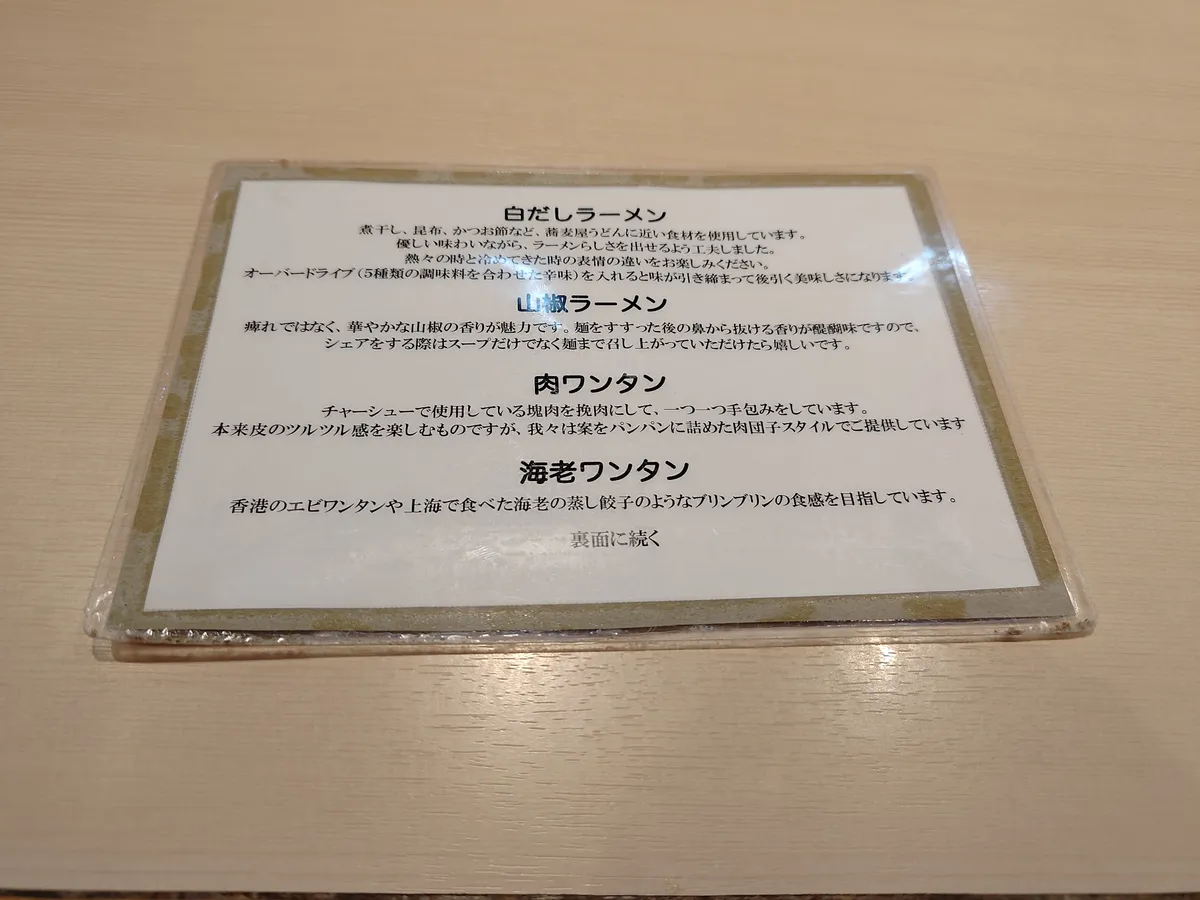
- 【Shirodashi Ramen】A gentle, refined dish using niboshi, konbu, katsuobushi, and other ingredients, akin to a soba broth but with a distinct ramen character. You can enjoy the subtle differences in its flavor profile when it's piping hot versus when it has cooled slightly.
- 【Sansho Ramen】The appeal lies in the fragrant, aromatic sansho (Japanese pepper), not its numbing quality. Its characteristic is the aroma that wafts through your nose after slurping the noodles. If you're sharing, it's recommended to savor not just the soup but the noodles as well.
- 【Pork Wonton】Each one is meticulously handmade, using minced blocks of meat typically used for chashu. They are like flavorful meatballs with a substantial filling, offering both a smooth wrapper and a satisfying texture.
- 【Shrimp Wonton】Aims for a plump, bouncy texture, reminiscent of Hong Kong-style shrimp wontons or steamed shrimp dumplings found in Shanghai.
🍜Tasting Notes: King Seimen's Shirodashi Ramen & Wonton (Chotto-zutsu)
For our visit, we ordered the 'Chotto-zutsu Shirodashi Ramen'. This option, one step below the 'Zenbu-iri' (all toppings), includes a little of each topping, allowing you to enjoy the shirodashi flavor and each individual ingredient all at once. We chose the 180g noodle portion.
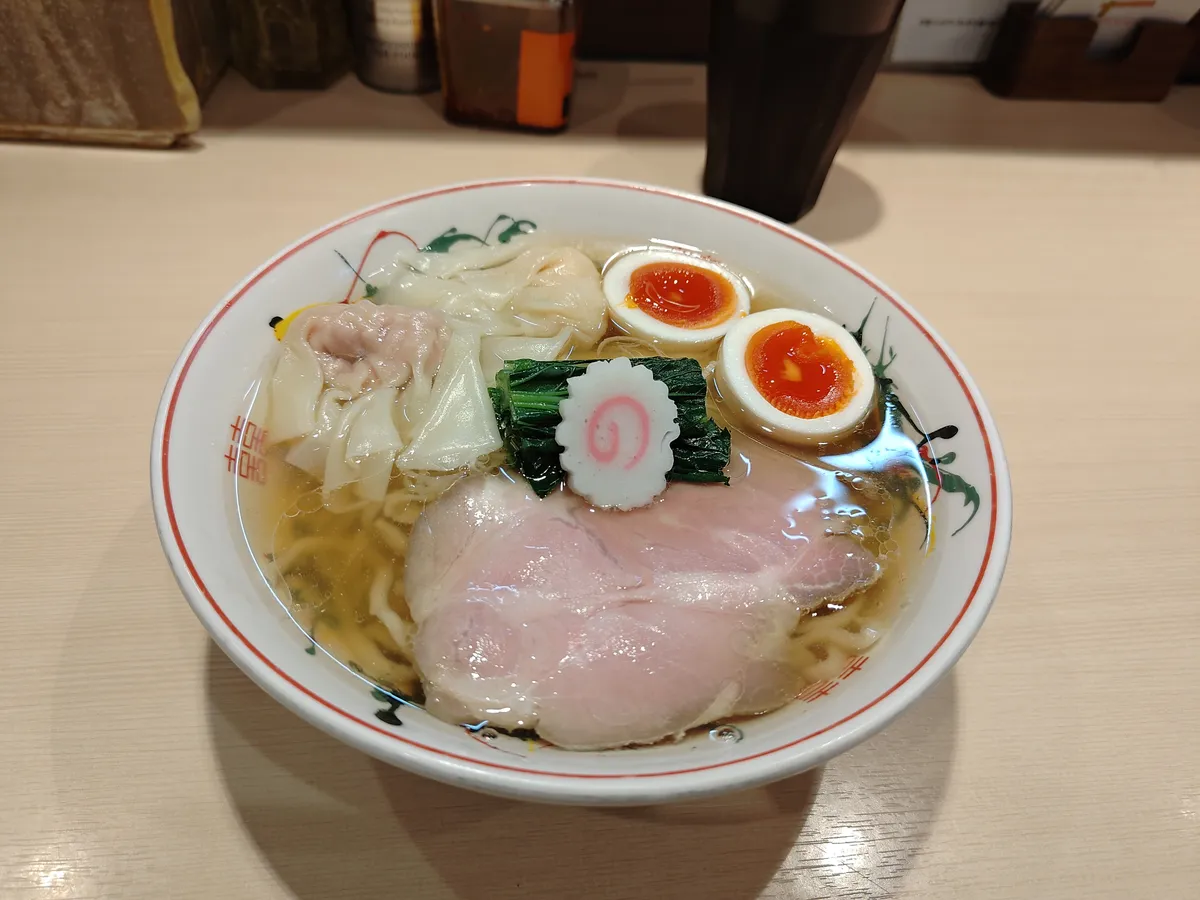
The Broth: Delicate Shirodashi, a Clean & Drinkable Japanese Clear Broth
The broth is a light, shirodashi base, with seafood dashi taking center stage. It's delicate and clean, making it incredibly drinkable without any cloying richness. While its color is light and clear like shio ramen, tasting it reveals a subtle soy sauce flavor and a crispness. It's impressively not just thin, but deeply imbued with the umami of the dashi.
The Noodles: Chewy Wavy Noodles (Chijire-men) That Embrace the Broth
The homemade wavy noodles (chijire-men) have a chewy texture and a good bite, making them satisfying. Their ripples expertly pick up the broth, allowing for a harmonious experience with the delicate shirodashi. True to a 'seimenjo-kei' (noodle-making shop) style, the deliciousness of the noodles themselves truly shines.
The Wontons: Delicate, Silky Wrappers with Plump Shrimp & Flavorful Pork
The wontons feature delicate, silky wrappers so tender they almost slip off your chopsticks. The shrimp wontons are generously filled with plump shrimp, offering exceptional flavor, while the pork wontons have a robust, meaty punch. With two distinct types, you can enjoy comparing their tastes.
Ajitama & Chashu: Soft-Boiled & Juicy Toppings
The ajitama (seasoned soft-boiled egg) is perfectly half-boiled, so jiggly it trembles when you pick it up with chopsticks. The yolk has absorbed plenty of dashi, making it incredibly flavorful. The chashu (braised pork) comes in a large, juicy slice, providing a satisfying presence even alongside the delicate broth.
🥢How to Eat: Table Condiments & Leaving Etiquette
The shop interior is not particularly spacious, featuring a U-shaped counter that offers a view into the kitchen. It's a clean and calm ramen shop with J-Pop music playing softly. Water is available from a self-service dispenser, and paper aprons are also self-service along the wall. There are hooks under the counter for small bags.
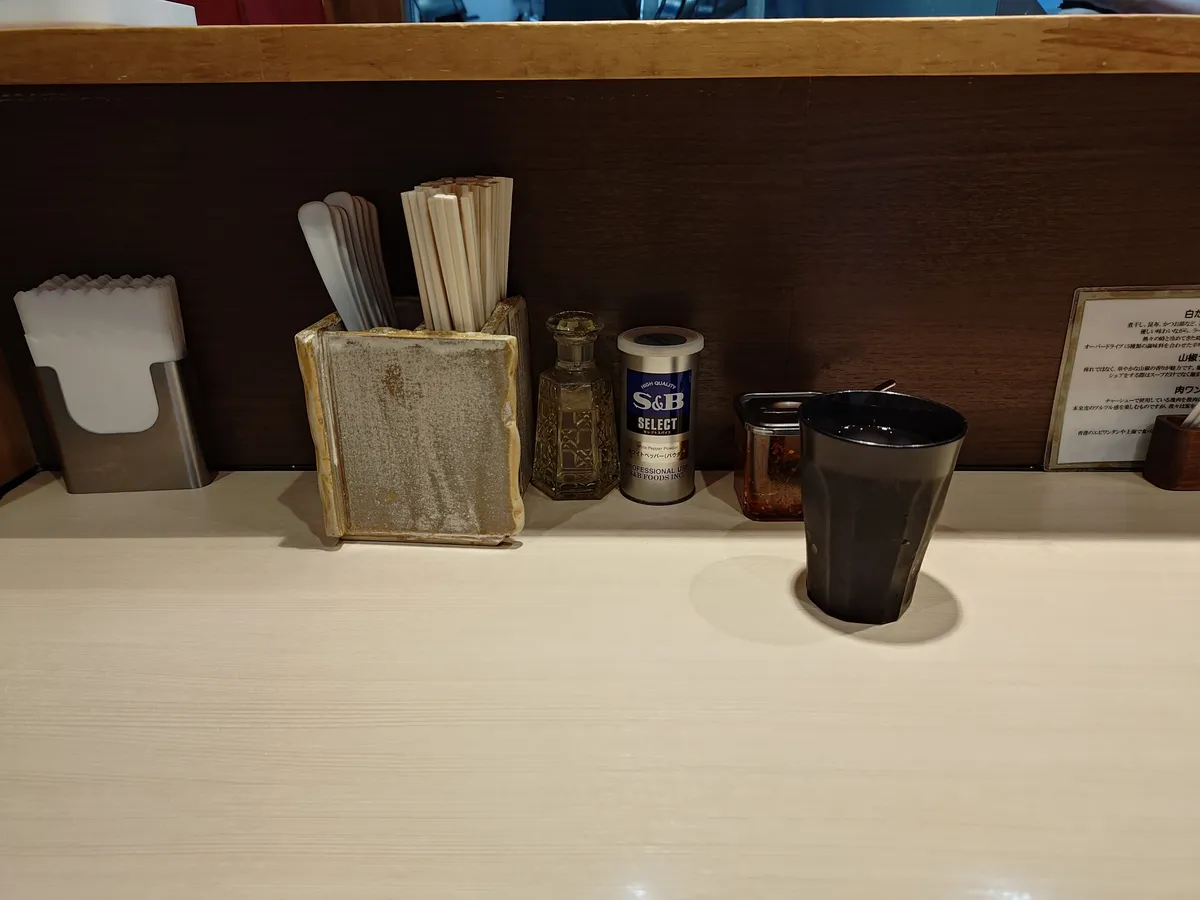
- First, savor the delicate shirodashi broth and toppings as they are (it's recommended to enjoy the dashi flavor without adding anything at first).
- Later, if you add a little table pepper or the shop's recommended 'Over Drive' (a spicy blend of 5 seasonings), the delicate soup will transform into a distinctly spicy profile.
- After finishing your meal, it's common practice to place your bowl on the upper shelf of the counter (not a strict rule, but a natural gesture).
- There are instructions to discard toothpicks, paper napkins, and paper aprons in the trash can behind you.

Dr. Hiro
Shirodashi is a clear broth made from Japanese dashi ingredients like niboshi, konbu, and katsuobushi. It's similar to the dashi used in Japanese soba and udon, offering a delicate quality that's a completely different genre from rich tonkotsu ramen. For the first few sips, taste the clean and drinkable broth as it is to appreciate its distinct dashi character. Then, partway through, you can add 'Over Drive' or pepper to sharpen the flavor – this way, you can enjoy two different expressions from one bowl, which is especially recommended for shirodashi ramen.
🔄What if King Seimen is Closed? (Plan B)
As a small, independently run shop, King Seimen may have irregular closures or sell out of ingredients early. Fortunately, Oji is a well-connected station served by the JR Keihin-Tohoku Line, Tokyo Metro Namboku Line, and Toden Arakawa Line, so if it happens to be closed, you can easily switch to another area. To avoid a wasted trip, it's wise to keep the following backup plans in mind:
- 【First, Check】Before visiting, check their operating hours, regular holidays, any temporary closures (on their official Instagram), and the possibility of them selling out early.
- 【Jujo / Higashi-Jujo Area】Head to 'Sansanto', another extremely popular local shop also off the main tourist route. However, Sansanto has its own specific conditions, such as short operating hours and cash-only payment, so check beforehand (see link below).
- 【Ikebukuro Area】Just a few minutes away by Tokyo Metro Namboku Line or JR. This area is a ramen battleground with many options, making it a reliable backup if you definitely want to eat ramen (see area guide below).
- 【Akabane Area】Two stations away on the JR Keihin-Tohoku Line, this 'shitamachi' (old Tokyo neighborhood) offers many casual izakaya and ramen shops, suitable as an evening alternative.
- 【Timing】If you want to ensure you get noodles and soup before they sell out, aim for an earlier time, slightly outside of peak hours.
🌿Enjoying Oji's Neighborhood Along with King Seimen
King Seimen's (Kingu Seimen) value is enhanced when combined with a stroll through the local Oji neighborhood, rather than visiting it as a standalone 'special trip'. It's an area where it's best not to overpack your sightseeing, but rather to enjoy it with a casual stop as part of a walk.
- 【Otonashi Shinsui Park】A waterside park located right outside Oji Station's North Exit. Its stone-paved promenade is pleasant for walking, especially recommended during cherry blossom and fresh green leaf seasons. It's the natural path to and from the shop.
- 【Asukayama Park】Known for its cherry blossoms, this park is very close to Oji Station. Perfect for a walk before or after your meal.
- 【Local Oji Streetscapes】Experience the atmosphere of everyday Tokyo, not a typical tourist destination. After your meal, taking a short one-stop tram ride on the retro Toden Arakawa Line can also be enjoyable.

Zack
For a good plan, start with a light stroll through Otonashi Shinsui Park or Asukayama Park, then head to King Seimen during off-peak hours. Since the shirodashi broth is so delicate, the soup will be especially satisfying after working up an appetite. Afterwards, you could even round out your local day with a ride on the retro Toden Arakawa Line tram.
❓Frequently Asked Questions (FAQ) about King Seimen
QAre English menus available at King Seimen?▼
The ticket machine and in-store menus are Japanese only. However, the ticket machine is a touch-panel with photos of the dishes, and there are Japanese menu explanation cards on the counter. You can order by selecting a photo and communicating your noodle size (130g or 180g) with numbers.
QIs payment cash-only at King Seimen?▼
Payment is cash only. Credit cards, e-money (like Suica), and QR code payments (like PayPay) are not accepted. The ticket machine accepts high-denomination bills, so you don't need to worry much about exact change, but be sure to bring cash for your visit.
QWhat should I order if it's my first time at King Seimen?▼
The signature 'shirodashi ramen' is recommended, especially the 'Chotto-zutsu Shirodashi Ramen' (a little of each topping). This allows you to enjoy the delicate shirodashi broth, handmade shrimp and pork wontons, ajitama, and chashu all at once. The standard noodle size of 180g is recommended, but 130g is sufficient for lighter eaters.
QIs King Seimen's ramen spicy?▼
The shirodashi ramen itself is not spicy; it has a delicate, light Japanese dashi flavor. If you add table pepper or the shop's recommended flavor enhancer 'Over Drive' (a spicy blend of 5 seasonings) during the latter half of your meal, you can make it spicier to your liking.
QHow do I get to King Seimen from Oji Station?▼
Exit Oji Station's North Exit (JR Keihin-Tohoku Line, Tokyo Metro Namboku Line, Toden Arakawa Line) and turn left, walking through Otonashi Shinsui Park. Climb the stairs of the pedestrian bridge partway through the park to reach the main street, then walk straight north for 3-4 minutes. King Seimen will be on your left. The walk from the station takes approximately 7 minutes.
QCan I enter King Seimen with large luggage?▼
The shop interior is compact, primarily featuring counter seating, making it quite difficult to accommodate large suitcases. While there are hooks under the counter for small bags, it's recommended to leave large luggage in a coin locker at Oji Station and travel light. The route involving the park and pedestrian bridge stairs is also not suitable for heavy luggage.
QIs King Seimen easy to enter alone?▼
Yes. The shop primarily features a U-shaped counter, creating an atmosphere that is easy for solo diners. Turnover is also relatively fast, making it suitable for a quick meal during sightseeing or a stroll.
QWhat do the wontons taste like at King Seimen?▼
The wrappers are delicate and silky, so tender they almost slip off your chopsticks. The shrimp wontons are generously filled with plump shrimp, offering rich flavor, while the pork wontons are packed with a substantial, meatball-like filling that delivers a robust punch. You can enjoy comparing the two distinct types.
🏪King Seimen Shop Information
| Item | Details |
|---|---|
| Shop Name | キング製麺 (King Seimen) |
| Genre | Shirodashi ramen, sansho ramen, wonton-men, tsukemen, tantan mazesoba (homemade noodles). Part of the Raamen Koike / Chukasoba Nishino group, and selected for Ramen Hyakumeiten. |
| Difficulty | ★2 Standard |
| Ordering Method | Touch-panel ticket machine with photos inside the shop. Verbally choose noodle size (130g/180g) when handing over your ticket. |
| Seating | 10 counter seats only (no table seating). |
| Payment Method | Cash only (credit cards, e-money, QR code payments not accepted. Ticket machine accepts high-denomination bills). |
| Nearest Station | Oji Station (JR Keihin-Tohoku Line, Tokyo Metro Namboku Line, Toden Arakawa Line) North Exit, approx. 7-minute walk. |
| Address | 東京都北区王子本町1-14-1 高崎ビル 1F |
| Operating Hours | Two shifts: 11:00 AM – 3:00 PM / 5:30 PM – 8:30 PM (Regular holidays and temporary closures may vary, so please check for the latest information before visiting. May close once noodles/soup sell out). |
Summary of King Seimen
King Seimen (Kingu Seimen) in Oji is a local shop perfect for those who want to enjoy delicate, light shirodashi ramen and handmade wontons. Ordering is straightforward with a photo-equipped ticket machine, and the only verbal interaction is usually about noodle size, so the barrier to entry isn't high. For first-timers, the 'Chotto-zutsu Shirodashi Ramen' (a little of each topping) is recommended to savor the shirodashi flavor along with the wontons, ajitama, and chashu all at once.
While Oji is a bit off Tokyo's main tourist routes, combining your visit with a stroll through Otonashi Shinsui Park allows you to experience the everyday streetscapes of Tokyo. As it's not ideal for large luggage, we recommend traveling light and taking your time to enjoy the delicate shirodashi broth and the flavor transformation with 'Over Drive' later in your meal.
Share Your Experience with Future Travelers
If you've visited King Seimen, please share your experience regarding wait times, ticket machine ease of use, noodle size selection, your thoughts on the shirodashi, sansho, or wontons, and any insights on English support. Your experience will help future travelers visiting Oji.
If you visit, we'd love to hear your review!
Visited & Verified by Our Team
This article is brought to you by the Ramen Gateway editorial team, based on our actual visit to King Seimen in June 5, 2026, where we ordered and tasted the 'Chotto-zutsu Shirodashi Ramen' (180g noodles). (Arrived at 5:50 PM on a weekday, no wait, ramen served at 5:57 PM). All photos were taken during our visit. The directions, shop atmosphere, ordering process, tasting report, and eating recommendations are all based on our firsthand experience. Please note that operating hours, regular holidays, prices, and payment methods may change, so we recommend checking for the latest information before your visit.
"We don't let AI eat ramen. We use AI to draw the coolest map so adventurers worldwide can find the real treasure hidden in Japan's back alleys."
Made in Japan — with local knowledge & AI assistance