Mendokoro Honda Akihabara Main Store: The Pinnacle of Tokyo Shoyu Ramen with a Delicate Dashi Aroma
A complete report from an actual visit and experience at Akihabara's famous ramen shop, from its unique queuing system to tasting the ramen.


⚡Honda at a Glance
| Item | Details |
|---|---|
| Difficulty | ★3 Expert (Unique queuing system can be confusing for first-timers) |
| English Support | Romanized Japanese on ticket machine / Tsukemen eating guide in Japanese & English |
| Payment | Cash / Transportation IC cards (Suica, etc.) |
| Waiting Time | 12-13 people waiting, approx. 40 minutes on a weekday evening |
| Recommended for | Those who want to savor shoyu (soy sauce) ramen with delicate dashi (broth) |
| Caution | Unique queuing method (described later) / No smartphone use while eating |
| First Order | Shoyu (¥1,200). If budget allows, Special Shoyu (¥1,700). Add Nikumeshi (¥350) if not enough. |
A great stop during your Akihabara sightseeing
Honda is a 5-minute walk from Akihabara Station. It's conveniently located to drop by after exploring the electric town or anime shops. However, waiting times often range from 30-40 minutes, so make sure to allow plenty of time in your schedule.
🍜What is Mendokoro Honda?
Mendokoro Honda is a renowned ramen shop that originated in Higashi-Jujo and has captivated many ramen fans. In 2024, its main store relocated to Akihabara, making it more accessible to a wider audience. It's an acclaimed establishment, selected as one of Japan's Top 100 Ramen Shops, drawing many fans with its delicate bowls that carefully bring out the umami (savory taste) of the dashi (broth).
On April 2, 2026, it was announced that Yuki Honda, the founder and representative, had retired. The departure of the person who had shaped the flavor of this shop for many years became a big topic among ramen fans. The staff team has since taken over the shop and continues its operations.
(Reference: Official post regarding Mr. Honda's retirement)
About This Article
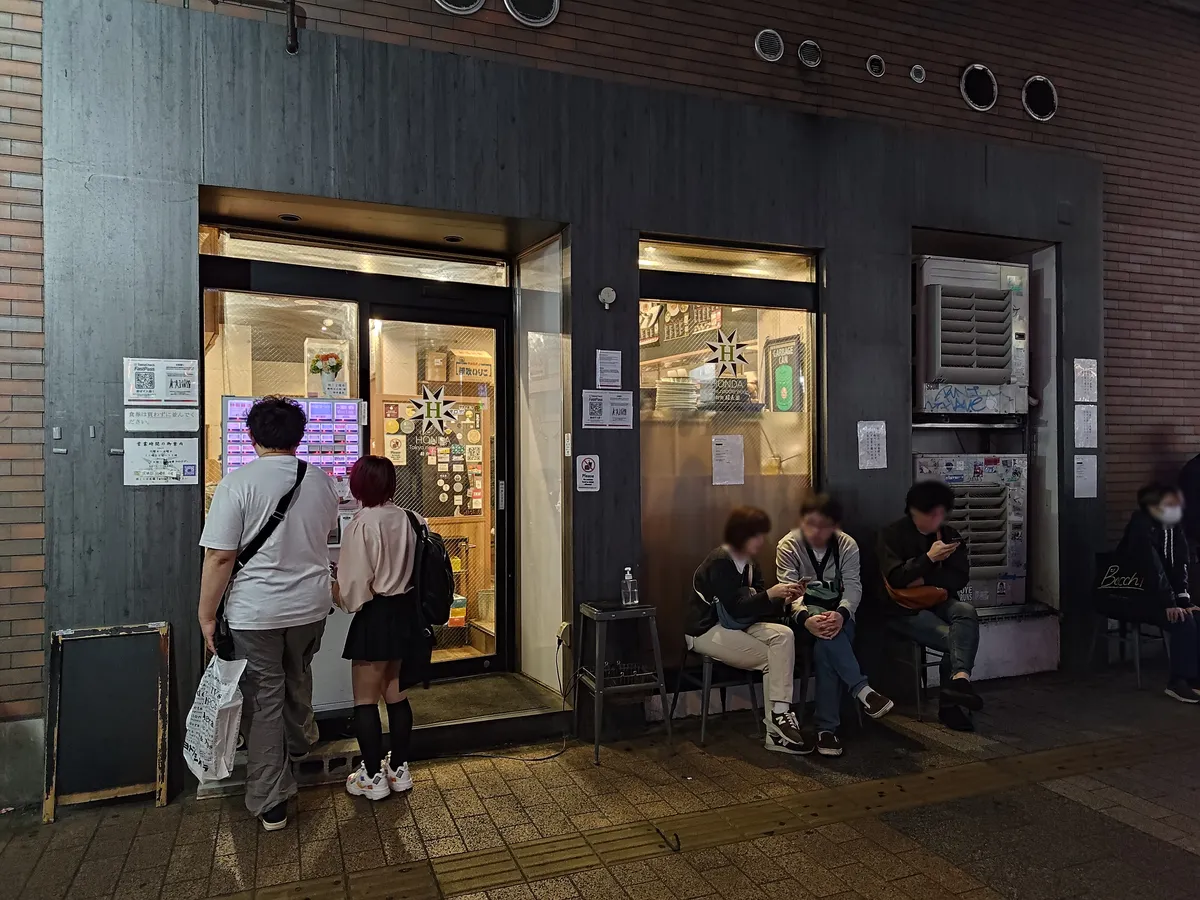
We visited on April 4, 2026 – just two days after Mr. Honda's retirement. While we cannot compare the taste to the Akihabara store before his departure, we will candidly report on the flavor of 'the current Honda'. We had previously visited during its Higashi-Jujo era, and while the soup's direction is different now, both offered uniquely appealing bowls.

Ren
Even if the face of the shop changes, the accumulated techniques and recipes are passed down to the team. What kind of bowl is Honda serving now, as it enters a new chapter? That's what this article is here to tell you.
🏠Shop Atmosphere — The Warmth of Wood and the Craftsmanship of Artisans
The interior is a clean space based on wood. In addition to 4 counter seats, there are two 4-person tables and three 2-person tables, accommodating small groups. At the counter seats, you can observe the artisans' delicate cooking right in front of you. During our visit, about half of the customers were women, giving the impression that the lighter flavor profile is popular across a wide range of people. In the kitchen, staff from diverse backgrounds efficiently collaborate in Japanese, creating a lively atmosphere.
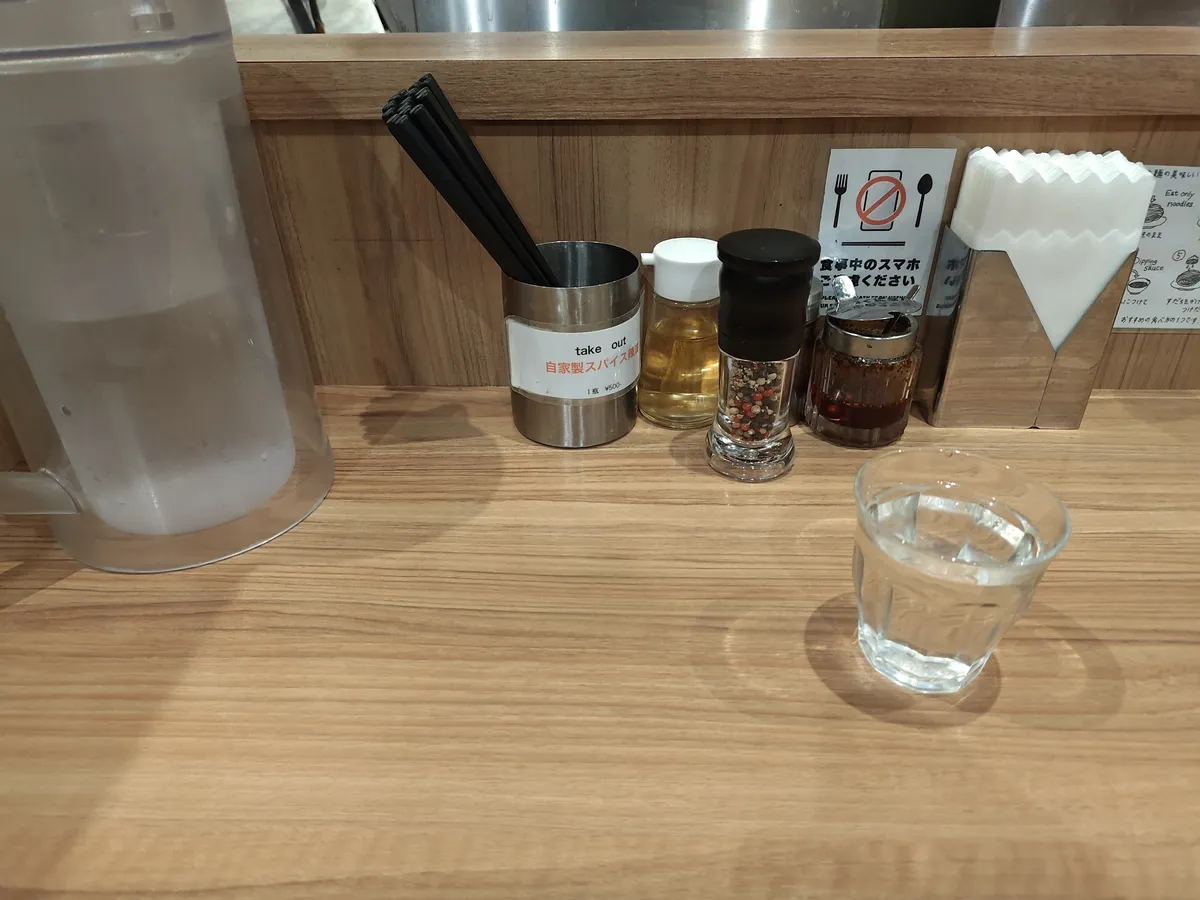
On the table, you'll find a pitcher of water, homemade spices, a pepper mill, chili flakes, vinegar, chili oil, and more. Chopsticks are stored in a pull-out holder. There are also small storage boxes for bags underfoot. The shop is meticulously attentive to detail.
Please note, there are signs requesting customers to refrain from using smartphones while eating. The kitchen, visible from the counter, performs extremely delicate cooking, and since each bowl is carefully prepared, service can be a bit slow. Using a smartphone while eating would further prolong your stay and affect waiting customers. The no-smartphone rule is a reasonable operational decision.

Mei
Since they prepare each delicate bowl one by one, we should also eat at a good pace. Quickly snap just one photo the moment your ramen arrives, then focus on enjoying it.
🚶From Arrival to Seating — The Unique Queuing Flow
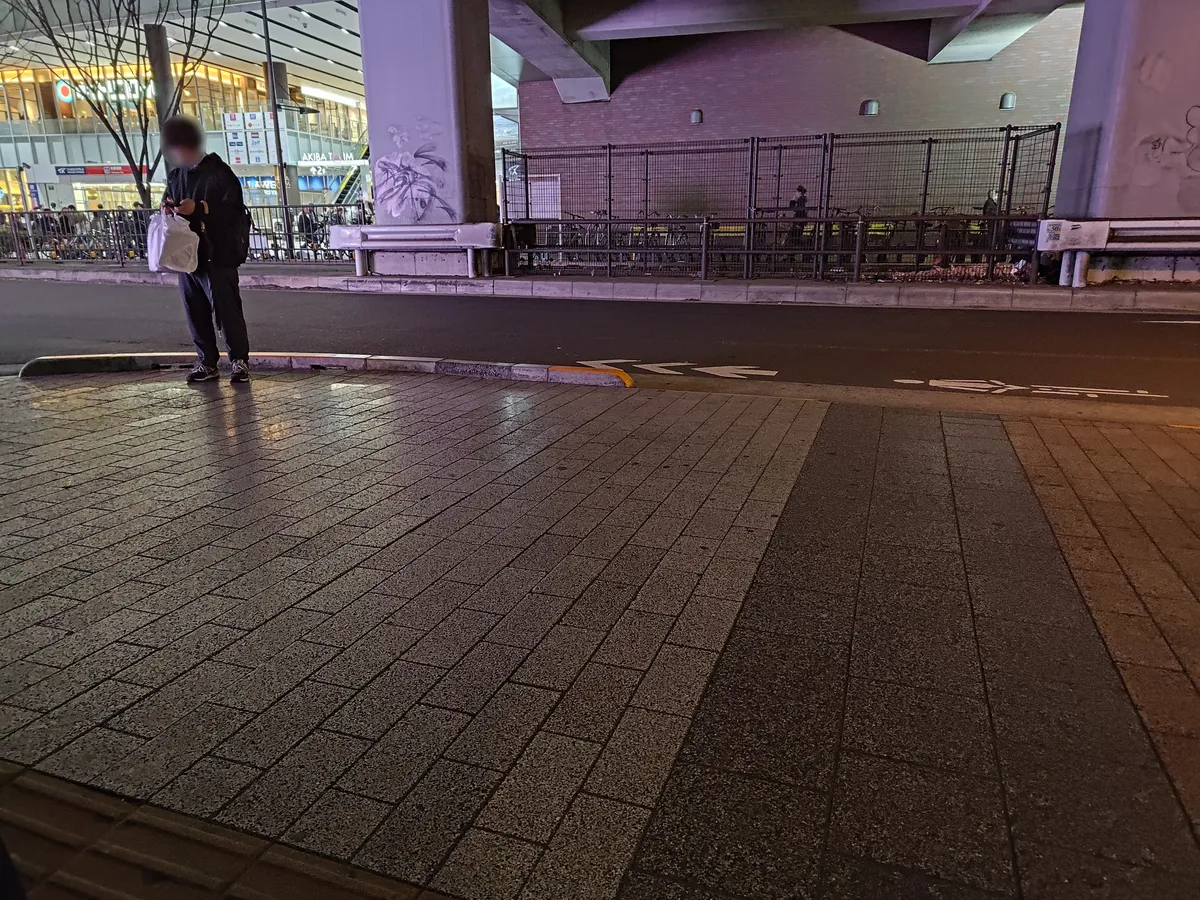
When we arrived at 18:20 on a weekday, there was a line of 12-13 people. From here, it took about 40 minutes until our ramen was served. Honda's queuing method is slightly different from other ramen shops and can be confusing for first-timers. Keep the following steps in mind beforehand.
- First, join the queue without buying a ticket. There's a sign saying 'Please line up without purchasing a ticket.'
- A staff member will come around the queue. Purchase your ticket from the ticket machine only after receiving instructions from the staff. They might ask for the number of people at this time (you can say '2 people', etc.).
- After purchasing your ticket, return to the queue and continue waiting. At this point, you might be instructed to 'Please line up on the opposite side of the queue.'
- If the queue reaches its end, you might find yourself standing alone on the opposite side. Since you'll be separate from the main line, people arriving later might ask, 'Are you queuing here?'
- You will be guided to your seat when one becomes available. They might ask for the number of people when you hand over your ticket. Water is already prepared at the counter.
Queueing Tips
The unique aspect of Honda's queuing system is being instructed to stand on the opposite side when the line loops back. Since you'll be standing alone, separate from the main queue, even Japanese customers can be confused. Following the staff's instructions will be fine, but if you're worried, you can tell someone nearby 'I'm in line' to feel more at ease.
Estimated Waiting Time
During weekday dinner, we waited for 12-13 people, approximately 40 minutes. Because the cooking is very delicate and each bowl is carefully prepared, the turnover is a bit slow. If you make a reservation via TableCheck beforehand, you might be able to enter without waiting in line.

Zack
The queuing rules are a bit unique, but the staff were friendly and smiling, so it's fine to ask if you're unsure. They come around the line frequently, so you can get their help then.
🎰How to Use the Ticket Machine
Honda's ticket machine is button-operated. Each button has the menu item name written in romanized Japanese, making it easy to choose even if you can't read Japanese. However, there are no photos, so it's recommended to check the menu table in this article beforehand. It also accepts payments with transportation IC cards (such as Suica).
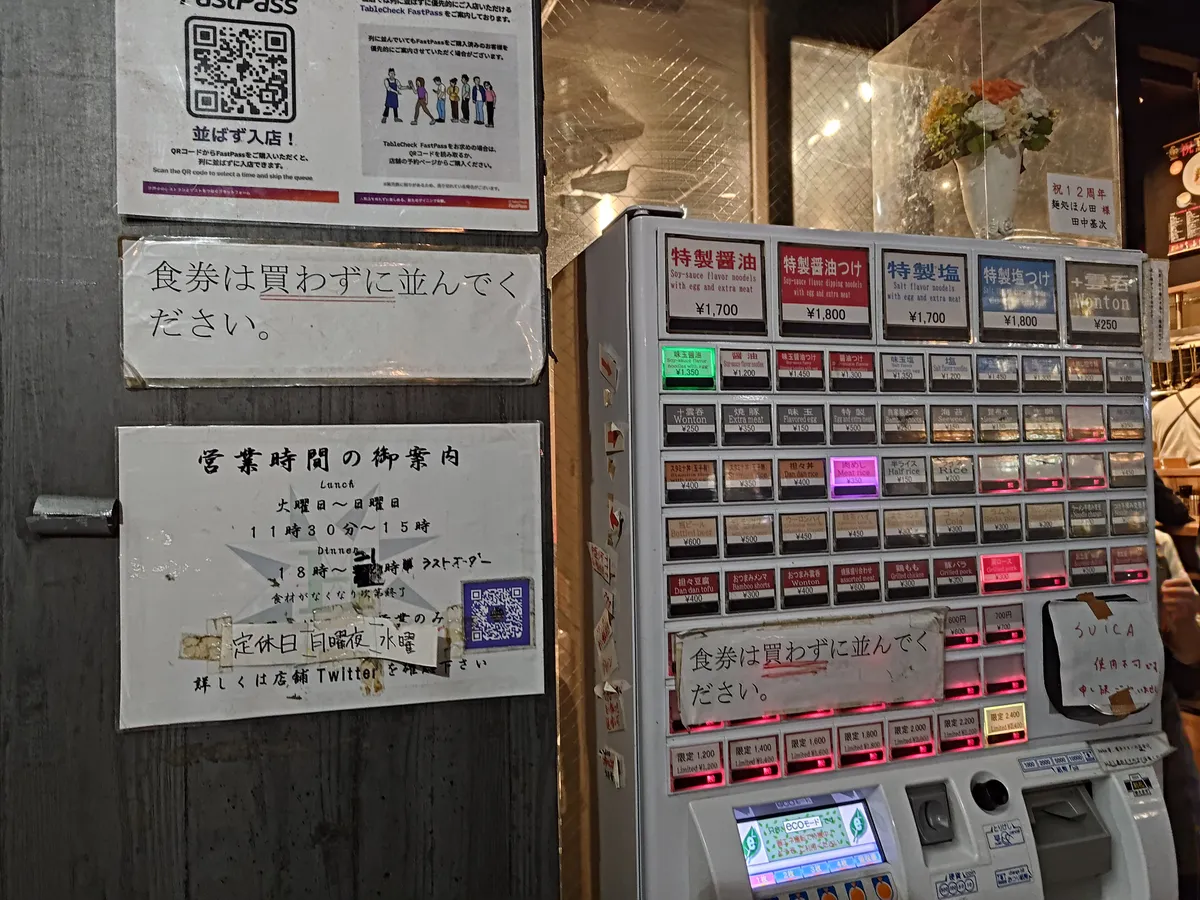
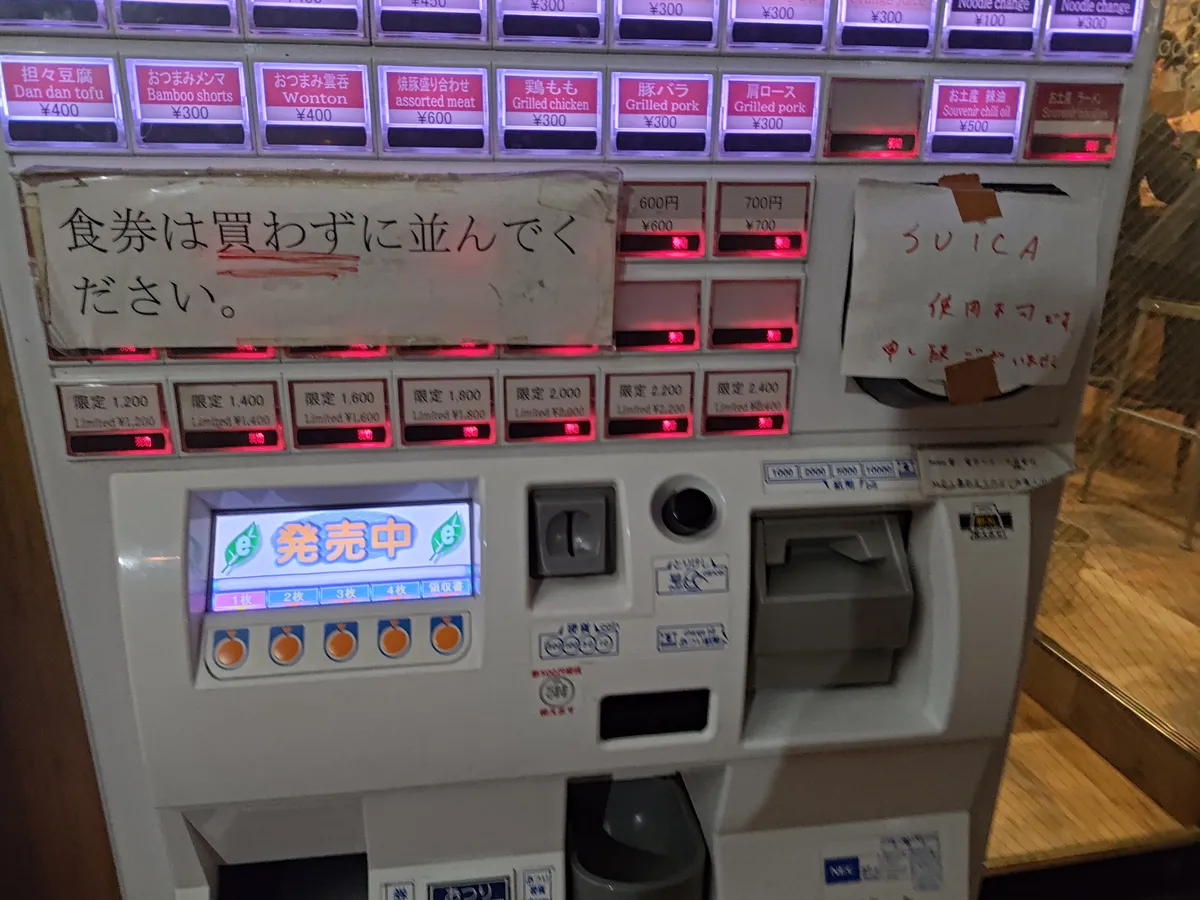
| Menu | Price (incl. tax) | Notes |
|---|---|---|
| Shoyu (Soy Sauce Ramen) | ¥1,200 | The classic with delicate dashi. If you're unsure, go for this. |
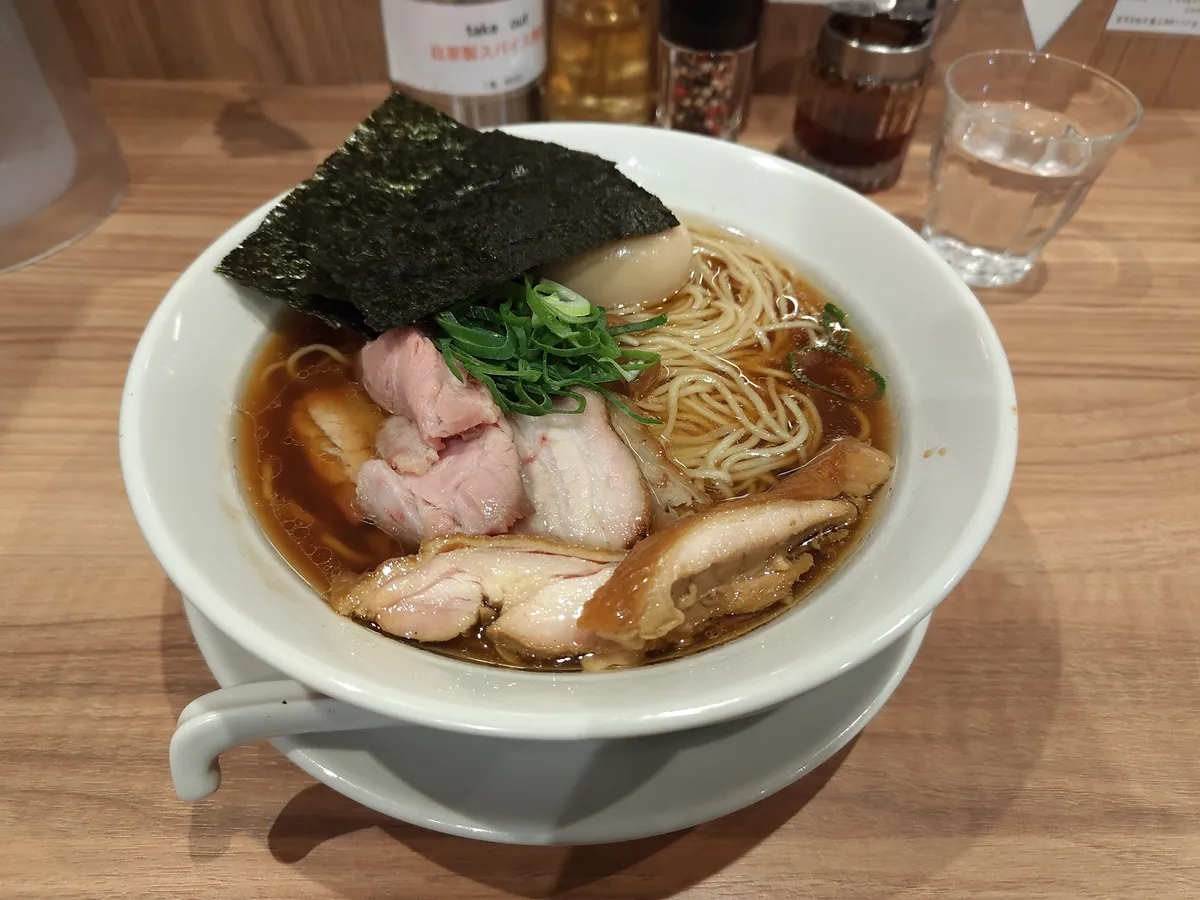
| Tokusei Shoyu (Special Soy Sauce Ramen) | ¥1,700 | Includes an ajitama (seasoned egg) + extra chicken & pork char siu. Ordered in this report. |
| Shio (Salt Ramen) | ¥1,200 | Allows you to directly savor the umami of the dashi. |
| Tokusei Shio (Special Salt Ramen) | ¥1,700 | Special version of the Shio Ramen. |
| Shoyu Tsukemen (Soy Sauce Dipping Noodles) | ¥1,200 | Eating guide (Japanese & English) available on table. |
| Tokusei Shoyu Tsukemen (Special Soy Sauce Dipping Noodles) | ¥1,800 | Special version of the Tsukemen. |
| Nikumeshi (Meat Rice Bowl) | ¥350 | Sweet and savory sauce over char siu offcuts. Excellent value. |
| Ajitama (Seasoned Egg) | ¥200 | Soft-boiled and runny. |
TableCheck FastPass
Honda supports advance reservations via TableCheck. There's a QR code guide next to the ticket machine, and by reserving, you might be able to skip the queue. As it's a popular shop, advance reservations are recommended if you want to be sure to eat there.
🔥The Tasting — Special Shoyu Ramen & Nikumeshi
Soup — Deep Umami Woven from Delicate Dashi
Visually, it's a dark soy sauce color, appearing rich at first glance. However, one sip reveals an unexpectedly light flavor. The saltiness is subtle, and the umami of the dashi (broth) gently spreads. The first sensation is the umami from seafood, like niboshi (dried sardines). Underneath, animal-based dashi, such as chicken, firmly supports it. Rather than one flavor standing out, everything harmonizes to create a single, cohesive taste.
It doesn't have an overt punch. Instead, it offers a delicacy where the depth of flavor reveals itself with each sip. The more you drink, the deeper the dashi's richness becomes, keeping you engaged until the very end. It's a highly refined bowl that stands apart from the recent trend of rich, heavy ramen.
Noodles — Extra-Fine and Supple
The noodles are quite thin and cooked to a slightly soft texture. Since the soup is light, the noodles don't so much 'coat' the soup as 'absorb' it. This is the opposite of the current trend for thick, chewy noodles, but you'll be convinced that these noodles are the only perfect match for this soup. The harmony between the delicate soup and delicate noodles is Honda's true essence.
Char Siu — Two Personalities, Chicken and Pork
The Special includes two types of char siu: chicken and pork. The chicken char siu is tender and succulent, thoroughly seasoned. The pork char siu has a roasted aroma and a moist texture. It reminded me of the pork char siu from their Higashi-Jujo era, which brought back a sense of nostalgia. Being able to enjoy two different textures and flavors is a luxury unique to the Special.
Ajitama — The Perfect Soft-Boiled Seasoned Egg
The ajitama (seasoned egg) included with the Special is soft-boiled and runny, with a juicy texture. It provides a nice accent amidst the light soup.
Nikumeshi (¥350) — A Worthwhile Side Dish
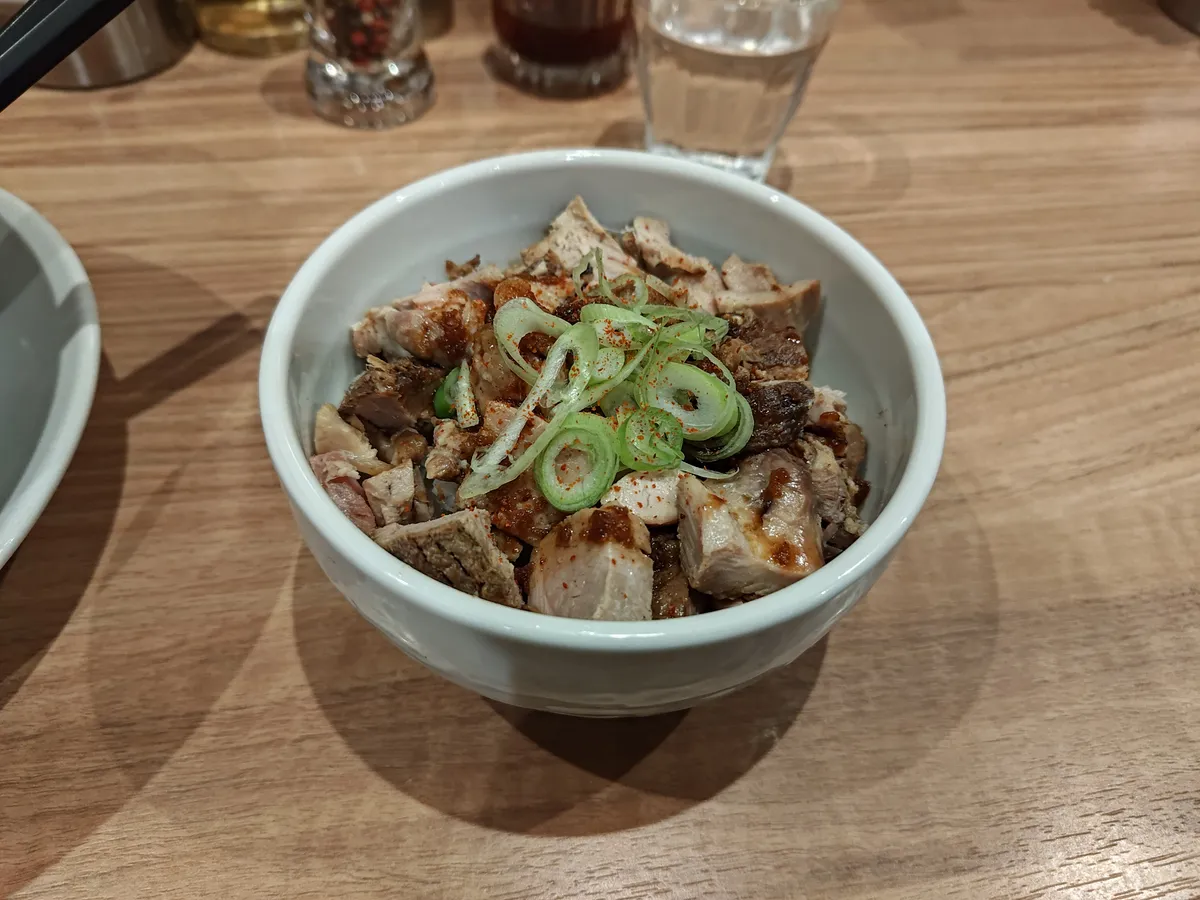
This donburi (rice bowl) style dish features offcuts of char siu topped with a sweet and savory sauce. Typically, nikumeshi made from offcuts can be tough, but Honda's nikumeshi is not. The mix of chicken and pork provides an interesting variety in texture and taste. At ¥350, the price is very reasonable, offering outstanding value for money.
Nikumeshi Portion Size
While Nikumeshi is affordable at ¥350, it's more substantial than it looks. Ordering it with ramen can leave even men feeling quite full, so for those with smaller appetites or women, it might be a good idea to try the ramen alone first. Conversely, for those who might find the light soup not quite enough, adding Nikumeshi can create a balanced meal.
Zack
The Nikumeshi for ¥350 is great value for money. Since the ramen is on the lighter side, it's worth adding if you want a hearty meal. But it's quite a generous portion, so check your appetite before ordering!
❓Frequently Asked Questions
QIs there an English menu?▼
The ticket machine buttons have romanized Japanese alongside the Japanese text. Although there are no photos, you can easily order by matching the romanized names like 'Shoyu,' 'Shio,' and 'Tsukemen' with the menu table in this article. Additionally, the tsukemen eating guide is illustrated and bilingual (Japanese and English), which is very helpful.
QCan I use a credit card?▼
The ticket machine accepts cash and transportation IC cards (Suica, Pasmo, etc.). Credit cards are not accepted. Be sure to prepare cash or a pre-charged IC card.
QHow long is the wait?▼
During weekday dinner, it was 12-13 people and approximately 40 minutes. Due to the delicate cooking process, the turnover is a bit slow. Advance reservations via TableCheck are supported, so we recommend booking if you want to be sure to eat or don't want to wait.
QAre there table seats?▼
In addition to 4 counter seats, there are two 4-person tables and three 2-person tables. It's perfectly fine for visiting with friends or as a couple.
QCan I take photos with my smartphone?▼
There are signs requesting customers to refrain from using smartphones while eating. This is an operational rule to maintain the dining pace, as the delicate cooking leads to a somewhat slower turnover. Limit photos to a quick single shot right after your ramen is served.
🚃Access
From Akihabara Station, exit the Electric Town Gate (電気街口, Denkigai-guchi) and walk for about 5 minutes. Head north along Chuo-dori (Central Street) and cross Kuramaebashi-dori (Kuramaebashi Street). Akihabara Station, served by multiple lines including JR Yamanote Line, Sobu Line, Keihin-Tohoku Line, Tokyo Metro Hibiya Line, and Tsukuba Express, offers excellent access as a base for Tokyo sightseeing.
📋Shop Information
| Item | Details |
|---|---|
| Shop Name | Mendokoro Honda Akihabara Main Store |
| Genre | Shoyu Ramen (also Shio and Tsukemen) |
| Difficulty | ★3 Expert |
| Ordering System | Button-operated ticket machine (Cash / Transportation IC cards) |
| Seating | 4 counter seats / 2 four-person tables / 3 two-person tables |
| Price Range | ¥1,200〜¥1,800 |
| English Menu | Romanized Japanese available / Tsukemen eating guide in Japanese & English |
| Nearest Station | Akihabara Station, approx. 5 min walk |
| Estimated Waiting Time | 30-40 minutes during weekday peak / Can be shortened with TableCheck reservation |
| Business Hours | Lunch: Mon-Sun 11:30-15:00 (Closed Wed) / Dinner: Tue-Sun 18:00-21:00 (Closed Mon & Wed) |
| Closed | Monday evenings / All day Wednesday (subject to change; please check before visiting) |
Business Day Notes
They are open almost every day for both lunch and dinner, but on Mondays, dinner service is not available (lunch only). Wednesdays are closed all day.
🎯Who This Shop Is For, and Who It Might Not Be For
| Recommended For | Might Not Be For |
|---|---|
| Those who want to slowly savor the delicate umami of dashi | Those who prefer rich, impactful ramen |
| Those who want to experience a highly-rated Tokyo shoyu ramen | Those who don't want to wait much (Can be avoided with TableCheck reservation) |
| Those who want to visit a famous shop while sightseeing in Akihabara | Those who want to use their smartphone while eating |
| Those who like light and delicate-tasting ramen | Those looking for a bold and robust bowl |
| Those who want to see the artisans' careful work up close | Those who want to eat quickly at a fast-turnover shop |
Summary
Honda has reached a major turning point with the retirement of its founder. We visited right after this significant event, and what was served was a perfectly crafted bowl, highlighting the delicate umami of its dashi. The light soup, extra-fine and soft noodles, and two types of char siu (chicken and pork) – everything was meticulously prepared, revealing a deeper dimension of flavor with each bite.
There are aspects that might be confusing for first-timers, such as the unique queuing method and the no-smartphone rule. But these are precisely because the shop takes its ramen seriously. If you read this article beforehand, you should be able to enjoy your visit without any confusion.
If you want a bit more volume, consider adding Nikumeshi (¥350). The combination of light ramen and sweet-savory Nikumeshi strikes a surprisingly good balance.
I felt a peculiar sense of connection, having tasted the first step of what Honda, now embarking on a new chapter, will create in the future.
Visited & Verified by Our Team
This article was written by the Ramen Gateway editorial team after an actual visit to the shop in April 2026, experiencing everything from queuing to tasting. All photos were taken during our visit.
If you visit, we'd love to hear your review!
"We don't let AI eat ramen. We use AI to draw the coolest map so adventurers worldwide can find the real treasure hidden in Japan's back alleys."
Made in Japan — with local knowledge & AI assistance