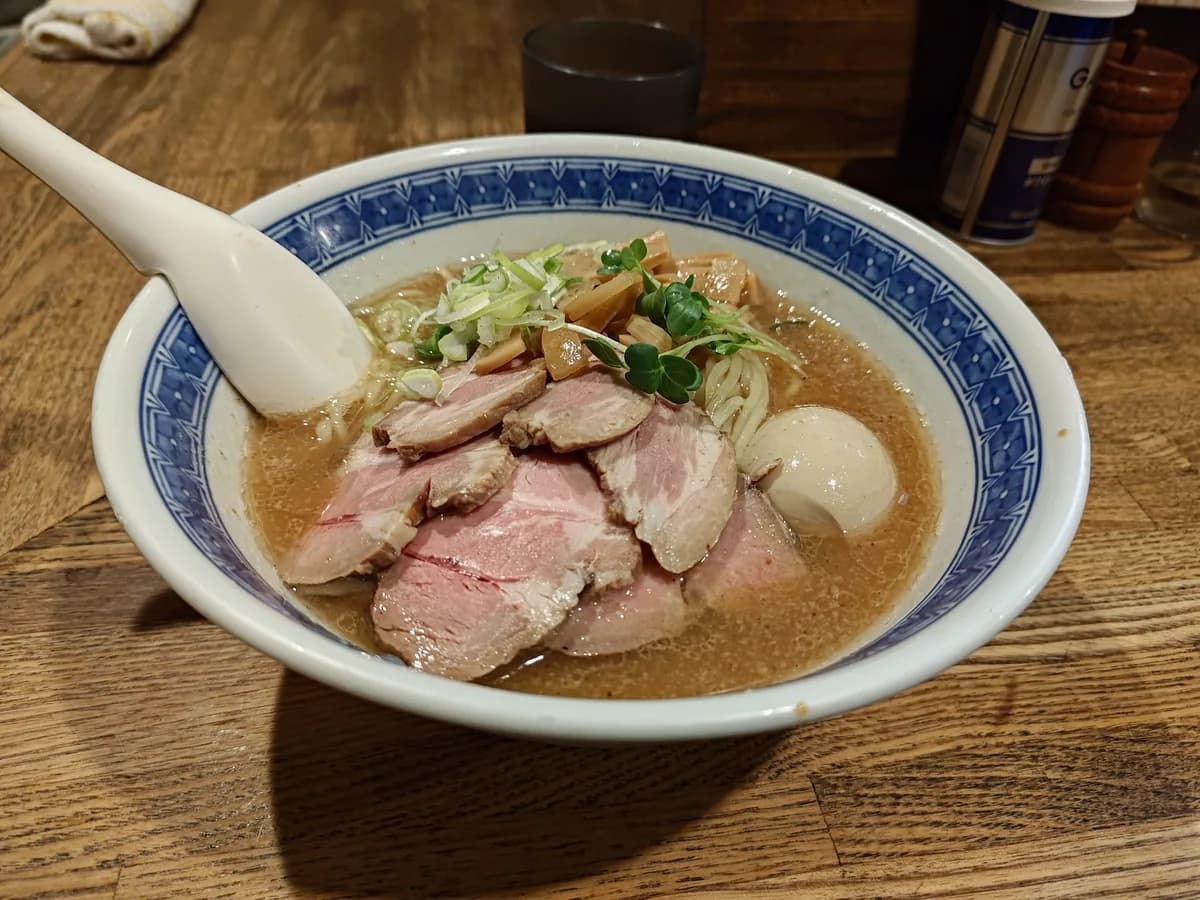
Sansanto
燦燦斗
Overview
Sansanto, nestled in Higashi-Jujo, Kita-ku, Tokyo, is a beloved local ramen destination specializing in gyokai-tonkotsu (a hybrid broth of pork bones + dried bonito/sardine). Operating for nearly 20 years (since around 2005), this well-regarded shop in Tokyo opens its doors for a mere two and a half hours each evening, from 18:00 to 20:30. The lean team consists of owner-chef Goto, his wife, and the owner of their family's Italian restaurant, Kitchen Tre Rosso. Sansanto has been selected for Tabelog's Top 100 Ramen Tokyo for nine consecutive years since 2017 (as of 2026) and consistently maintains a high rating of 3.85. The W-soup, combining tonkotsu and seafood dashi, is described as effectively MSG-free, offering a clean taste. It achieves a delicate balance of richness and a lightness that makes it easy to finish the entire bowl. The menu centers around their signature "Ramen," complemented by "Aburasoba" (often cited as the most popular), "Shio Chuka Soba" (featuring a prominent niboshi flavor), and "Tsukemen" (which best showcases their homemade noodles (jikasei-men)). These four pillars attract repeat customers who come to compare the distinct offerings. Toppings are presented in a two-tiered system. First-time visitors often opt for "Tokumashi" (¥450 - an advantageous set of chashu, menma, and ajitama), while "Santen-mori" (¥700), served on a separate plate, is the elevated choice for regulars. The "Niku-meshi" (¥400) side dish is also a standout, with its contents changing daily—sometimes even featuring chicken curry from their family's Kitchen Tre Rosso, adding a playful touch indicative of their flexible approach.
How to Order
1Before Entering the Shop
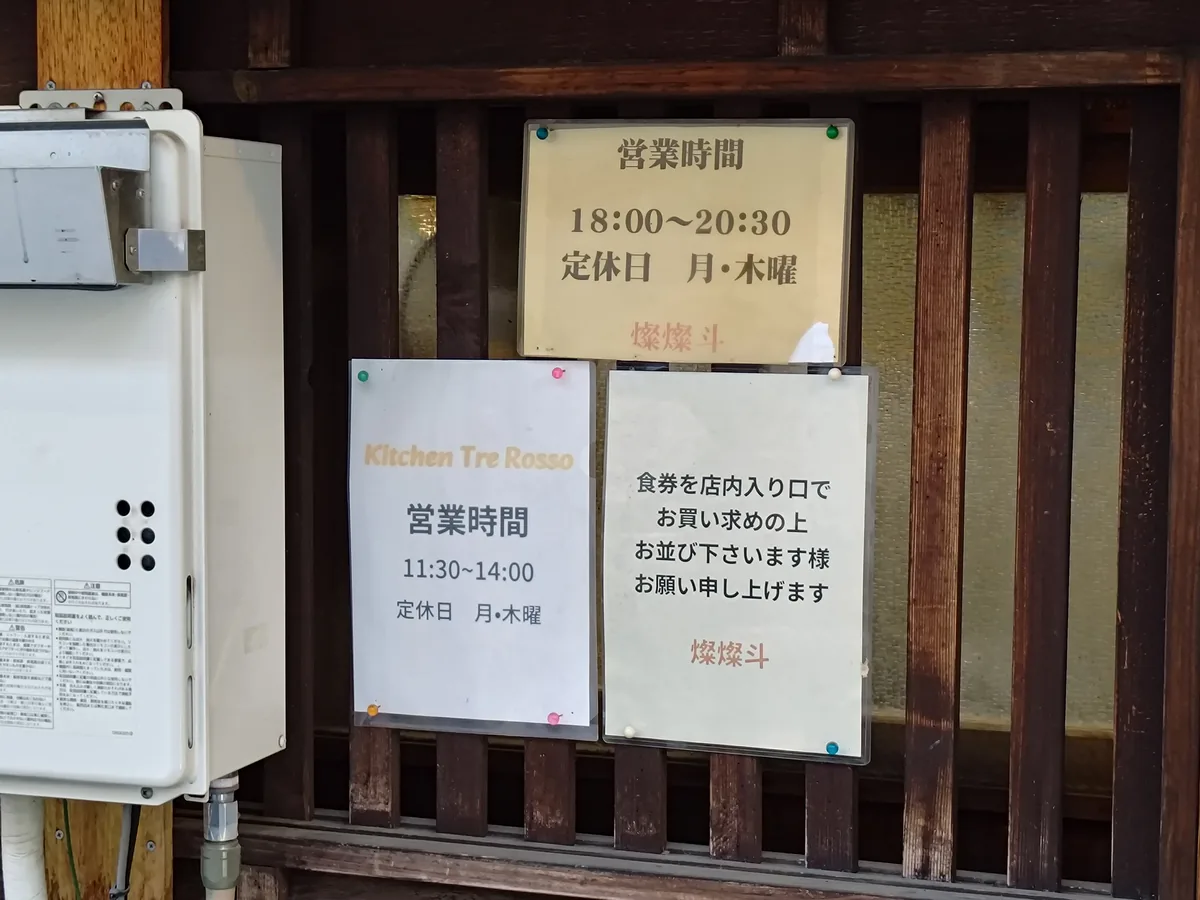
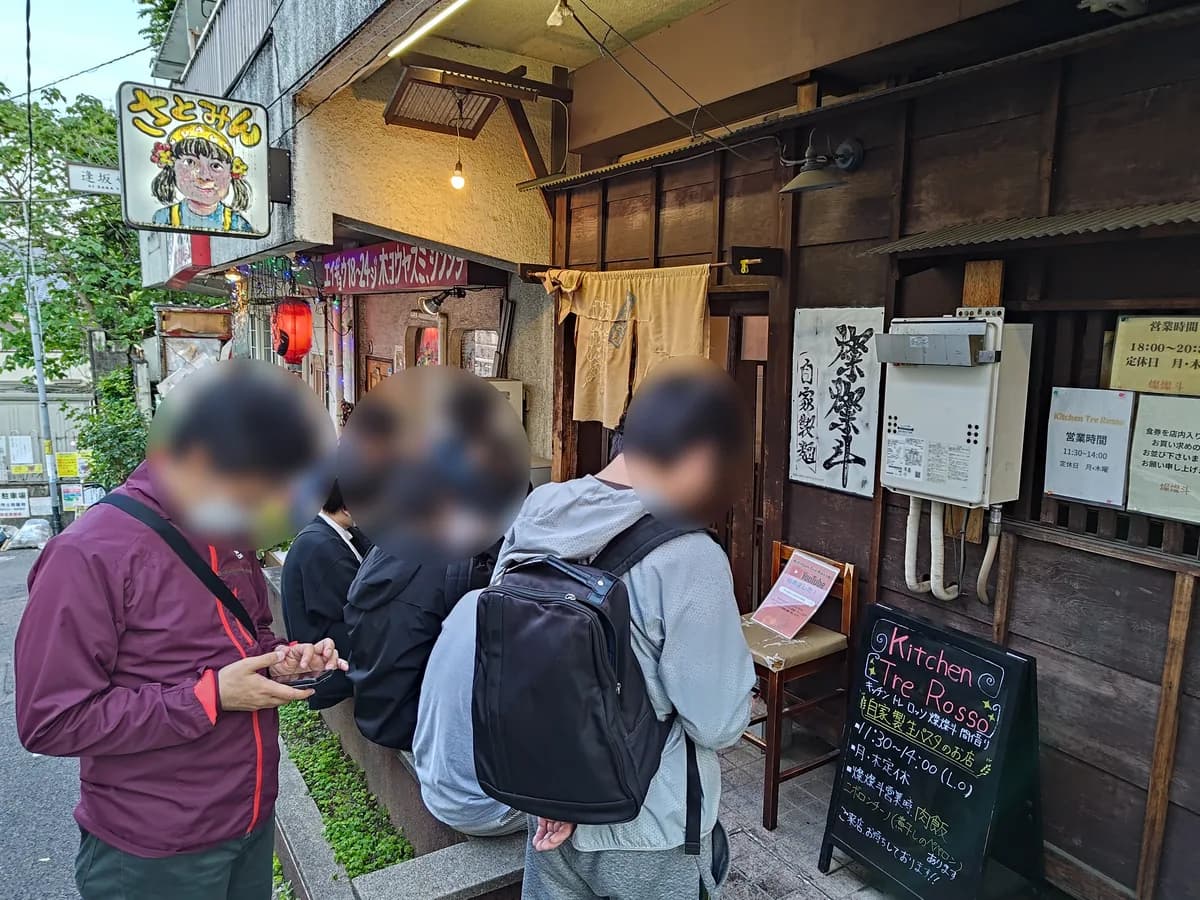
Approximately 2 minutes' walk from the North Exit of Higashi-Jujo Station on the JR Keihin-Tohoku Line. Exit the North Exit ticket gate, turn left, go up the stairs, turn left again, and walk down a small slope. The shop is quietly located on your right. (Be careful not to use the stairs leading down to the station rotary side, as it will take you to the opposite side.) Operating hours are only 2.5 hours, from 18:00 to 20:30. The shop is closed on Mondays and Thursdays. Temporary closures may occur without prior notice. If a worn yellow noren (暖簾 - traditional Japanese curtain) hangs at the storefront, the shop is open. If there is no noren, it is closed or temporarily closed. During busy periods, an early opening may occur around 17:50 when the noren is hung. Arriving between 17:40 and 17:50 on weekdays or 17:15 and 17:30 on weekends makes it easier to join the first group (for the 7 counter seats). The shop may close earlier than 20:30 if the soup sells out, so arriving after the late 19:00s carries a high risk of sold-out items.
2Purchasing Tickets / Ordering
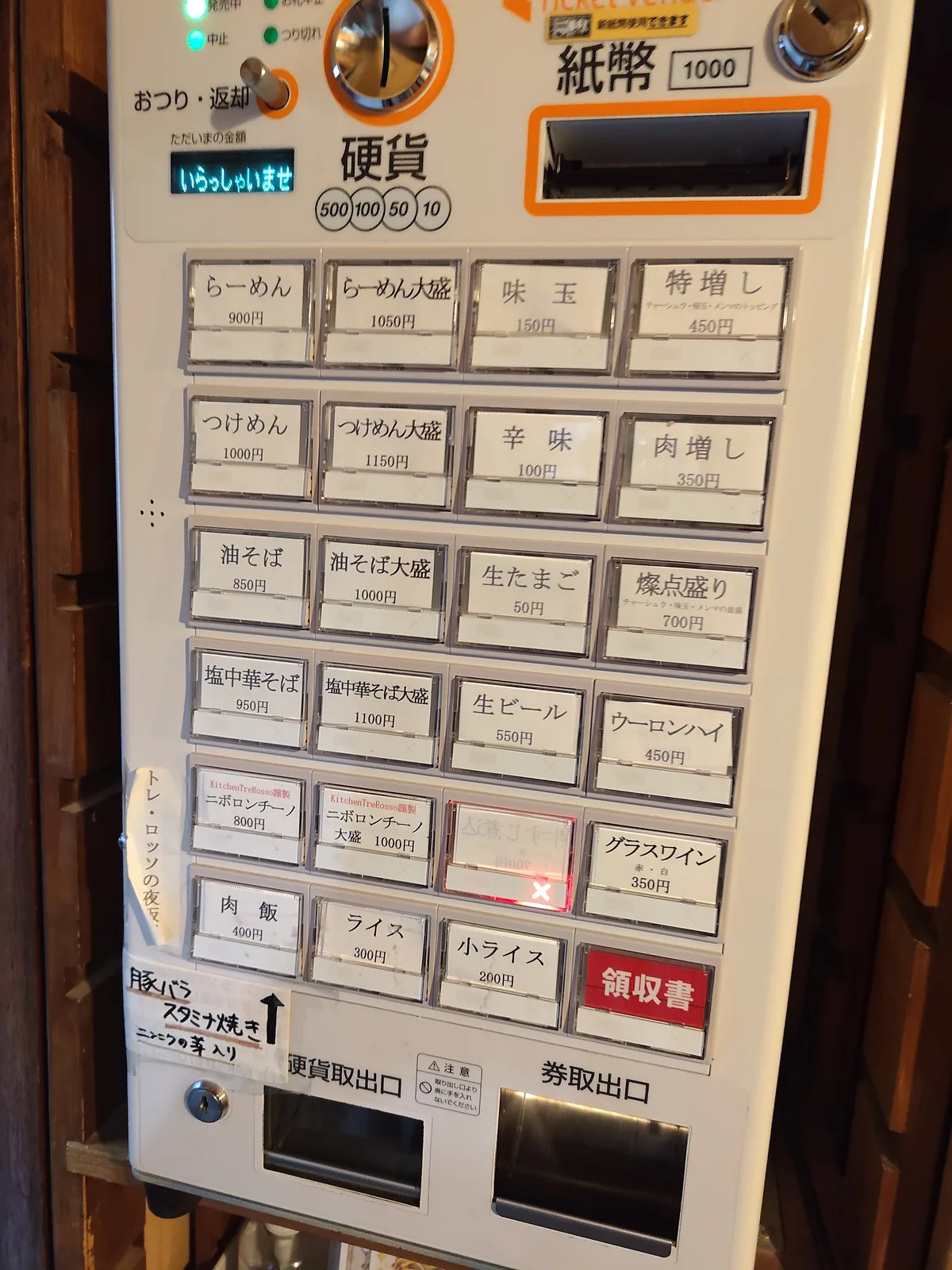
Pre-purchase system (purchase your ticket first, then join the end of the line). A notice at the storefront officially states, "Please purchase your meal ticket at the shop entrance, then proceed to line up." While it may seem like you're cutting in front of those waiting, you should open the door, enter, and purchase your ticket from the ticket machine (券売機 - kenbaiki) immediately to your left. This is the official route, so feel free to enter confidently. The signature dish is "Ramen" (¥900). For first-time visitors who want to experience the shop's full appeal, adding "Toku-mashi" (特増し - special toppings, ¥450 - extra chashu pork + extra menma + ajitama (味玉 - seasoned egg)) is standard. Prepare approximately ¥1,350 in cash. Payment is cash only; cards, e-money, and QR code payments are not accepted. There is no English signage; Japanese only on the ticket machine and menu.
3Seating and Receiving Your Order
After returning to the end of the line with your ticket, the staff will come to check it shortly. When it's your turn, the staff will call you, and you will sit at the assigned seat. There are only 7 counter seats, and the shop is small, so bringing large suitcases is not practical. Backpacks can be placed on a small shelf under your feet or hung on a hanger behind you. Water is self-service; you pour it from a pot on the upper counter (the staff may pour your first glass). Serving time is approximately 8-15 minutes.
4Other Notes
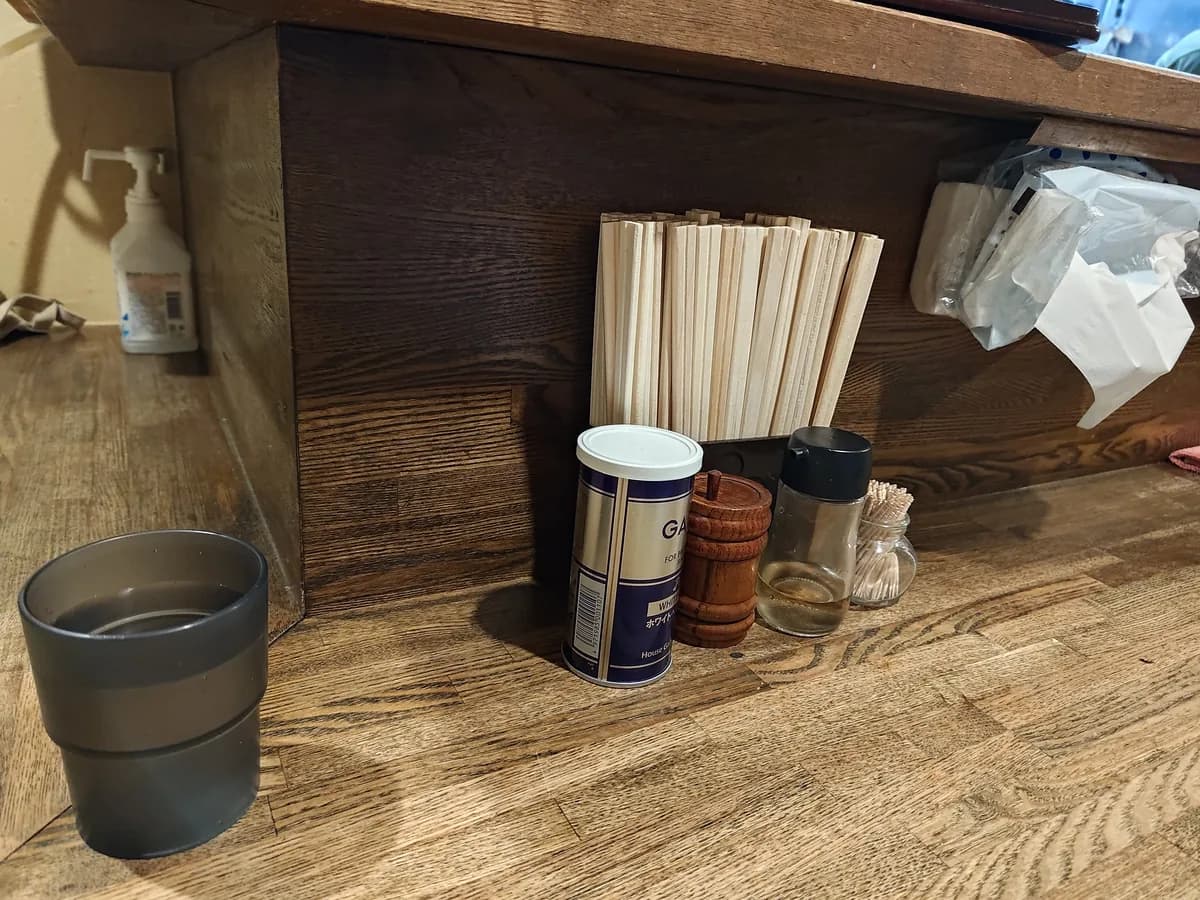
The table condiments include ichimi (一味 - Japanese chili powder), pepper, and vinegar. Among regular customers, adding a small amount of vinegar to the soup in the latter half, known as "Osu Tonyu" (お酢投入 - vinegar addition), is a popular way to alter the flavor. The acidity enhances the seafood (魚介 - gyokai) flavor, making it sharper. The soup and noodles are of high quality, so minimal flavor alteration at the table is sufficient. You can see the noodle-making machine in a small room behind, visually confirming the shop's dedication to homemade noodles (自家製麺 - jikasei-men). There is no explicit request to lift your finished bowl to the upper counter, but many regulars do so before leaving, so imitating them is a smart gesture. The staff are bright and friendly, and despite the shop's local appearance, you can enjoy a comfortable time.
Notice something different? Let us know in a review!
Seating
Open Map
Voices
燦燦斗@東十条
— たくまる555 (@takumaru55555) January 17, 2026
油そば 特増し
昨年3月以来の久訪✨
もっちり食感の太麺に濃厚ダレが絡みめちゃくちゃ旨え🤤
そして厚切り🥩がやっぱウマウマ👏
スープ付なのがほんと嬉しい😆
つけ麺風で頂いたりと色々楽しめる👍
大満足の完食💯💯
ご馳走さまでした〜🙏✨ pic.twitter.com/nVQve0Mx6I
「燦燦斗」@東十条
— さとじ☆ (@TmmSato) August 24, 2025
【らーめん+味玉+🍺】
18時〜20時半の営業
日勤の帰りにやっと寄れた!
店内はカウンターのみ7席
濃厚スープに中太自家製麺
コレは好みです😊 pic.twitter.com/2tq2RoaQJi
Photos
Reviews
Share your experience
No one has reviewed this shop yet. Only the first reviewer earns the 🏅Pioneer badge.
Business Hours
Crowd Calendar
| Lunch | Afternoon | Dinner | Late night | |
|---|---|---|---|---|
| Weekday | - | - | 30-60 minRef. | - |
| Weekend | - | - | 30-60 minRef. | - |
* Dashed cells = reference data from past visit examples (replaced once enough reviews arrive)
Dietary Notes
No dietary data yet
This information is based on user reports and is not official information from the shop. Cross-contamination in the cooking environment cannot be guaranteed. If you have severe allergies, please confirm directly with the shop.
Dietary information is verified through blind consensus. Reports become public when 3 or more independent users agree.
Ingredients & Allergens
Allergen info coming soon
Recommended Articles


Tokyo Station Ramen Guide for Travelers: Where to Eat Before or After the Shinkansen
From Rokurinsha to Station Concourse & Marunouchi. Includes 'Where to Eat During Your Shinkansen Layover' by Ticket Gate (Inside/Outside) and Distance. A Practical Guide So You Don't Get Lost Even with Short Transfers.
Structured by our team / Written by Ren, Dr. Hiro, Sophia, Zack & Mei (AI Editors)
King Seimen in Oji: Tokyo Shirodashi Ramen and Wonton Ordering Guide
A hands-on guide to King Seimen (Kingu Seimen) in Oji, north Tokyo. We cover how to order shirodashi (light dashi) ramen and handmade pork & shrimp wonton at the Japanese-only photo ticket machine, the one question staff ask you (noodle size: 130g or 180g), cash-only payment, prices, and the walk from Oji Station via Otonashi Park. A first-hand visit on June 5, 2026 (Fri).
Structured by our team / Written by Ren, Zack, Sophia & Dr. Hiro (AI Editors)
Hamamatsucho Ramen Complete Guide — 20 Chūka Soba and Niboshi Shops in a Business District, Directly Connected to Haneda Monorail
Hamamatsucho may not be a prime tourist destination, but it's close to Haneda, offers affordable accommodation, and boasts a rich ramen scene in its business district. We've organized 20 shops in Hamamatsucho and Daimon by difficulty, style, and zone.
Structured by our team / Written by Ren, Dr. Hiro, Zack, Sophia & Mei (AI Editors)