Kyoto City Ramen Comprehensive Guide — Three Origins of the Ancient Capital and Modern Flavors
A cultural history-based guide to Kyoto ramen for first-time visitors who haven't decided on their itinerary


This guide is for those who haven't yet decided on their Kyoto itinerary, or who are considering, 'I want to eat ramen in Kyoto, but where and what should I try?' It offers a cultural overview of the unique ramen culture that Kyoto, the ancient capital, has nurtured, something you can't experience just by visiting famous tourist spots. We'll also suggest ways to combine ramen with sightseeing. For those who have already decided on a specific area to visit, the upcoming small-area guides will be more practical. Note: This guide covers ramen shops within Kyoto City only. Other municipalities in Kyoto Prefecture such as Uji or Kameoka are not included.
🧭Decide in 30 Seconds — Your Perfect Bowl
Start here. Choose your type, and we'll help you find the first bowl of ramen you should try in Kyoto.
| Your Type | Your First Bowl | Details |
|---|---|---|
| First visit, don't want to fail | Shinpuku Saikan Honten (Kyoto Station) — Kyoto Shoyu founded in 1938 | See 'Origin 1: The Kyoto Shoyu Lineage' below |
| Want to understand ramen culture in one bowl | Honke Daiichi Asahi Honten (Kyoto Station) — A classic where you can taste history | See 'Three Origins' table below |
| Rich flavor seeker | Tenka Ippin Sohonten (Ichijoji / Kitashirakawa) — The home of Kotteri Chicken Paitan | See 'Origin 2: The Home of Kotteri Chicken Paitan' below |
| Delicate flavor seeker | Menya Inoichi (Kawaramachi) — Clear Chintan broth made with bonito and kombu | See 'Origin 3: Modern Chintan Chicken / Tanrei Style' below |
| Sightseeing priority | Choose a representative shop near each tourist spot | See 'Tourist Spots × Ramen' below |
| Need vegan option | Menya Inoichi or Kobushi Ramen | See 'Characteristics unique to the ancient capital' below |
| Ramen lover, doesn't mind traveling | Menya Gokkei Ichijoji Honten's Doro-kei | See 'Ichijoji Ramen Road' below |
📖What You'll Learn in This Guide
- That Kyoto ramen consists of 'three origins' (historical, rich chicken paitan, modern Chintan styles) and how to choose among them
- The unique characteristic revealed by our database: 'Kyoto is a shoyu city, a blank space for Jiro-kei, Iekei, and Miso'
- The positioning of Ichijoji Ramen Road (a cluster of famous shops for ramen fans)
- Mindset unique to the ancient capital, such as 32% English menu availability and 26% Ninja-rated shops
- Representative shops for each tourist spot, and the inverse perspective of choosing tourist spots based on ramen
⚡Quick Reference if You're Lost
| Purpose | Area | Recommended Starting Point |
|---|---|---|
| Want to know Kyoto ramen history | Kyoto Station | The two major neighboring famous shops: Shinpuku Saikan Honten and Honke Daiichi Asahi Honten |
| Want to experience Kotteri Chicken Paitan | Ichijoji / Kitashirakawa | Tenka Ippin Sohonten — A famous shop that popularized rich Chicken Paitan nationwide |
| Want to taste modern Chintan / Tanrei style | Kawaramachi | Menya Inoichi (vegan options available) |
| Want to challenge top-tier shops for ramen fanatics | Ichijoji | Ramen Road with shops rated ★3 and above. Menya Gokkei's Doro-kei is emblematic |
| A delicious bowl while sightseeing | Gion / Kinkakuji / Fushimi Inari | Refer to 'Tourist Spots × Ramen' below |
For those who want to know how to plan their overall itinerary
How to incorporate ramen into your Japan trip is covered in our sister article, the Ramen Trip Planning Guide. This article is a cultural guide focused specifically on 'what to eat in Kyoto'.
📚If You're Worried About Conquering Ramen, Prepare Here
Kyoto ramen shops primarily have Japanese menus, and there are unique rules for ordering and etiquette. If you're feeling anxious about your first trip to Japan, it's reassuring to visit after grasping the basics with our Beginner's Guide Articles. Highly recommended:
- World Map of Ramen (11 Styles) — Learn the differences between styles like Shoyu, Miso, and Tonkotsu
- Master the Ticket Machine — So you don't get confused at ticket-machine-based shops in Kyoto
- Queue Etiquette — How to wait in line at popular shops
- The Rules of the Counter — The flow from entering to leaving a shop
- Are Ramen Shop Staff Rude? — Understand Japan's unique customer service culture
🗾The Core of Kyoto Ramen: Three Origins
While you might say 'Kyoto ramen,' it actually consists of three independent origins. Knowing this structure will make choosing a ramen shop significantly easier, even on your first trip to Kyoto.
| Origin | Year Founded | Main Area | Representative Shops | Appearance / Style |
|---|---|---|---|---|
| ① Kyoto Shoyu (Historical) | 1938~ | Kyoto Station | Shinpuku Saikan / Daiichi Asahi | Traditional style with jet-black shoyu soup + pork back fat |
| ② Kotteri Chicken Paitan | 1971~ | Ichijoji / Kitashirakawa Area | Tenka Ippin | Rich, creamy style with cloudy white broth |
| ③ Modern Chintan / Tanrei Style | 2010s~ | Kawaramachi / Central Kyoto | Menya Inoichi / Appareya / Kubota | Clear, elegant, delicate style |
Both ② and ③ often use chicken, but ② has a 'cloudy, viscous broth' while ③ has a 'clear, transparent broth', making their appearance and taste completely different. Both are unique ramen styles nurtured in Kyoto, but the impression they leave is contrasting.
Furthermore, separate from these three origins, the Ichijoji area in the northeast of Kyoto City has an independent presence as one of the nation's leading 'Ramen Roads,' born from its student town. In this article, we will explain Kyoto ramen from these four perspectives.

Ren's Note
Kyoto ramen equals Kyoto shoyu equals Daiichi Asahi or Shinpuku Saikan – that's just one side of the story. Kyoto gave birth to Tenka Ippin, and Kyoto nurtured the recent Chintan styles – all of them are authentic Kyoto ramen.
🍜Origin 1: The Kyoto Shoyu Lineage (1938~)
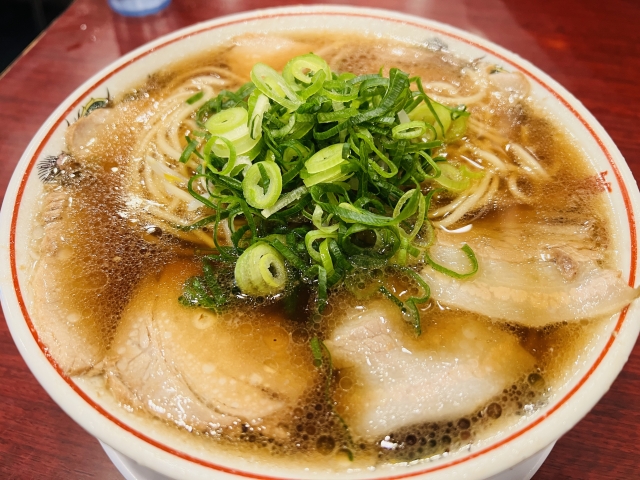
Just a few minutes' walk from Kyoto Station's Hachijo Exit, you'll find two ramen shops that have been operating side-by-side for over 80 years: Shinpuku Saikan Honten, founded in 1938, and Honke Daiichi Asahi Honten, founded in 1947. These two shops are the very history of Kyoto ramen itself.
Common to both shops is a deep, jet-black shoyu (soy sauce) broth, the sweetness of pork back fat (seabura), and straight thin noodles – a style unique to Kyoto. While Tokyo's shoyu ramen aimed for a 'Chintan (clear broth) / Tanrei (light)' profile, Kyoto's shoyu ramen developed as a powerful bowl that relies on the 'overlap of rich tonkotsu (pork bone) and shoyu' (the overall landscape of shoyu ramen is explained comprehensively in our Complete Guide to Shoyu Ramen).
In addition to these two shops, the Kyoto Station area concentrates famous, tourist-friendly shops rated ★1, such as Todai Kyoto Branch, Kaidashimen Kitada, and Ginjo Ramen Kubota. Kyoto Station serves as a perfect starting point to gain an overview of Kyoto ramen's history.
Derived Lineage of Kyoto Shoyu
The DNA of Kyoto Shoyu has spread throughout the city. In Yamashina Ward, Ramen Ten (of the 'Asahi-kei' lineage from Daiichi Asahi and Ramen Fuji), which has been operating for over 30 years, and Yonakiya (old-fashioned shoyu tonkotsu) uphold the same lineage. Roughly 40% of the Kyoto shops listed on our site are tagged as shoyu-kei, making it the largest faction and confirming Kyoto's identity as a shoyu city.

Dr. Hiro's Note
Shinpuku Saikan in 1938, Daiichi Asahi in 1947 – both are long-established shops continuing since before and just after the war. If you're talking about Kyoto's ramen history, starting with these two shops is absolutely fundamental.
🐔Origin 2: The Home of Kotteri Chicken Paitan (1971~)
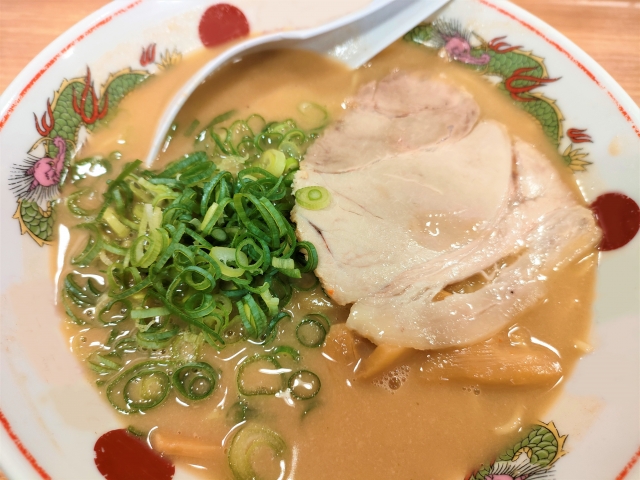
When it comes to rich chicken paitan (chicken broth) ramen, many people probably think of Tenka Ippin Sohonten, which has branches nationwide. Its main shop was founded in 1971 as a street stall in Kitashirakawa, Kyoto (though its address is in Ichijoji, Sakyo Ward, at the border of the Ichijoji and Kitashirakawa areas). The broth, slowly simmered from chicken bones until it reaches a 'doro-doro' (thick and gooey) consistency, offered a culinary experience unlike any ramen before it. It surprised ramen fans across Japan in the 1970s-80s and became known as one of the quintessential rich-style ramens.
This 'kotteri (rich) culture' took root in the eastern to northeastern parts of Kyoto City, giving rise to a succession of spin-off famous shops:
- Menya Gokkei Ichijoji Honten — The symbol of 'Doro-kei' (muddy style). A highly viscous bowl made by further reducing chicken paitan broth.
- Tonryu Kitashirakawa Honten — A famous shop in Kitashirakawa, standing alongside Tenka Ippin.
- Chukasoba Masutani Kitashirakawa Honten — The Kitashirakawa version of seabura shoyu (pork back fat shoyu).
- Ganzo Ramen Daiei — A shop beloved by locals near Shimogamo Shrine.
- Muttepo Sohonten — A famous, rich tonkotsu (pork bone) shop in central Kyoto.
Among Kyoto shops listed on our site, about 30% are tagged 'chicken', and just over 10% are tagged 'creamy'. Many of these are distributed in the eastern to northeastern areas, including Shimogamo Shrine, Ichijoji, and central Kyoto.

Mei's Note
If the staff asks you, 'Kotteri or Assari?', it's a sign you're at a Tenka Ippin lineage shop. For your first visit, definitely choose 'kotteri' to experience the rich chicken paitan that originated in Kyoto.
✨Origin 3: Modern Chintan Chicken / Tanrei Style (2010s~)
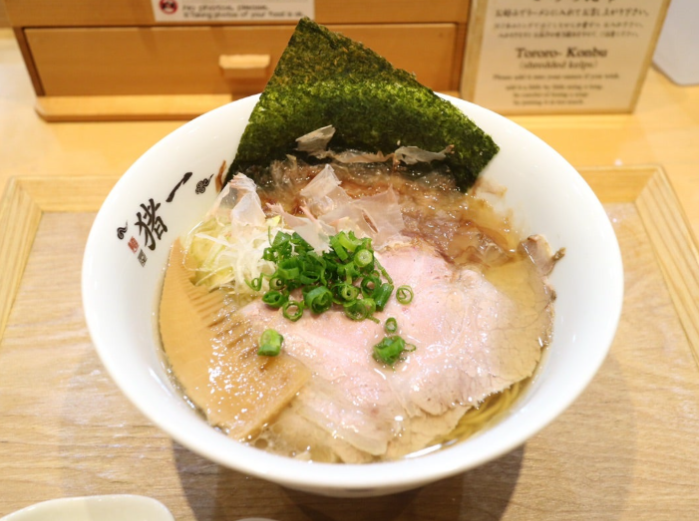
Since the 2010s, Chintan-kei (clear soup) ramen, themed around 'elegance, delicacy, and emphasis on ingredients,' has emerged in Kyoto. Highly compatible with Kyoto's traditional cuisine culture, it has established itself as a refined style previously unseen in Kyoto ramen.
The symbols of this trend are Menya Inoichi in Kawaramachi and its sister shop, Menya Inoichi Hanare. Their transparent broth, highlighting the first dashi (broth) from bonito and kombu, is truly 'ramen as an extension of Washoku (Japanese cuisine).' Inoichi is also one of the few vegan-friendly ramen shops in Kyoto.
Other notable shops in the same lineage include:
- Ginjo Ramen Kubota — An innovative bowl using sake. A prime example of Chintan that can be enjoyed at Kyoto Station.
- Kaidashimen Kitada — Delicate umami extracted from shellfish dashi.
- Namae no Nai Ramen-ya — A ★5 legendary chicken Chintan near the Imperial Palace (Ninja certified).
- Ore no Ramen Appareya — A famous shop for rich Tsukemen (dipping noodles) in Karasuma Oike.
- Menya Takakura Nijo — A ★4 Ninja+Dojo, a powerful shop where you should expect a queue.
- Mugi no Yoake — A ★3 Ninja in Mibu, a standard-bearer of the new wave.
- Aitsu no Ramen Kataguruma Honten — A popular shop in Mibu.
- Seaburano Kami Mibu Honten — A hybrid of seabura (pork back fat) × Chintan.
Mibu and central Kyoto (Karasuma Oike to Nijo) have a particularly high concentration of famous shops listed on our site. It's an area worth visiting for ramen specifically, rather than just as an add-on to sightseeing.
⚔️Ichijoji Ramen Road — A Ramen Hotspot Born from a Student Town
In the northeast of Kyoto City, the Ichijoji area, where Kyoto Seika University and Kyoto University of the Arts (formerly Kyoto University of Art and Design) are located, became known nationwide as 'Ramen Road' after the 1990s. As a result of the rivalry among ramen shop owners who honed their skills serving the appetites and palates of young students, the road is now densely packed with rich and unique famous shops.
All five Ichijoji shops listed on our site are rated ★3 or higher, with four of them being highly reputable shops featured as famous on our site. Although it's not a typical tourist destination, it's a must-visit pilgrimage site for ramen fans.
| Shop | Difficulty | Special Class | Features |
|---|---|---|---|
| Akihide | ★5 | Ninja+Dojo | Ichijoji's most challenging. A famous tanrei shop to savor in quiet contemplation. |
| Ramen Jiro Kyoto Branch | ★4 | Wizard+Ninja | The base for Jiro-kei that landed in Kyoto. Experience the 'call' culture. |
| Menya Gokkei Ichijoji Honten | ★3 | Dojo | Synonym for Doro-kei. Highly viscous chicken paitan. |
| Chukasoba Takayasu | ★3 | — | Kyoto-style arrangement based on Hakata Tonkotsu. |
| Raamen Touhichi | ★3 | — | A highly regarded chicken-based shop. |

Zack's Note
Ichijoji might be a bit out of the way for quick sightseeing, but for a ramen lover, it's worth dedicating half a day. It's just a few minutes from central Kyoto City by Eizan Railway to 'Ichijoji Station'.
🏯Characteristics Unique to the Ancient Capital — Kyoto is 'Not Tokyo'
If Tokyo is a melting pot of ramen (a convergence of all styles), then Kyoto is an ancient capital that has undergone its own unique evolution. From our site's listing data, the 'differences from Tokyo' in Kyoto ramen become clear.
Styles Mainstream in Tokyo are Rare Species in Kyoto
The following reflects the trends among shops listed on our site (it does not represent the total number of shops in Kyoto).
| Style | Number of Shops on Our Site (Kyoto) | Position in Kyoto |
|---|---|---|
| Miso Ramen | Only 2 shops | Seeking miso in Kyoto is not realistic |
| Jiro-kei (Jiro Style) | 2 shops | Ichijoji Branch and Chikyukibo de Kangaero in Fushimi Inari |
| Iekei (House Style) | 1 shop | Only Akutagawa in Shimogamo |
| Tantanmen (Spicy) | 1 shop | Tantanmen Yebisu in Yamashina. Spicy ramen is rare. |
If travelers from Tokyo are thinking, 'I want miso ramen' or 'I want to be stuffed with Jiro-kei,' those desires should be satisfied in other cities, not Kyoto (if you're craving miso, you can check options in Sapporo, Tokyo, and Osaka in our Complete Guide to Miso Ramen). In Kyoto, choosing a bowl that is distinctly Kyoto-style will enhance your travel satisfaction.
English Menus in 1 out of 3 Shops, Ninja Rate is 26%
Among the Kyoto shops listed on our site, about 1 in 3 (approximately 32%) have English menus. Even based on our listed shops, 2 out of 3 require ordering in Japanese only. Furthermore, shops certified as 'Ninja' due to 'irregular operating hours' such as lunch-only service or early closing due to ingredients running out, account for about 1 in 4 shops (approximately 26%), a higher percentage than the Tokyo shops listed on our site.
This is also a testament to Kyoto 'continuing to uphold its own customs.' The more prepared you are when you visit, the more deeply you can savor the ramen of the ancient capital:
- Always check business hours before visiting (lunch-only, Wednesday closures, and early closing due to ingredients running out are not uncommon)
- Prepare cash (many shops do not accept cashless payments)
- Learn how to order in advance (verbal exchanges like 'kotteri/assari' (rich/light) or 'noodle firmness: katame/futsu/yawa' (firm/regular/soft). See The Rules of the Counter for details)
- If you're unsure how to use a ticket machine, read Master the Ticket Machine beforehand
- Bookmark shops with English menus in advance (about 1/3 of shops have them)
Vegan and Halal Options Are Almost Non-existent
Among the ramen shops currently registered in Kyoto on our site, only two offer vegan options:
- Menya Inoichi (Kawaramachi) — Vegan menu available
- Kobushi Ramen (Mibu) — Vegan menu available
Halal-certified, pork-free, or gluten-free options are not currently registered on our site. If these apply to you, we recommend planning your itinerary with these shops as your destination. Additionally, there are 5 shops that are muchō (free of chemical seasonings) (Torisoba 223, Nabura, and others).

Sophia's Note
Kyoto is a city where tradition and innovation coexist. That's reflected in its ramen, too, with many shops maintaining old-fashioned operating styles. But that's precisely part of the Kyoto experience.
⛩️Tourist Spots × Ramen — How to Choose by Area
For those who want to enjoy ramen while sightseeing, we've summarized representative shops for each major tourist spot. Each heading includes approximate travel times from Kyoto Station, so please use them as a reference for itinerary planning. Detailed routes, station exits, and full shop information will be covered in upcoming small-area guides.
Kiyomizu-dera Temple / Yasaka Shrine (Gion Area)
🚈 Approximately 10-15 minutes from Kyoto Station (city bus / subway) — Excellent access to the city center, easy to incorporate into a half-day focused on sightseeing. Five shops are gathered close to Yasaka Shrine, perfect for a stop during your sightseeing:
- Ramen Nishiki ★1 — Easiest to enter in Gion
- Gion Duck Noodles ★1 Ninja — An innovative bowl with duck broth
- Kyo Ramen Sadakazu ★2 Ninja — Kyoto-style shoyu
Kinkaku-ji Temple / Kitano Tenmangu Shrine (Kinkakuji Area)
🏞 Approximately 35-45 minutes from Kyoto Station (city bus) — Slightly outside the city center, suitable for a half-day sightseeing + lunch combo. Shops are easily accessible from Kinkaku-ji Temple and Kitano Tenmangu Shrine, perfect for a stop during your sightseeing. This area also has legendary famous shops closer to Enmachi, including some more challenging bowls.
- Menya Rennosuke ★2 Ninja — For lunch after sightseeing
- Nabura ★4 (Muchō) — For those who value ingredients
- Yamazaki Menjiro ★5 Ninja — A legendary famous shop in the Enmachi area
Fushimi Inari Taisha Shrine
🚈 Approximately 5-10 minutes from Kyoto Station (JR Nara Line) — One of the most accessible tourist areas from Kyoto Station. Conveniently located after exploring the Senbon Torii (Thousand Torii Gates), with five shops of different styles gathered around the station, offering a wide range of choices from beginner-friendly to Jiro-kei.
- Daikoku Ramen Honten ★2 — A classic after sightseeing
- Tsukemen Kirari ★2 Ninja — A famous Tsukemen shop
- Ramen Sou Chikyukibo de Kangaero ★4 Wizard — This is the place to experience Jiro-kei in Kyoto
Arashiyama / Tenryu-ji Temple
🚈 Approximately 15-20 minutes from Kyoto Station (JR Sagano Line) — Though somewhat far as a tourist spot, it's a direct train ride and a good distance for a half-day tour. Arashiyama is a scenic area, so there aren't many ramen shops, but there are a few reputable ones conveniently located for sightseeing. It's suitable for a plan to add a bowl after exploring around Togetsukyo Bridge or enjoying Buddhist vegetarian cuisine.
- Gion Duck Noodles Arashiyama ★2 — Arashiyama version of the Gion shop
- Ramen Senmonten Daiki ★4 — A highly reputable shop
Shimogamo Shrine / Philosopher's Path Area
🏞 Approximately 25-35 minutes from Kyoto Station (city bus) — Slightly outside the city center, this is the origin area of Kotteri Chicken Paitan (see 'Origin 2' above). Shops include Tenka Ippin Sohonten, Tonryu, Masutani, and more.
Pontocho / Kawaramachi Entertainment District
🚈 Approximately 10-15 minutes from Kyoto Station (subway / city bus) — Excellent access to the city center, convenient for dinner. This area is home to modern Chintan-kei ramen (see 'Origin 3' above). Five shops include Menya Inoichi, Wajoryomen Sugari (Tsukemen), Shinjuku Menya Fuuka, and others.
Nijo Castle / Kyoto Imperial Palace Area
🚈 Approximately 5-10 minutes from Kyoto Station (Subway Karasuma Line) — The closest central area to Kyoto Station, allowing efficient combination of sightseeing and ramen in one day. If you start from Nijo Castle or Kyoto Imperial Palace, you'll be in an area where popular new-wave ramen shops have recently gathered. The central Karasuma Oike ~ Nijo area has a high concentration of popular shops, including Muttepo Sohonten, Appareya, and Menya Takakura Nijo, where you can feel the current pulse of Kyoto ramen.
Uji Byodo-in Temple
🏞 Approximately 25-30 minutes from Kyoto Station (JR Nara Line) — A separate tourist area away from Kyoto City, requiring a commitment of half a day to a full day. Our site currently lists only one shop. When combining with sightseeing at Byodo-in Temple and Uji tea, it's more advisable to decide on a ramen shop as your primary destination rather than just a casual stop.
- Seiko Udoku ★4 Dojo — The only shop listed in Uji. It offers authentic modern ramen, but has its own unique customs, making the difficulty level a bit high.
Small-Area Guides (Coming Soon)
Detailed routes, station exits, full shop information, and waiting time details for each tourist area will be covered in upcoming small-area guides. When individual articles for Kyoto Station, Ichijoji, Gion, Kawaramachi, etc., are published, we will link to them directly from this comprehensive guide.
🎯Tourist Areas Chosen with Ramen in Mind
The inverse perspective of tourist spots × ramen. If you're 'choosing tourist spots centered around ramen,' then areas with a high concentration of shops treated as famous on our site are your target. The following are areas in Kyoto with a dense cluster of famous shops, extracted from our site's listing data.
| Area | Number of Famous Shops Listed | Suggested Sightseeing Combo |
|---|---|---|
| Kyoto Station | 4 shops | Toji Temple sightseeing + ramen crawl (Daiichi Asahi, Shinpuku Saikan, Todai, Kubota) |
| Mibu | 4 shops | Nijo Castle sightseeing + Kataguruma, Seaburano Kami, Kobushi Ramen |
| Ichijoji | 4 shops | (Not a tourist spot, but) Eizan Railway line stroll + conquering 3 shops |
| Central Kyoto (around Karasuma Oike) | 3 shops | Nishiki Market / Kyoto International Manga Museum + Appareya, Muttepo, Takakura Nijo |
These areas have a high ramen density, allowing for a 'ramen journey' where you can visit multiple shops in one day. Kyoto Station, in particular, is effective for a strategy of eating one bowl on your arrival day and another on your departure day.
Example 1-Day Ramen Pilgrimage Plan (Intermediate Level)
- 8:00 AM: Kaidashimen Kitada at Kyoto Station (light and perfect for morning)
- 11:00 AM: Aitsu no Ramen Kataguruma in Mibu
- Afternoon: Head to Ichijoji, experience Doro-kei at Menya Gokkei
- Evening: Rich Tsukemen from Wajoryomen Sugari (Ninja) in Kawaramachi
1-Batch Rule
Kyoto ramen shops are generally smaller than those in Tokyo. If you see a queue, estimate the waiting time with 'number of people ÷ number of seats × 20 minutes'. For more details, refer to the Ramen Trip Planning Guide.
📋Kyoto Ramen Shop Selection (Total 56 Shops)
All 5 shops are listed for major areas, while only representative shops are listed for sub-major and surrounding areas. You can view all Kyoto shops (approx. 70 shops) listed on our site from the Shop List Page (Filter by Kyoto).
View by Area
This section organizes shops by area. You can jump directly to your desired area from the table of contents at the top of the page (left sidebar). Shops are listed in the order of Kyoto Station, Mibu, Ichijoji, Shimogamo Kitashirakawa, Kawaramachi, Kinkakuji Kitano, Fushimi Inari, Gion, and Other (sub-major areas).
Kyoto Station (5 Shops: Historical Origin Area)
| Shop | Difficulty | Style |
|---|---|---|
| Shinpuku Saikan Honten | ★1 | Kyoto Shoyu, founded 1938 |
| Honke Daiichi Asahi Honten | ★1 | Kyoto Shoyu, founded 1947 |
| Todai Kyoto Branch | ★1 | Chukasoba |
| Kaidashimen Kitada | ★1 | Shellfish Dashi Chintan |
| Ginjo Ramen Kubota | ★1 | Sake × Chintan |
Mibu (5 Shops: Area with New Wave Shops)
| Shop | Difficulty | Style |
|---|---|---|
| Aitsu no Ramen Kataguruma Honten | ★2 | Popular shop |
| Seaburano Kami Mibu Honten | ★2 | Seabura × Chintan |
| Kobushi Ramen | ★1 | Vegan options |
| Ramen Mugyu Vol.1 Honten | ★1 | New wave |
| Mugi no Yoake | ★3 Ninja | Standard-bearer of new wave |
Ichijoji (5 Shops: Ramen Road)
| Shop | Difficulty | Special Class | Style |
|---|---|---|---|
| Akihide | ★5 Ninja+Dojo | Peak of Tanrei style | |
| Ramen Jiro Kyoto Branch | ★4 Wizard+Ninja | Jiro-kei | |
| Menya Gokkei Ichijoji Honten | ★3 Dojo | Doro-kei Chicken Paitan | |
| Chukasoba Takayasu | ★3 | Hakata Tonkotsu-kei | |
| Raamen Touhichi | ★3 | Chicken-based |
Shimogamo Shrine / Kitashirakawa (5 Shops: Home of Kotteri Chicken Paitan)
| Shop | Difficulty | Style |
|---|---|---|
| Tenka Ippin Sohonten | ★2 | Kotteri Chicken Paitan, founded 1971 |
| Tonryu Kitashirakawa Honten | ★3 | Kotteri Chicken Paitan |
| Chukasoba Masutani Kitashirakawa Honten | ★3 Ninja | Seabura Shoyu |
| Ganzo Ramen Daiei | ★3 Wizard | Local favorite |
| Sodai Menya Akutagawa | ★2 Wizard | Kyoto's only Iekei |
Kawaramachi (5 Shops: Famous Chintan-kei Area)
| Shop | Difficulty | Style |
|---|---|---|
| Menya Inoichi | ★2 Dojo | Chintan, Vegan options |
| Menya Inoichi Hanare | ★1 | Sister shop |
| Wajoryomen Sugari | ★1 Ninja | Famous Tsukemen shop |
| Mendokoro Janomeya | ★2 | Chicken Chintan |
| Shinjuku Menya Fuuka | ★2 | Tokyo-style |
Kinkaku-ji Temple / Kitano Tenmangu Shrine (5 Shops)
| Shop | Difficulty | Style |
|---|---|---|
| Menya Rennosuke | ★2 Ninja | A bowl after sightseeing |
| Raamen Kimura | ★3 | Chicken Chintan |
| Nabura | ★4 | Muchō (No chemical seasonings) |
| Tanpopo | ★4 | Highly reputable |
| Yamazaki Menjiro | ★5 Ninja | Peak of Tsukemen |
Fushimi Inari (5 Shops)
| Shop | Difficulty | Style |
|---|---|---|
| Daikoku Ramen Honten | ★2 | Local classic |
| Tsukemen Kirari | ★2 Ninja | Tsukemen |
| Gankomen | ★3 Ninja | Highly reputable |
| Tokusei Ramen Daichu Honten | ★4 Wizard | Verbal customization |
| Ramen Sou Chikyukibo de Kangaero | ★4 Wizard | Jiro-kei |
Gion (5 Shops: Base for Kiyomizu-dera Temple Sightseeing)
| Shop | Difficulty | Style |
|---|---|---|
| Ramen Nishiki | ★1 | Easy to enter |
| Gion Duck Noodles | ★1 Ninja | Duck dashi |
| Hakata Nagahama Ramen Miyoshi | ★2 | Hakata Tonkotsu |
| Mensho Ichiryumanbai Kawaramachi Branch | ★2 | Tsukemen |
| Kyo Ramen Sadakazu | ★2 Ninja | Kyoto-style Shoyu |
Sub-Major / Surrounding Areas (Representative Shops Only)
| Area | Representative Shop | Difficulty | Notes |
|---|---|---|---|
| Central Kyoto (Karasuma Oike) | Ore no Ramen Appareya | ★2 Ninja | Rich Tsukemen |
| Central Kyoto | Muttepo Sohonten | ★2 Ninja | Rich Tonkotsu |
| Central Kyoto | Menya Takakura Nijo | ★4 Ninja+Dojo | Guaranteed queue |
| Saiin | Menya Santa | ★2 | Chicken Paitan |
| Saiin | Ramen Soubou Pako | ★4 | Highly reputable |
| Takaragaike | Torisoba 223 | ★3 Ninja | Muchō Chicken Shio |
| Takaragaike | Iicho Ramen | ★5 Ninja+Dojo | Kyoto's most challenging |
| Yamashina | Akichan Ramen | ★3 | Kyoto's first Chan-kei |
| Yamashina | Yonakiya | ★4 Ninja | Open for lunch only 4 days a week |
| Yamashina | Ramen Ten | ★4 Dojo | Asahi-kei, unique rules |
| Arashiyama | Ramen Senmonten Daiki | ★4 | Arashiyama's highly reputable shop |
| Uzumasa | Ramen Oyaji | ★5 Wizard | Legendary shop near Toei Kyoto Studio Park |
| Gosho | Namae no Nai Ramen-ya | ★5 Ninja | ★5 near Imperial Palace |
| Gosho | Taiho Ramen Kiyamachi Branch | ★4 Ninja | Famous shop in Kiyamachi |
| Uji | Seiko Udoku | ★4 Dojo | Only one in Uji |
| Fukuchiyama | Menya Somie's | ★4 Dojo | Muchō, famous shop in Fukuchiyama |
⭐Difficulty Level Guide
★1-2: Easy Ramen for Sightseeing (36 Shops)
53% of the shops listed on our site fall into this category. These are primarily shops where foreign tourists can enter without hesitation. All 5 shops at Kyoto Station, and major shops in Mibu and Kawaramachi, are included.
★3: Reputable Shops (16 Shops)
Reputable shops worth visiting for ramen fans, such as Menya Gokkei, Tonryu, and Raamen Kimura. Recommended for intermediate visitors who are accustomed to waiting times and unique systems.
★4-5: A Challenging Bowl (16 Shops)
The pinnacle of Kyoto's ramen scene are these ★5 shops (5 shops):
- Akihide (Ichijoji) — Ninja+Dojo
- Yamazaki Menjiro (Kinkakuji) — Ninja
- Namae no Nai Ramen-ya (Gosho) — Ninja
- Iicho Ramen (Takaragaike) — Ninja+Dojo
- Ramen Oyaji (Uzumasa) — Wizard
These are typical Ninja shops with short operating hours and long queues. They are a challenging option for those with ample time in their itinerary.
🧠Kyoto Ramen Style Explanation
For those who want to understand ramen styles more systematically, our World Map of Ramen (Style Guide), which comprehensively explains 11 different styles, will also be helpful. Below is the distribution of each style in Kyoto:
| Style | Number of Shops in Kyoto | Characteristics / Representative Shops |
|---|---|---|
| Kyoto Shoyu (shoyu) | 26 shops | Powerful style with jet-black shoyu + seabura (pork back fat). Shinpuku Saikan / Daiichi Asahi are the origins. |
| Kotteri Chicken Paitan (chicken+creamy) | 9 shops | Rich Doro-kei (muddy style). Tenka Ippin and Gokkei are iconic. |
| Chintan-kei (chicken, no creamy) | 11 shops | Delicate, elegant. Inoichi and Kubota are representative. |
| Tonkotsu-kei (tonkotsu) | 17 shops | Includes some Hakata style. Also overlaps with Kotteri Chicken Paitan. |
| Tsukemen (tsukemen) | 14 shops | Appareya and Yamazaki Menjiro are famous. |
| Seafood / Niboshi (fish) | 13 shops | Includes shellfish dashi styles. |
| Shio (salt) | 8 shops | Many delicate bowls. |
| Miso (miso) | Only 2 shops | Rare in Kyoto. Refer to Complete Guide to Miso Ramen for options in other cities. |
🗺️Recommendations by Sightseeing Plan
Half-Day Plan: Arrive at Kyoto Station → Ramen → Full Sightseeing
- Arrive at Kyoto Station by Shinkansen
- Leave luggage in a coin locker, then receive your Kyoto Shoyu initiation at Shinpuku Saikan Honten or Honke Daiichi Asahi Honten, both a 5-minute walk.
- Take a city bus to major tourist spots like Kinkaku-ji Temple and Kiyomizu-dera Temple.
1-Day Plan: Three Origins Experience Course
- Morning: Historical Origin at Kyoto Station (Daiichi Asahi or Shinpuku Saikan)
- Lunch: To Shimogamo by city bus for Kotteri Origin (Tenka Ippin Sohonten)
- Afternoon: Return to the city center for modern Chintan-kei (Menya Inoichi or Appareya)
3+ Day Stay Plan: Deep Dive into Areas
By delving into areas one by one, you can grasp the full picture of Kyoto ramen. Here's an example for 3 days (alternating between sightseeing and ramen):
- Day 1 (Kyoto Station + City Center): Morning, experience the historical origin at Shinpuku Saikan Honten, then Toji Temple sightseeing. Lunch, move to the city center for a new-wave experience at Menya Takakura Nijo or Appareya. Central Kyoto sightseeing like Nijo Castle until evening.
- Day 2 (Kotteri Culture Day): To Ichijoji Station by Eizan Railway. Lunch at Menya Gokkei or Chukasoba Takayasu. Afternoon, via Ginkaku-ji Temple and Philosopher's Path to Shimogamo, evening, savor the origin of kotteri at Tenka Ippin Sohonten.
- Day 3 (Tourist Spot Combination): Choose based on preference: 'Kinkaku-ji Temple + Yamazaki Menjiro or Nabura', 'Kiyomizu-dera Temple / Yasaka Shrine + Kyo Ramen Sadakazu', 'Fushimi Inari + Daikoku Ramen Honten'.
For detailed information on each area (station exits, routes, waiting times, and full shop details), please refer to the small-area guides that will be published sequentially. Once published, they will be directly linked from this page.
❓FAQ
Q. Is Ichijoji far from Kyoto Station?
A. Approximately 40 minutes from Kyoto Station to Eizan Railway 'Ichijoji Station' (subway + Eizan Railway transfer). It's recommended to visit with the mindset of dedicating half a day for ramen, rather than just as a quick stop while sightseeing.
Q. How should I deal with shops that don't have English menus?
A. In Kyoto, two-thirds of shops only have Japanese menus. It's helpful to learn common ordering phrases in advance (e.g., 'kotteri/assari' (rich/light), 'noodle firmness: katame/futsu/yawa' (firm/regular/soft)). Many shops with ticket machines also have pictures, so pointing to what you want is often an option.
Q. Can vegans eat ramen in Kyoto?
A. There are only two vegan-friendly ramen shops in Kyoto: Menya Inoichi (Kawaramachi) and Kobushi Ramen (Mibu). Both are located in central areas, making them easy to combine with sightseeing.
Q. Can Muslims eat Chicken Paitan (Chicken Broth) ramen?
A. Unfortunately, chicken broth does not automatically mean it is Halal. Many chicken paitan ramen shops in Kyoto use pork chashu as a topping, so you need to confirm both the soup and the toppings. Our site does not currently list any Halal-certified shops. Therefore, if a Muslim traveler wishes to enjoy ramen, it is safest to choose vegan-friendly shops (Menya Inoichi, Kobushi Ramen) or to call in advance to confirm if a pork-free arrangement is possible.
Q. What is the most famous ramen in Kyoto?
A. Historically, it's Shinpuku Saikan and Honke Daiichi Asahi (Kyoto Station). For nationwide recognition, it's Tenka Ippin Sohonten (Shimogamo Shrine). Among ramen fanatics, the various shops in Ichijoji are famous.
Q. I want to eat Miso Ramen in Kyoto.
A. Kyoto is a blank space for miso ramen (only 2 shops registered on our site). If you strongly crave miso, please refer to the Complete Guide to Miso Ramen for options in Sapporo, Tokyo, and Osaka. We also have an in-depth article on Sapporo Junren Sapporo Honten as a representative of Sapporo.
💡Practical Information (Tips)
Approximate Travel Times from Kyoto Station to Each Area
These are approximate travel times by public transport to major areas, starting from Kyoto Station. Please use them as a reference for your itinerary planning.
| Destination Area | Transportation Method | Estimated Travel Time |
|---|---|---|
| Gion / Kawaramachi | City Bus or Subway | Approx. 10-15 min |
| Nijo Castle / Karasuma Oike | Subway Karasuma Line | Approx. 5-10 min |
| Kinkaku-ji Temple / Kitano Tenmangu Shrine | City Bus | Approx. 35-45 min |
| Shimogamo Shrine / Kitashirakawa | City Bus | Approx. 25-35 min |
| Ichijoji (Ramen Road) | Subway + Eizan Railway | Approx. 30-40 min |
| Fushimi Inari Taisha Shrine | JR Nara Line | Approx. 5-10 min |
| Arashiyama / Tenryu-ji Temple | JR Sagano Line | Approx. 15-20 min |
| Yamashina | Subway Tozai Line | Approx. 15-20 min |
| Uji Byodo-in Temple | JR Nara Line | Approx. 25-30 min |
Many people use the city bus one-day pass in Kyoto, but during tourist seasons (spring and autumn), delays due to traffic jams can occur. Therefore, it's safer to prioritize railways in areas where subways and trains are available.
Beware of Kyoto Bus Congestion
Kyoto city buses are crowded throughout the year, and especially since inbound tourism has returned, it's not uncommon to 'exhaust all your energy just by taking the city bus.' When traveling for ramen, the trick is to prioritize alternative routes using trains. For Ichijoji, you can use the Subway Karasuma Line + Eizan Railway; for Arashiyama, Fushimi Inari, and Yamashina, use JR; and for Kawaramachi, Nijo Castle, and Higashiyama, use the subway. For places without train access like Kinkaku-ji Temple, combining with a taxi (the price difference with the city bus is small for 2-3 people) is also a realistic option.
Other Tips
- Don't forget cash: Fewer than half of shops accept cashless payments. Always keep about ¥2,000 in cash.
- Many shops are open for lunch only: Especially long-established shops in Ichijoji and Yamashina sometimes close by 2-3 PM.
- Many shops close on Wednesdays and Thursdays: In Kyoto, some shops also close on Mondays, Tuesdays, Saturdays, and Sundays (e.g., Yonakiya).
- Few late-night operations: Unlike Tokyo, shops open past 11 PM are limited.
- Early closing due to ingredients running out: For popular shops, lining up before opening is the safest approach.
- Be prepared to walk a bit from tourist spots: Many famous shops are located one or two stations away from the very heart of tourist areas.
✍️Verified by Real Humans
This article was written by compiling and analyzing the database of approximately 70 Kyoto Prefecture shops listed on Ramen Gateway (as of April 2026). Shop information is curated by our editorial team based on official sources, social media, and review sites, with some information verified on-site. Information for listed shops is updated periodically, so please check each shop's page for the latest details before visiting.
🧭Recommendations by Type — Start with This Bowl for You
How to choose your first bowl, tailored to your itinerary and preferences. If you're lost, start here.
| Your Type | Your First Bowl if Only One | Reason |
|---|---|---|
| Staying in Kyoto for only 1 day | Shinpuku Saikan Honten (Kyoto Station) | Right near the station, so you won't get lost. A famous shop founded in 1938, representing the history of Kyoto Shoyu, allowing you to grasp the taste of Kyoto in one bowl. |
| Staying for several days, cultural type | Menya Inoichi (Kawaramachi) | A delicate Chintan as an extension of Kyoto's culinary culture. Easy to combine with Kawaramachi sightseeing or a stroll through Pontocho. |
| Staying for several days, hearty eater | Tenka Ippin Sohonten (Ichijoji / Kitashirakawa) | The rich 'kotteri' chicken paitan that spread from Kyoto. Experience the authentic taste at its founding main shop. |
| Ramen fanatic | Menya Gokkei Ichijoji Honten (Ichijoji) | A representative 'Doro-kei' chicken paitan from Ramen Road. It requires a bit of a trip from central Kyoto, but it's a special bowl. |
| Vegan option needed | Menya Inoichi (Kawaramachi) | One of the few vegan-friendly ramen shops in Kyoto. Conveniently located with good access. |
| Just one bowl while sightseeing | Representative shop nearest each tourist spot | Refer to the 'Tourist Spots × Ramen' section above. E.g., Kiyomizu-dera + Gion, Kinkaku-ji + Yamazaki Menjiro. |
🎌Conclusion — What It Means to Choose Ramen in Kyoto
Kyoto ramen has a characteristic structure: 'three origins + Ramen Road.' From Kyoto Shoyu starting with Shinpuku Saikan in 1938, to Kotteri Chicken Paitan popularized by Tenka Ippin in 1971, to the modern Chintan-kei since the 2010s, and the Ichijoji Ramen Road. Whichever you experience, each possesses a distinct 'Kyoto-ness.'
A taste of the ancient capital, uniquely evolved, different from the diversity of Tokyo ramen. If you visit prepared, you're sure to encounter a memorable bowl.
You can view all Kyoto shops (approx. 70 shops) listed on our site from the Shop List Page (Filter by Kyoto).
Ren's Note
The moment you slurp Shinpuku Saikan's black soup, you'll probably think, 'Ah, this is Kyoto.' I think that's what it means to taste history.
"We don't let AI eat ramen. We use AI to draw the coolest map so adventurers worldwide can find the real treasure hidden in Japan's back alleys."
Made in Japan — with local knowledge & AI assistance