Menya Kaijin Shinjuku: A Clear Shio Ramen Experience from Daily-Varying Fish Bone Broth
A complete guide based on our firsthand experience at Menya Kaijin Shinjuku, a specialty shop offering Ara-daki Shio Ramen (salt ramen with broth simmered from fish heads and bones), just 30 seconds walk from Shinjuku Station's Southeast Exit. We cover the daily changing fish for the broth, how to order, our actual meal, and crucial access tips.


🐟Menya Kaijin Shinjuku at a Glance
| Item | Content |
|---|---|
| Difficulty | ★1 Friendly (Large menu with photos, pointing-and-ordering OK, English menu available upon request) |
| English Support | English menu available (request verbally) / Japanese handwritten menus are usually on tables |
| Payment | ⚠️Cash or PayPay only (Credit cards & transit IC cards not accepted). Please prepare cash before entering. |
| Waiting Time | No wait during our visit (Monday 18:05) / Queues can form on the narrow stairs during weekend lunch |
| Recommended For | Those who enjoy delicate seafood dashi (broth) shio ramen (salt ramen) / Those looking for a unique bowl in Shinjuku |
| Caution | Stairs are narrow and steep, difficult with luggage / The fish heads and bones used for broth change daily, so the flavor varies with each visit |
| First-Time Order Recommendation | The Ara-daki Shio Ramen with Heshiko Grilled Rice Ball (¥1,150) is highly recommended for first-time visitors. This set, for just ¥150 more than the ramen alone, allows you to experience Kaijin's unique eating style by soaking the rice ball in the soup. |
Effective for both 'stopping by' and 'making a special trip' in Shinjuku
Menya Kaijin Shinjuku boasts an unbeatable location, just a 30-second walk from JR Shinjuku Station's Southeast Exit, making it easy to drop by during sightseeing or shopping. However, its unique style of salt broth, made exclusively from ara (fish heads, bones, and collars — traditionally prized in Japanese cuisine for their concentrated umami), is rarely found elsewhere. For those who appreciate delicate dashi-based shio ramen, this shop is truly worth making a special trip to Shinjuku for this exquisite bowl.
🍜A Unique Shio Ramen Made from Fish Heads and Bones
Menya Kaijin (めんやかいじん) is a specialty shop that serves shio ramen with broth simmered from ara (fish heads, bones, and collars — the most flavorful parts of the fish). In a ramen culture dominated by rich tonkotsu (pork bone) and shoyu (soy sauce) broths, their style, centered on a clear seafood broth, is quite rare in Tokyo. This renowned establishment has even been selected as one of Japan's Top 100 Ramen Shops in the past.
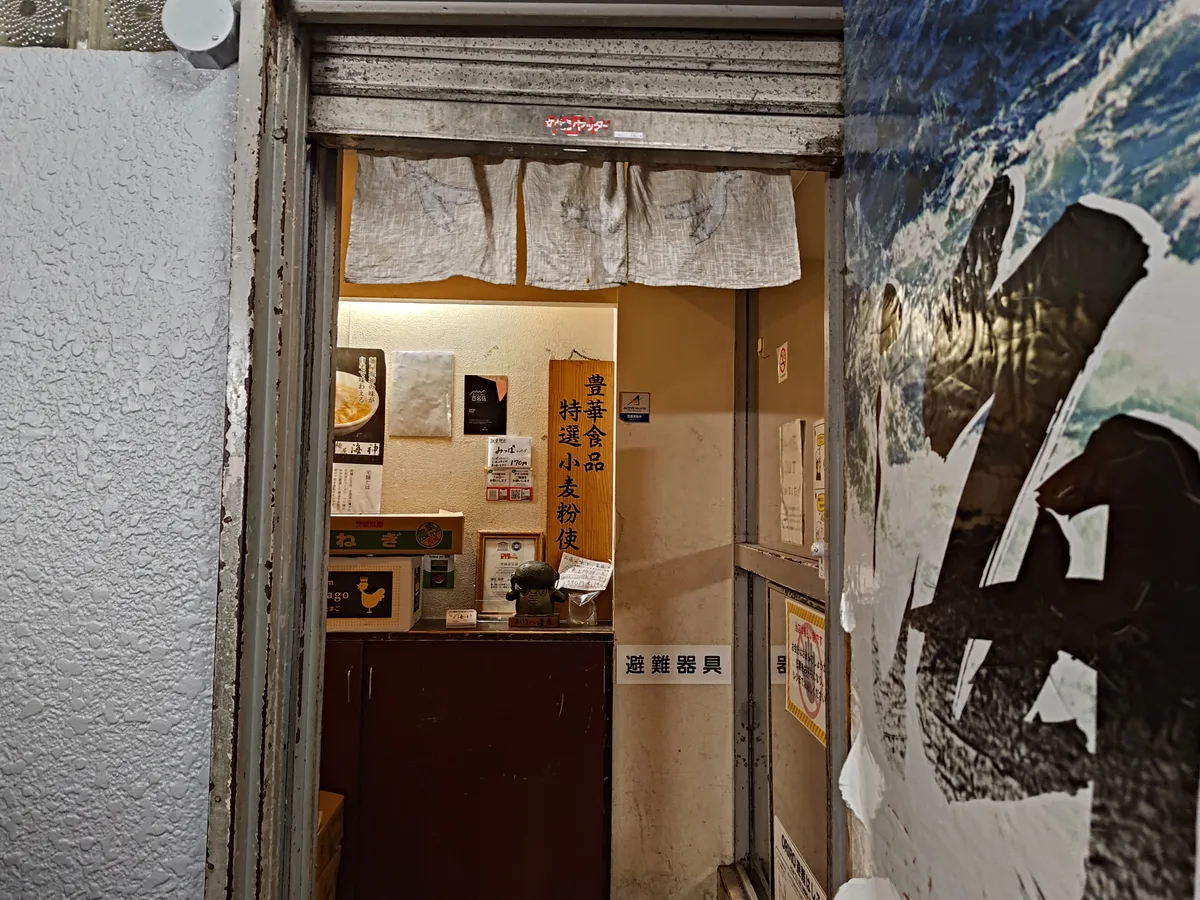
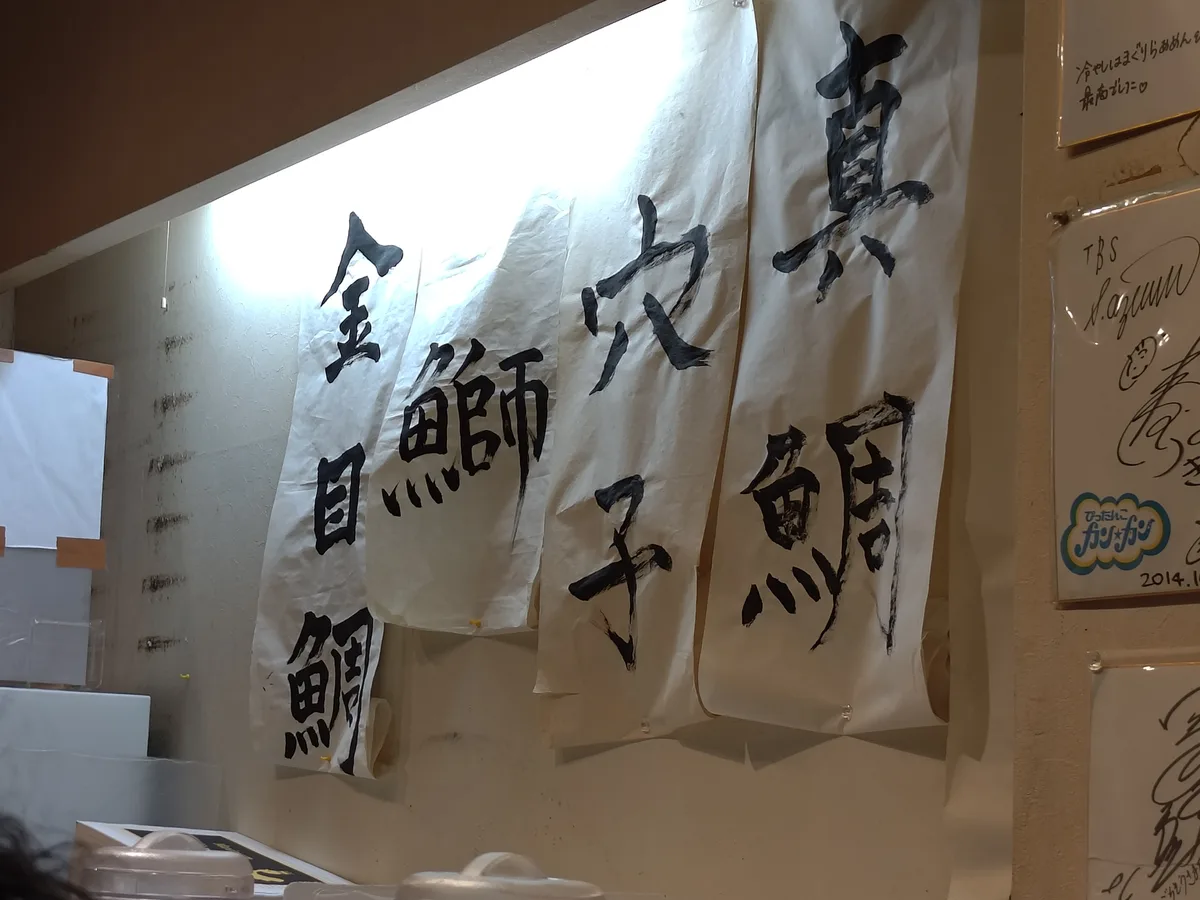
The greatest characteristic of this shop is that the ara (fish heads and bones) used for the broth changes daily. Written in brushstrokes on the shop's wall is 'Today's Ara,' listing 4-5 types of fish such as sea bream (madai), splendid alfonsino (kinmedai), yellowtail (buri), conger eel (anago), and amberjack (hamachi), depending on the day. Since the combination changes according to what's sourced, encountering slightly different flavored broths with each visit has become a connoisseur's delight.

Ren
Ara refers to the heads, bones, and surrounding parts of fish. When simmered instead of discarded, they create an elegant broth with more concentrated umami than the flesh itself. This is a technique traditionally used in Japanese cuisine, and Kaijin's style applies it to ramen.
Onigiri Set is Highly Recommended for First-Timers
If you're visiting for the first time, choosing the set with a rice ball (¥1,150) will allow you to fully enjoy the Kaijin experience. For just ¥150 more than the ramen-only option, this set lets you try their unique eating style: 'first, enjoy it as is, then later, break it into the soup.' While the ramen alone is a perfectly crafted bowl, opting for the rice ball set on your first visit ensures you taste the full concept of this shop.
🚶How to Get There — 1 Minute from the Station, But Hard to Spot
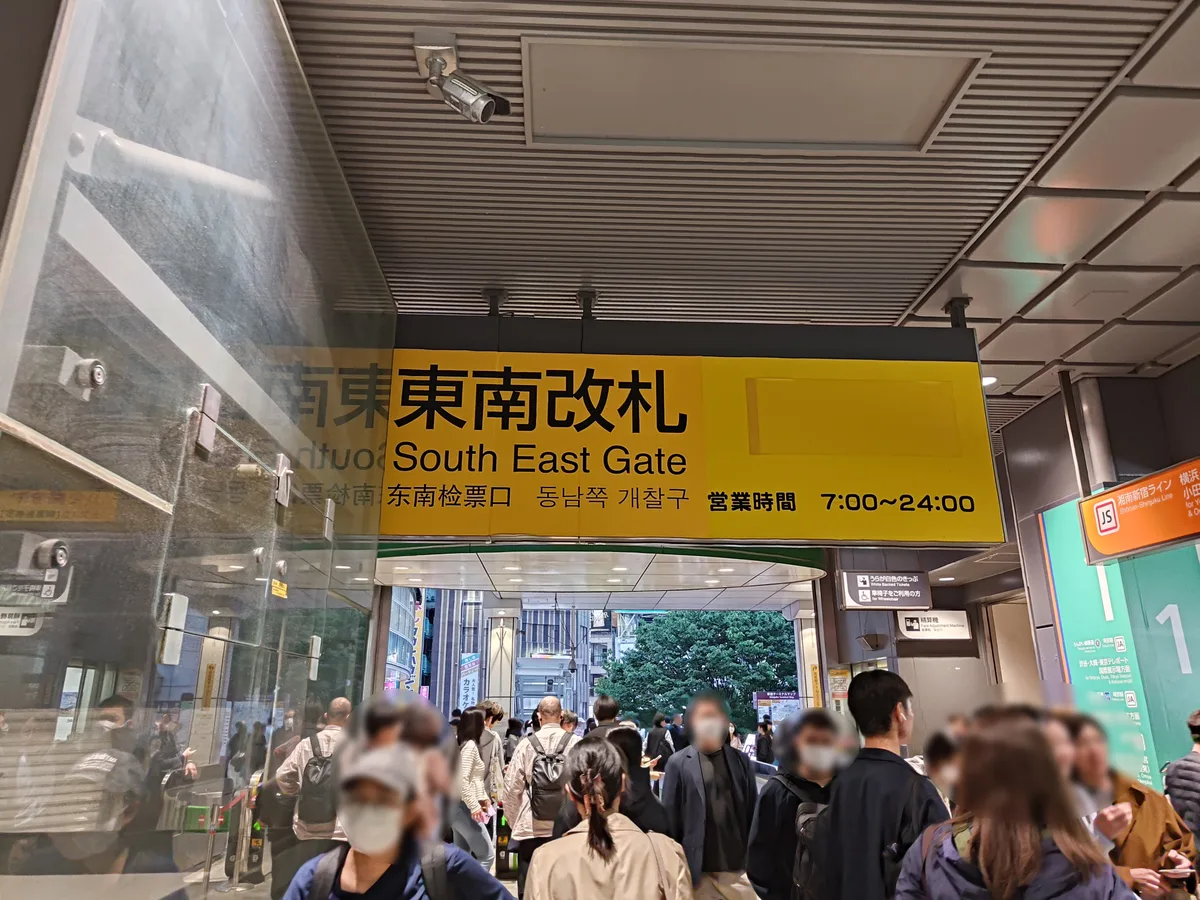
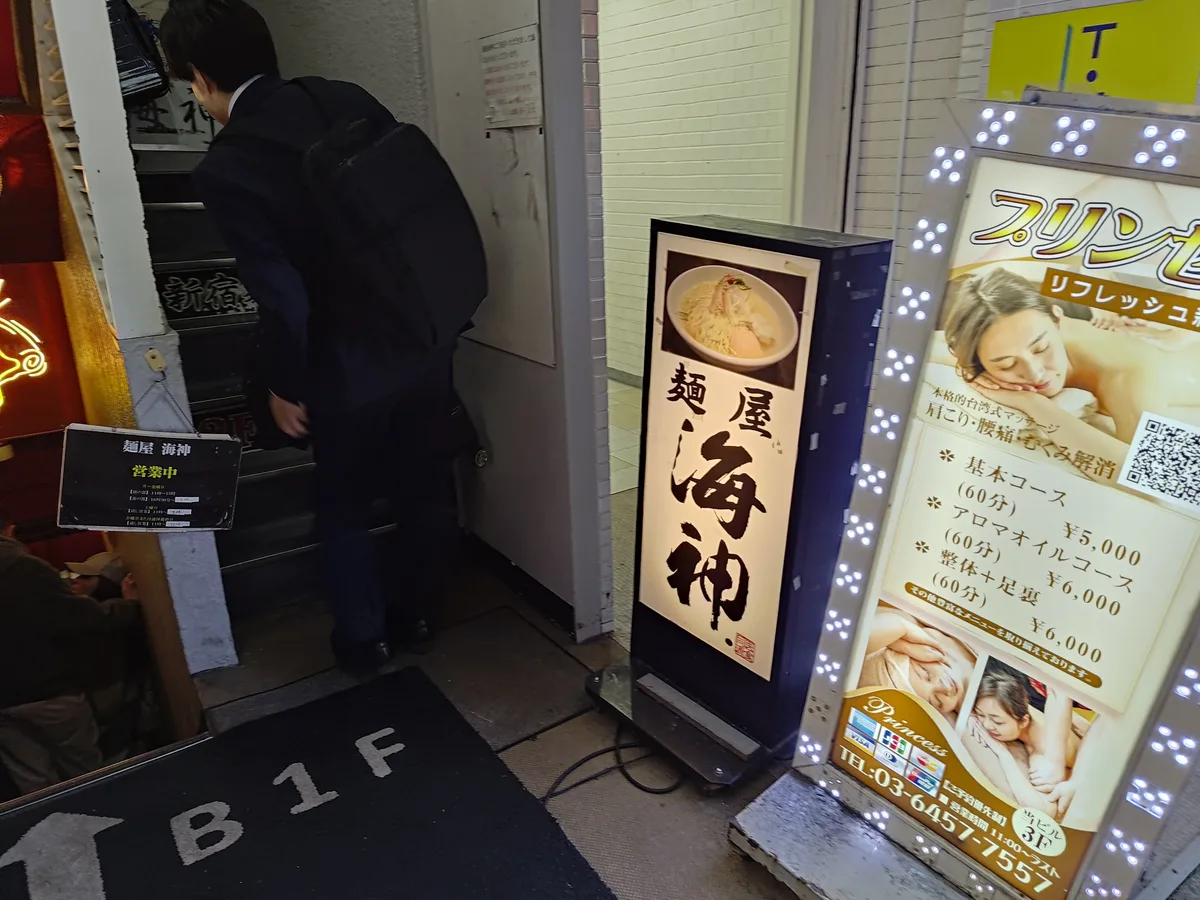
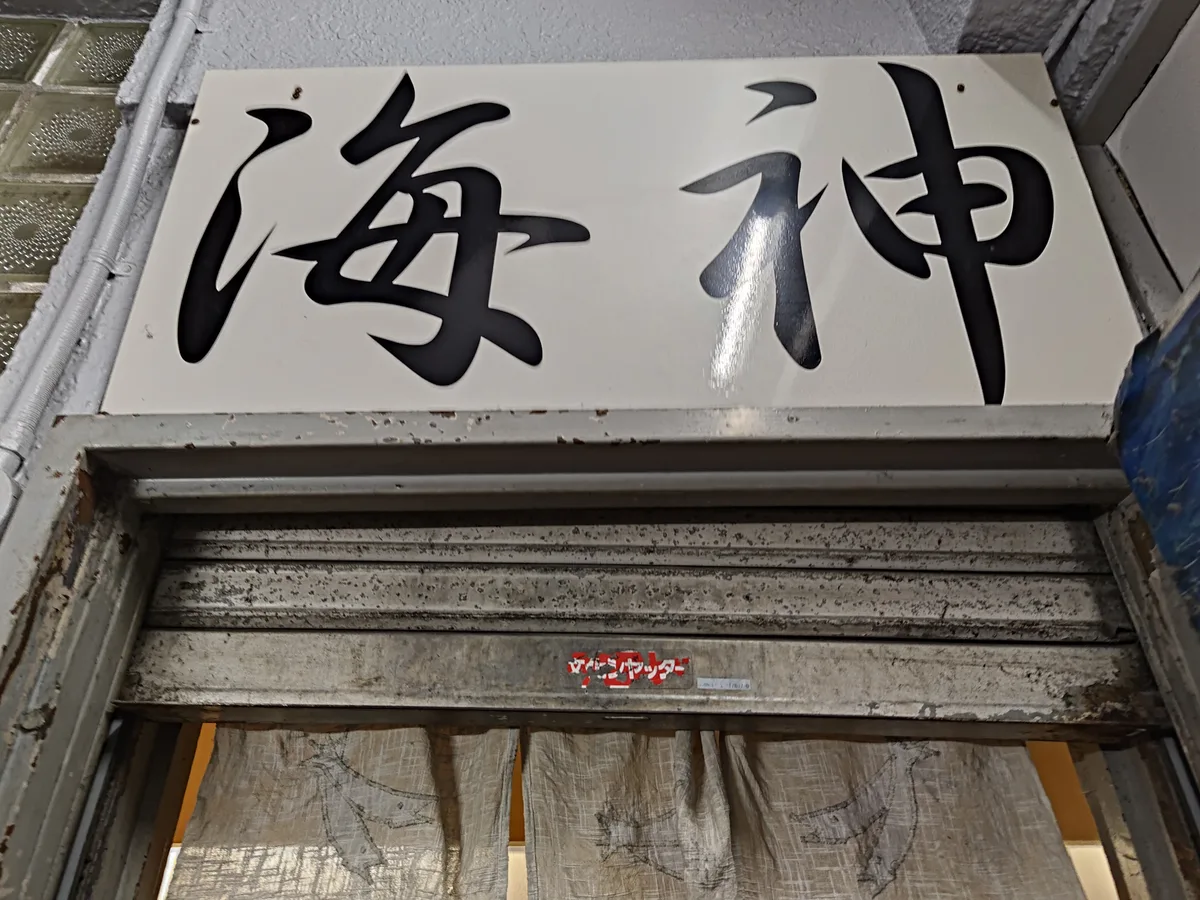
Access is excellent; simply exit JR Shinjuku Station's Southeast Exit and head straight towards the station rotary. You'll arrive in just a few dozen meters. However, there's no ramen shop-like sign on the first floor, only a small, vertical 'Menya Kaijin' sign at the entrance of a multi-tenant building. First-time visitors might walk past it, so please look carefully for the building's entrance.
It's Best to Avoid Visiting with Large Luggage
The stairs leading to the shop are narrow and steep, making it impractical to go up with a large suitcase. We recommend storing your luggage in a coin locker at Shinjuku Station before your visit, or stopping by after you've checked into your hotel.
Prepare Cash Before Going Up the Stairs (Important)
Payment is cash or PayPay only; credit cards and transit IC cards (like Suica or PASMO) are not accepted. It can be problematic to realize this only after entering the shop on the second floor, so please check your wallet before ascending the stairs. There are convenience store ATMs inside Shinjuku Station and nearby, where you can withdraw cash.
Beware of Visit Timing — Weekdays Have a Mid-Day Break
Menya Kaijin Shinjuku operates on a two-part schedule on weekdays (Mon-Fri): lunch from 11:00 to 15:00 and dinner from 16:30 to 23:30. There's a break from 15:00 to 16:30 when the shop is closed. If you plan to visit between 14:00 and 16:00 during your sightseeing, be aware that it will be outside business hours. On Saturdays and public holidays, it's open continuously from 11:00 to 23:30, and on Sundays from 11:00 to 23:00, allowing you to visit without worrying about timing.
🏠Shop Atmosphere — A Calm, Bar-like Space
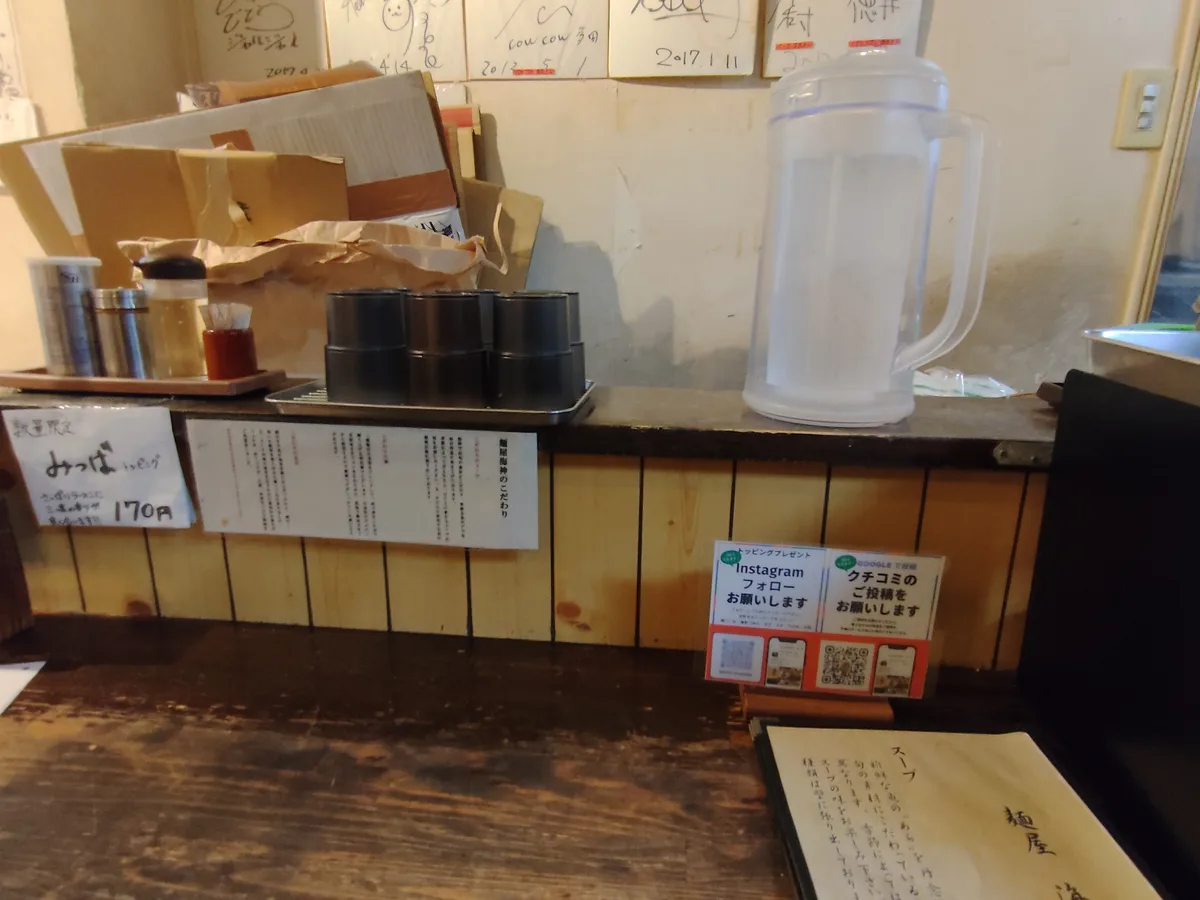
As you open the door, you're greeted by a tranquil atmosphere unlike a typical ramen shop. The lighting is somewhat dim, pop music plays in the background, and the wooden interior contributes to a bar-like ambiance. With 6 counter seats, two 4-person tables, and one 2-person table, it's not overly spacious, but it doesn't feel cramped, allowing you to enjoy your meal at a relaxed pace.
The clientele is relatively young, mainly Japanese with a sprinkling of foreign visitors. The gender ratio is fairly even, with both solo diners and couples present. Tissues are neatly placed at the end of tables, and chopsticks are self-serve. There's space under the tables for bags, so a backpack can fit without issue.
Due to its location in Shinjuku, an area lively even late at night, Kaijin offers an elegant space with subdued lighting where male customers don't appear intimidating. It lacks the typical ramen shop tension of 'packed counters and mostly male diners,' making it a **rare and valuable spot in Shinjuku for female solo travelers, with a low psychological barrier to entry.** It's especially recommended for those who want to enjoy a quiet meal alone in the evening.

Mei
Ramen shops with a bar-like atmosphere are surprisingly rare, which is a great plus for dates or dinner with colleagues. Solo diners and couples alike will feel comfortable, making it a convenient option for an evening meal in Shinjuku.
📝How to Order — Verbal Ordering, English Menu Available
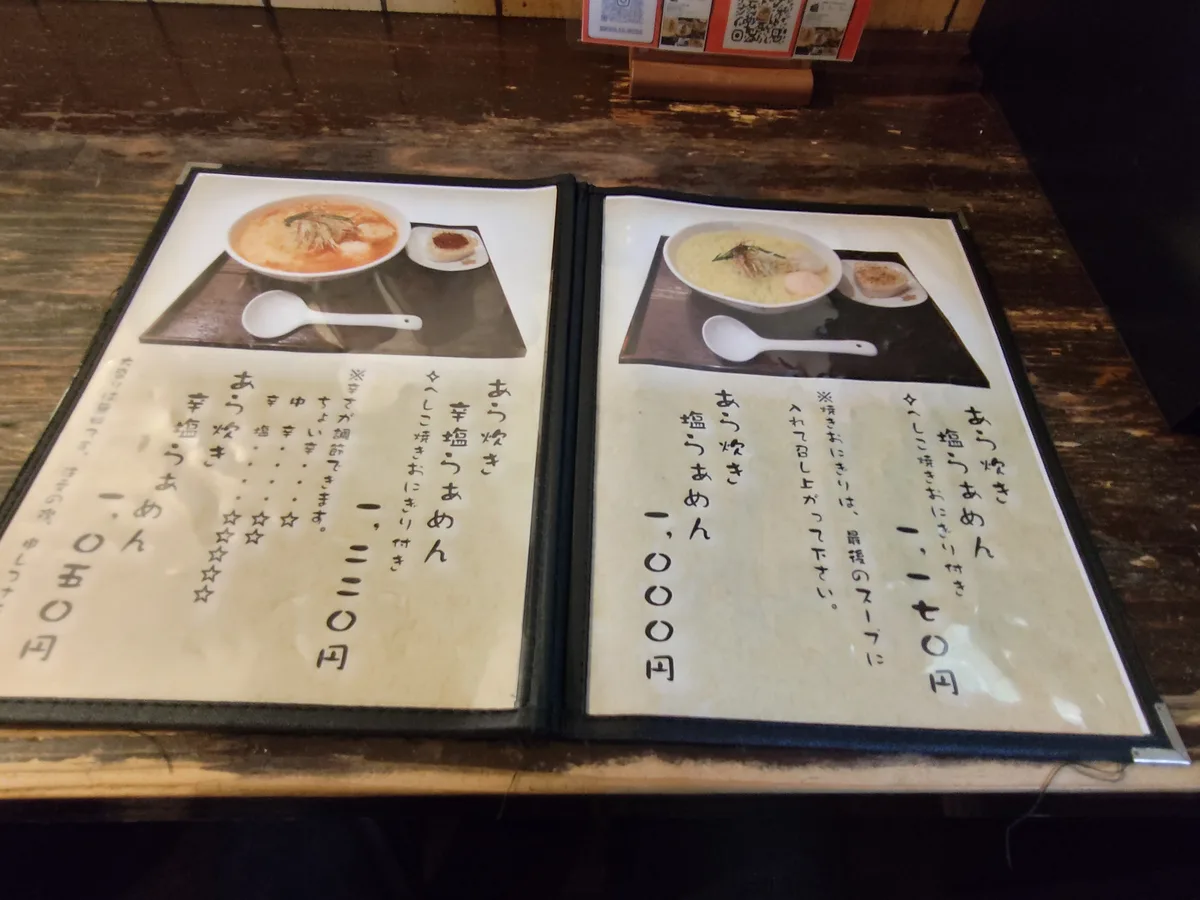
Kaijin does not use a ticket machine. Once seated, you order verbally to the staff at the counter. While the Japanese handwritten menu (with photos) is usually on the table, a separate English menu is available, which you can request by saying 'English menu, please.' You can also order by pointing to photos on the Japanese menu. Please remember that payment is cash or PayPay only (credit cards and transit IC cards are not accepted), so it's best to confirm you have cash before ordering.
- Check for available seats at the 2nd-floor entrance and follow staff's guidance to your seat
- Open the menu book. Ara-daki Shio Ramen is the signature dish.
- Call a staff member across the counter and order by pointing. If you want a large portion (omori), tell them verbally here (it's free).
- Water and chopsticks are self-serve. Condiments and water pitchers are provided on the upper counter.
- Service from order to delivery is relatively quick (our ramen arrived 4 minutes after ordering during our visit).
How to Get the English Menu & Ordering Phrases
An English menu is not initially placed on the table, but you can get a separate English menu by telling a staff member, 'English menu, please.' Ordering by pointing to the Japanese menu is also fine. If ordering verbally, you can say, "One Ara-daki Shio Ramen with Onigiri, please." If you want a large portion, add "Omori" or "Large size, please."
The menu also includes Ara-daki Kōshio Ramen (あら炊き幸塩らぁめん), which has added spiciness, adjustable from mild (ほんのり / subtle) to ★★★★★ (maximum). Kōshio is recommended for spice lovers, while the regular shio ramen is best for those who want to savor the delicate saltiness. For a first visit, starting with the regular shio ramen combined with the Heshiko grilled rice ball set is a great way to experience the shop's unique character.
| Menu | Price (incl. tax) | Notes |
|---|---|---|
| Ara-daki Shio Ramen (Salt Ramen with Fish Bone Broth) | ¥1,000 | Signature dish. Clear salt broth made from daily changing fish heads and bones. |
| Ara-daki Shio Ramen with Heshiko Grilled Rice Ball | ¥1,150 | ★Highly recommended for first-time visitors. Experience Kaijin's unique eating style by breaking the rice ball into the soup. |
| Ara-daki Kōshio Ramen (Spicy Salt Ramen with Fish Bone Broth) | ¥1,050 | A shio ramen with added spiciness. Spice level adjustable in 5 stages. |
| Ara-daki Kōshio Ramen with Heshiko Grilled Rice Ball | ¥1,200 | Spicy salt ramen + rice ball set. |
| Clam Ramen (Limited Quantity) | ¥1,800 | Limited menu item using high-quality clams from Kujukuri-hama. |
| Deluxe All Toppings | ¥750 | All toppings except cilantro (cheaper than ordering individually). |
| Sea Bream Tsukune / Shrimp Tsumire | ¥130 each | Can be added individually. |
| Ajitama (Seasoned Egg) | ¥250 |
Large Portion (Omori) is Free. Quantity is a Guideline Only.
For Ara-daki Shio Ramen dishes, a large portion (omori) is free. You can request it verbally by saying 'Omori de' or 'Omori, please' when ordering. While portion sizes vary by physique and eating habits, as a guide: an average-sized male might find a 'large portion + rice ball' to be just right for satisfaction, while for women, a 'regular portion + rice ball' is often sufficient. For those who eat a lot, a regular portion might feel a bit small, so if in doubt, it's safe to choose the large portion.
🎣'Today's Ara' — The Daily Changing Star
The true delight of Kaijin begins with checking 'Today's Ara' posted inside the shop. Written in bold brushstrokes on the wall are the names of the fish whose ara are being used that day. On our visit on April 17, 2026, the daily lineup included splendid alfonsino (kinmedai), yellowtail (buri), conger eel (anago), and sea bream (madai). Since the combination changes daily — sometimes featuring sea bream family fish, blue fish, white fish, Japanese amberjack (amadai), or amberjack (hamachi) — regulars look forward to 'today's lineup' with each visit.

Zack
If you visit multiple times, it's interesting to keep a record of 'Today's Ara' for each visit. The soup's character changes with each lineup – some days feature mainly white fish, others include blue fish, and some even have premium splendid alfonsino. Many regulars post about it on social media!
🔥Our Meal — Ara-daki Shio Ramen with Heshiko Grilled Rice Ball (Large Portion)
Soup — Light and Smooth, Yet Packed with Fish Umami
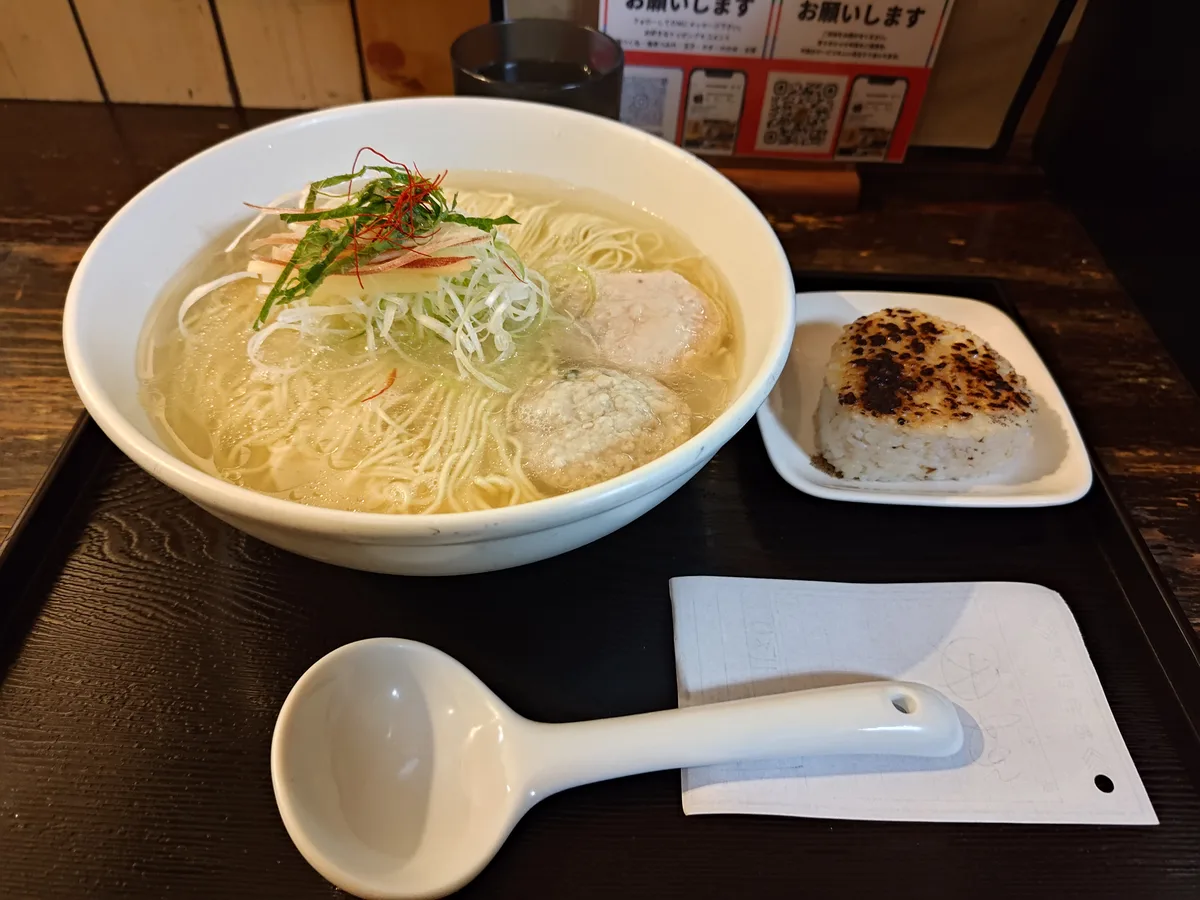
The first impression is a 'clear, serene salt flavor.' It's light and smooth with almost no oil, a mouthfeel that's the complete opposite of heavy tonkotsu broths. However, it's far from lacking; the umami and aroma of seafood are layered throughout the soup, deepening with every sip. It's delicate yet never becomes bland, a perfectly crafted bowl that you can drink entirely.
This direction is particularly perfect for those tired of rich, oily broths, or those looking for a light bowl of ramen to finish off an evening of drinking.
Noodles — Thin Straight Noodles with Wheat Aroma
The noodles are thin and straight, with a slight chewiness. They slide down smoothly, and when bitten, release a gentle aroma of wheat. They are designed not to overpower the delicate soup, striking a perfect balance. Even with a large portion, the quantity doesn't feel heavy, allowing you to enjoy it rhythmically to the very end.
Chicken Tsukune (Meatball) & Shrimp Tsumire (Dumpling) — A Red and White Contrast with Distinct Roles
The main toppings are the white chicken tsukune (meatball) and the pale pink shrimp tsumire (dumpling). In place of chashu (sliced pork), these two serve as both protein sources and provide flavor variations. The chicken tsukune is juicy and rich in flavor, offering a relatively distinct taste within the ramen. The shrimp tsumire has a strong shrimp flavor, naturally blending with the seafood dashi salt soup. You won't feel any lack without chashu.
Ginger & Shiso — A Mid-Course Accelerator for the Latter Half
Thin strips of ginger and shredded shiso (perilla leaf) are delicately placed on top of the bowl. The ginger provides a pungent kick, and the shiso a refreshing aroma. Since these strong flavors suddenly appear within the delicate soup, it's recommended not to mix them in from the start. Instead, eat about half of the ramen first, then gradually break them in. This adds layers of flavor as you progress, effectively preventing the dish from becoming monotonous.
Heshiko Grilled Rice Ball — A Side Dish Designed for 'Two-Stage Enjoyment'
Heshiko (mackerel fermented in rice bran for several months — a traditional specialty of Fukui Prefecture) is one of Japan's representative fermented foods, characterized by a deep, rich umami similar to miso or aged cheese. Kaijin's grilled rice ball is made by forming this heshiko with rice and then grilling it, offering a unique flavor where the umami of fermentation and the fragrant char of grilling are integrated.
The Heshiko grilled rice ball, served on a separate plate, is designed to be eaten in Kaijin's unique style. First, take a bite as is. The aroma of toasted rice, the fragrant char, and the umami of the fermented mackerel spread in your mouth. Then, when only a little is left, soak the rice ball generously in the soup, lightly break it apart, and enjoy. The fragrant rice and soup intertwine, revealing a new dimension to the ramen. This 'two-stage eating method' is clearly stated on the menu.
How to Eat the Heshiko Grilled Rice Ball
① First, take a bite as is — enjoy the fragrant char and mackerel umami on its own. / ② When only a little is left, add it to the soup — enjoy it as a 'second ramen' with fragrant rice combined with ara dashi (fish bone broth). This is Kaijin's specialty eating method, designed for a two-stage flavor transformation.
Mei
With its clear soup, red and white tsukune, and accents of myoga (Japanese ginger) and chili threads, this bowl is simply beautiful to look at. It's perfectly Instagrammable, but if you're taking photos, the first five seconds before the soup fogs up with steam are crucial. I recommend having your smartphone ready as soon as you sit down!
Large Portion (Omori) — As a Guideline Only
This time, we ordered the large portion with a rice ball, which was just the right satisfying amount for the average-sized male writer. While individual differences exist based on physique and eating habits, as a reference, those who eat a lot may feel more satisfied with a large portion, while women or those with smaller appetites often find a regular portion with a rice ball to be ample. Due to the thin straight noodles, even a large portion doesn't feel heavy, and the ramen is designed to be easy to finish, soup and all.
📍Nearby Tourist Attractions
The area around Shinjuku Station is one of Tokyo's premier entertainment districts, with many tourist attractions concentrated within walking distance. Here are a few places that are easy to combine with a ramen meal:
- Shinjuku Gyoen National Garden (10-minute walk) — A vast garden, popular for cherry blossoms in spring and autumn leaves. Perfect for a post-meal stroll.
- Isetan Shinjuku Main Store (8-minute walk) — One of Tokyo's top department store basements for gourmet food. Great for Japanese and Western sweets or souvenir shopping.
- Kabukicho (10-minute walk) — A neon-lit district where you can experience Tokyo's nightlife. A completely different world when visited at night.
- Tokyo Metropolitan Government Building Observation Decks (15-minute walk / free) — Enjoy panoramic views of Tokyo from 202m up for free. Mount Fuji is visible on clear days.
- Golden Gai (12-minute walk) — A retro Showa-era area packed with tiny bars. A great option for drinks after ramen.
❓Frequently Asked Questions
QIs there an English menu?▼
Yes, there is. However, the Japanese menu (handwritten with photos) is initially placed on tables, so please verbally request an English menu from the staff by saying 'English menu, please.' They will provide a separate English menu. You can also order by pointing to photos on the Japanese menu.
QAre credit cards accepted?▼
Credit cards and transit IC cards are not accepted. You can pay with cash or PayPay. For PayPay payments, you scan the QR code next to the register, input the amount yourself, and then show the screen to the staff for confirmation.
QHow long is the wait?▼
During our visit on a Monday at 18:05, we were able to enter without waiting. However, during peak hours on weekend afternoons, queues of about 8 people can form on the narrow stairs. The turnover is relatively fast, with ramen arriving 4-5 minutes after being seated.
QCan I bring a suitcase?▼
The stairs are narrow and steep, so we do not recommend visiting with a large suitcase. It's safer to store your luggage in a coin locker at Shinjuku Station beforehand or visit after checking into your hotel. There is space under the tables for items like a backpack.
QDoes 'Today's Ara' change daily?▼
Yes, it changes daily depending on the day's sourcing. 4-5 types of fish such as sea bream (madai), splendid alfonsino (kinmedai), yellowtail (buri), conger eel (anago), and amberjack (hamachi) are combined for the broth each day. Since the flavor subtly differs with each visit, many repeat customers look forward to seeing 'Today's Ara' displayed on the shop's wall.
🚃Access
Exit JR Shinjuku Station's Southeast Exit, proceed straight towards the station rotary, and you'll find it on the 2nd floor of the first block's multi-tenant building. It's a prime location, just a 30-second to 1-minute walk. It's also a 7-minute walk from Seibu Shinjuku Station, and within 10 minutes from Shinjuku Stations on the Toei Shinjuku Line, Toei Oedo Line, and Marunouchi Line. Please note that the only sign for the entrance is a vertical banner on the multi-tenant building, and there's no shop-like exterior on the first floor. Look carefully.
📋Shop Information
| Item | Details |
|---|---|
| Shop Name | Menya Kaijin Shinjuku (めんやかいじん) |
| Genre | Fish Bone Broth Shio Ramen |
| Difficulty | ★1 Friendly |
| Ordering Method | Verbal (Menu with photos, pointing OK) |
| Seating | 6 counter seats / Two 4-person tables / One 2-person table |
| Price Range | ¥1,000〜¥1,970 |
| English Menu | Available (provided upon verbal request) |
| Payment Methods | Cash / PayPay (Cards & e-money not accepted) |
| Nearest Station | JR Shinjuku Station Southeast Exit, 30 seconds to 1 minute walk |
| Waiting Time Estimate | No wait observed on weekday evenings / Queues of around 8 people can form on weekend afternoons |
| Business Hours | Mon-Fri 11:00-15:00 / 16:30-23:30, Sat/Holidays 11:00-23:30, Sun 11:00-23:00 (Please confirm before visiting) |
| Closed | Irregular holidays |
🎯Who This Shop Is For / Not For
| Recommended | Might Not Be For You |
|---|---|
| You prefer delicate seafood dashi shio ramen | You're craving rich tonkotsu or Jiro-kei ramen |
| You're looking for a unique bowl in Shinjuku | You want ramen with plenty of chashu (sliced pork) |
| You want to continue walking or sightseeing afterward (light and easy on the stomach) | You want to fill your stomach completely |
| You're looking for ramen to finish off an evening of drinking | You only carry credit cards |
| You want to enjoy a Japanese-style dashi (broth) | You are traveling with a suitcase |
Summary
Menya Kaijin Shinjuku is a ramen specialty shop in Tokyo with a rare style, featuring a clear shio (salt) broth made exclusively from ara (fish heads and bones). Its excellent location, just a 30-second walk from JR Shinjuku Station's Southeast Exit, makes it easy to visit during sightseeing. At the same time, the daily changing fish dashi (broth) offers new discoveries with every visit, making it a place worth 'making a special trip' for. If you visit, we highly recommend the Heshiko grilled rice ball set for your first time, allowing you to experience Kaijin's signature method of soaking the rice ball in the soup during the latter half of your meal—this is the key takeaway we want to convey throughout this article.
From the light, smooth broth with minimal oil to the fragrant thin straight noodles, the red and white tsukune and tsumire, the flavor transformation in the latter half with ginger and shiso, and finally, the grilled rice ball to conclude the meal—every element of this bowl is carefully crafted. Its delicate nature, capable of resetting taste buds fatigued by rich ramen, is sure to leave a special memory during your Shinjuku sightseeing.
Visited & Verified by Our Team
This article was written after the Ramen Gateway editorial team actually visited the shop on Monday, April 17, 2026, and ordered and reviewed the Ara-daki Shio Ramen (large portion) with Heshiko grilled rice ball. All photos were also taken during this visit.
If you visit, we'd love to hear your review!
"We don't let AI eat ramen. We use AI to draw the coolest map so adventurers worldwide can find the real treasure hidden in Japan's back alleys."
Made in Japan — with local knowledge & AI assistance