Sapporo Ramen Guide: Not Just Miso – A Complete Map of 18 Shops in the City of Snow, Shime, and Seafood
From Junren, Saimi, and Sanpei to Sapporo Black, savor the birthplace of miso. A traveler's guide to winter underground routes and shime ramen culture.


📖What You'll Learn in This Guide
- 5 Shops You Can Enjoy Just in Central Sapporo — within walking distance of Sapporo Station, Odori, and Susukino
- 4 Shops Worthy of Miso Pilgrimage — Junren, Saimi, MEN-EIJI, Ramen Yoshi
- 8 Famous Shops Beyond Miso — Makibi Shoyu, Niboshi, Sapporo Black, Toripaitan, Jiro-style
- Shime Ramen Culture — Shops open after 11 PM
- Practical Winter Information — Avoiding crowds during Snow Festival, underground passage routes, countermeasures for icy sidewalks
🎯First Things First — Quick Picks by Scene
If you're only having 1-2 bowls of ramen in Sapporo, choosing from the following options will likely lead to a satisfying experience.
- Want to try Sapporo's classic Miso Ramen for the first time: Keyaki / Saimi / Aji no Sanpei
- Want Shime Ramen after drinking in Susukino: Isono Kazuo / Yukikaze / Keyaki
- Want to try Sapporo Ramen other than Miso: Tokuichi (Makibi Shoyu) / Nanabei (Toripaitan Shio) / Shouki (Kombusui Tsukemen)
- As a ramen enthusiast, want to go on a serious pilgrimage: Junren / Saimi / Tokuichi / Mokuyobi
- Beginner worried about ordering or getting around: Keyaki / Aji no Sanpei / Shops around Sapporo Station & Odori
⚡When in Doubt, Refer Here — Sapporo Ramen Quick Reference
| Purpose | Shop | Area | Difficulty | Key Point |
|---|---|---|---|---|
| First Miso Bowl | Keyaki Susukino Honten | Susukino | ★2 | Photo guide (like an English menu), on tourist route |
| Pilgrimage to the Peak of Miso | Menya Saimi | Misono (Toho Line) | ★2 | Miso said to be among Hokkaido's best, direct subway access |
| Origin of Miso | Aji no Sanpei | Odori (4F building) | ★2 | Originator of Sapporo Miso, understated sign |
| A Shime Bowl | Isono Kazuo | Susukino | ★3 | Sapporo Black, flavor change with Gagome Kombu |
| Venture Beyond Miso | NOUILLES JAPONAISE Tokuichi | Nijuyonken (Tozai Line) | ★2 | Unique Makibi Shoyu style |
Information Source Disclosure from the Editorial Team
This article is based on on-site verification by the Ramen Gateway editorial team (including a real visit and tasting report for Sapporo Junren), meticulous review of official websites, local reviews, and social media information, and individual checks of ordering difficulty, payment methods, and business hours for each shop. All information has been cross-referenced with each shop's page on our site. Business hours and regular holidays may change, so please check each shop's page or official information before visiting.
📚Sapporo Ramen Terminology Mini-Glossary
- Miso Ramen (味噌ラーメン): Originated in Sapporo (around 1955, from Aji no Sanpei). The original style combines stir-fried vegetables and minced meat with a miso-based soup.
- Sapporo Black (札幌ブラック): A dark, cloudy, rich soy sauce soup. A unique Sapporo evolution, distinct from Toyama Black.
- Shime Ramen (〆ラーメン): Ramen eaten late at night after drinking. In Sapporo, it's not uncommon for shops to be open from 2-5 AM.
- Junren (純連) / Sumire (すみれ): Originated in 1964 as 'Sumire.' Closed in 1982, then revived in 1983 as 'Junren' (pronounced 'joon-ren'), later branching into 'Junren' and 'Sumire.' These are the two major lineages of Sapporo Miso ramen.
- Makibi (薪火): Soup cooked over a wood fire. Characterized by a fragrant, smoky aroma.
- Kombusui Tsukemen (昆布水つけ麺): Dipping noodles in cold water steeped with Hokkaido kelp, a recent Hokkaido-style dipping ramen.
- Jiro-style (二郎系) / Call (コール): A rich ramen characterized by a mountain of vegetables and thick pork slices. 'Call' refers to the unique ordering custom of verbally requesting the presence or absence, and increase or decrease, of 'ninniku (garlic) / yasai (vegetables) / abura (fat) / karame (extra seasoning)' just before serving.
- Hyakumeiten (百名店): The 'Tabelog Top 100 Ramen Shops.' Several Sapporo shops are regularly selected.
🍜From Taisho Era's Takeya to the Birthplace of Miso — The History and Modernity of Sapporo Ramen
The history of Sapporo ramen is said to trace back to 'Takeya Shokudo,' which opened in Odori in 1922. The Chinese noodle dishes served by the cooks at that time are one of the origins of the term 'ramen.' On top of this pre-war trend, post-war street stall culture accumulated.
A turning point came around 1955. Morito Omiya, the owner of 'Aji no Sanpei' in Odori, is said to have perfected 'Miso Ramen,' combining stir-fried minced meat and vegetables with miso soup. This became the prototype for Miso Ramen not only in Sapporo but throughout Japan.
In 1964, 'Sumire' (later also known as Junren) opened near Nakajima Park, establishing a method for rich Miso Ramen that locks in the soup's heat with a thick layer of lard. After closing once in 1982, it revived in 1983 as 'Junren' (pronounced 'Joon-ren'), with the sibling brand 'Sumire' later becoming independent. These two major brands became the driving force behind Sapporo Miso's global renown. Even today, these two shops are regarded as symbolic presences of Sapporo Miso.
In 2004, 'Sapporo Ramen Republic' opened on the 10th floor of JR Sapporo Station ESTA, becoming a major gathering place for tourists. However, it closed in August 2023 due to station redevelopment. The current tourist ramen routes have been reorganized to include 'Ramen Yokocho' (Susukino, at its current location since 1971), multi-branch brands like Sumire and Teshikaga Ramen, and the unique, famous shops introduced in this article.
A characteristic of modern Sapporo ramen is that it's not just about miso. Sapporo has evolved into a diverse city offering all difficulty levels and styles, including Sapporo Black, Niboshi (dried sardine) varieties, Makibi Shoyu (wood-fired soy sauce), Toripaitan Shio (chicken paitan salt), and Jiro-style ramen. In this article, we'll organize the 18 shops featured on our site from a traveler's perspective, using three axes: geographical zone, style, and difficulty.

Ren
It's a shame to leave Sapporo having only eaten Miso Ramen. Experience the origin at Aji no Sanpei, the peak at Junren or Saimi, and Sapporo Black at Isono Kazuo — these three bowls will give you a complete picture of Sapporo ramen.
🗾How to Incorporate Sapporo — Timing Your Hokkaido Trip and Ramen
Sapporo is often incorporated as a base for exploring Hokkaido, visiting places like Otaru, Furano, Niseko, and Hakodate, rather than as a standalone destination. The median stay in Sapporo is 2-3 nights, during which realistically, you'll have 1-2 evenings for ramen. That's why the choice of 'which bowl to have' greatly impacts your satisfaction during your limited time in Sapporo.
✈️New Chitose Airport to Sapporo Station: Fastest in 33 Minutes
From New Chitose Airport to Sapporo Station, the JR Rapid Airport train takes a minimum of 33 minutes and costs 1,230 yen. Special rapid trains will also begin operation from 2025. If you have a lot of luggage, a reserved 'u-seat' (additional charge) is convenient. Buses take about 77 minutes. If you arrive in Sapporo on a late-night flight, checking into your hotel then heading to Susukino for a shime ramen is a viable way to start your trip.
🧳A Practical Solution: Incorporating Ramen on Arrival and Departure Days
In Sapporo, which serves as both an entry and exit point for Hokkaido tours, scheduling 'one ramen bowl on the night of arrival' and 'one last bowl on the day of departure' is highly time-efficient. For arrival day, choose a shop in Susukino/Odori within walking distance of your hotel; for departure day, a shop within walking distance of Sapporo Station. For a ramen pilgrimage (Junren/Saimi), it's best to set aside ample time on a middle day.
| Timing | Recommendation | Reason |
|---|---|---|
| Shime on Arrival Day | Keyaki / Isono Kazuo / Yukikaze | Within walking distance of Susukino, open late |
| Pilgrimage on Middle Day | Menya Saimi (Misono Station) / Sapporo Junren (Sumikawa Station) | Allow 1-2 hours, including waiting in line |
| Last Bowl on Departure Day | Ramen Jiro Sapporo (8-min walk from Sapporo Station) / Aji no Sanpei (3-min walk from Odori Station) | Quickly enjoy near the station before catching the JR to the airport |
🚆Connecting with Hokkaido Tours — Towards Otaru, Hakodate, Furano
Otaru is about 30-40 minutes by JR Rapid train, Hakodate is about 4 hours via Shinkansen Shin-Hakodate-Hokuto, and Furano is about 2 hours by limited express + local train. Each destination offers different culinary experiences: Otaru for seafood, Furano for lavender and cheese, and Hakodate for Shio Ramen and night views. By dividing your experiences – Miso, Sapporo Black, Niboshi, and Makibi Shoyu in Sapporo – you can efficiently enjoy Hokkaido's diverse food scene.
🏔️On Your Way Back from Skiing in Niseko or Rusutsu
Skiing in Niseko or Rusutsu, then spending 1-2 nights in Sapporo before returning home, is a classic winter itinerary. It takes about 2-3 hours by highway bus from the ski resorts to Sapporo. A rich Miso (Keyaki, Yukikaze) or shime ramen (Isono Kazuo) is particularly suitable for warming up after a day on the slopes.
🧭Three Understandings for Enjoying Sapporo Ramen
🥄Understanding 1: Miso is the Star, but Half is Not Miso
Of the 18 Sapporo shops listed on this site, 10 feature Miso as their signature style. The remaining 8 offer styles like Sapporo Black (Soy Sauce), Makibi Shoyu (wood-fired soy sauce), Niboshi (dried sardine), Toripaitan Shio (chicken paitan salt), Gyokai Tonkotsu Shoyu (seafood pork bone soy sauce), and Jiro-style. The simplistic equation 'Sapporo = Miso' is only half true.
Even within miso ramen, there's a wide range: the super-rich Junren-style (with a insulating layer of lard), the classic ginger-infused Saimi-style, the simple original style of Aji no Sanpei, and unconventional variations from MEN-EIJI or Ame wa Yasashiku (featuring seafood or white liver adaptations). If you're having two bowls in one day, combining miso with non-miso, or rich with light, will reveal Sapporo's diversity.
🌙Understanding 2: Shime Ramen Culture — A City with Nationally Prominent Late-Night Openings
Susukino is one of Japan's premier entertainment districts, and the culture of eating ramen as a 'shime' (closing meal) after drinking is more ingrained here than in other cities. Among the shops featured on this site, Isono Kazuo (Sapporo Black), Yukikaze, and Keyaki are open late into the night.
After drinking in Susukino, grab a bowl before heading back to your hotel. Or, it could be your very first bowl on a late-night arrival in Sapporo. Shime ramen, enjoyed amidst the snowglow in winter or under the cool night breeze in summer, is a unique travel experience only Sapporo can offer.
🦀Understanding 3: Time Slot Separation with Seafood — Seafood for Breakfast/Lunch, Ramen for Dinner
Sapporo's three culinary pillars are said to be 'seafood, Miso Ramen, and Genghis Khan (lamb BBQ).' From a local perspective, it's rational to allocate time slots: seafood for breakfast/lunch (Nijo Market, Curb Market, conveyor belt sushi), Genghis Khan for dinner, and ramen for a late lunch or late at night.
If you're incorporating ramen as a 'lunch between sightseeing,' it serves as a great recharge before your afternoon shop visits. If you're making it the 'main event for dinner,' it's recommended not to have it just as a stomach rest after seafood, but rather to dedicate a separate day and ample time to head to the ramen pilgrimage zone (southern Toyohira Ward).

Mei
Honestly, ramen after a full kaisendon (seafood bowl) is tough. The recommended way to combine them is: seafood at Nijo Market in the morning → light lunch (or skip it) → ramen around 6 PM. In winter, when your body is cold, night ramen is especially appealing.
📊Map of All 18 Shops
Payment methods may change. Please check each shop's page for the latest information.
Tap/Click Shop Names
Each shop name is a link. Tap or click to go to the shop's detailed page (business hours, ordering guide, reviews, etc.).
About Special Classes
🧙 Wizard = Shops with tricky ordering methods (e.g., specific 'calls' or customizations). 🥷 Ninja = Hidden gems with hard-to-find entrances. 🥋 Dojo = Famous shops with unique rules or etiquette. These indicate 'adventure elements' separate from the difficulty stars.
🗾 Sapporo Ramen Map
About Mobile Display
Of the six columns, 'Zone' and 'Special Class' are automatically hidden on mobile. We've prioritized 'Shop Name / Quick Guide / Difficulty / Style' for easy viewing on portrait screens. Individual information like payment methods and business hours can be found on each shop's page.
| Shop Name | Difficulty | Style | Special |
|---|---|---|---|
| Keyaki Susukino Honten | ★2 | Miso | — |
| Menya Yukikaze Susukino Branch | ★2 | Rich Miso (Toripaitan) | — |
| Aji no Sanpei | ★2 | Miso (Origin) | Ninja |
| Okami Soup | ★2 | Miso | — |
| Ramen Jiro Sapporo | ★4 | Jiro-style | Wizard/Dojo |
| Isono Kazuo | ★3 | Sapporo Black (Shoyu) | Ninja |
| NOUILLES JAPONAISE Tokuichi | ★2 | Makibi Shoyu/Shio | — |
| Ramen Mokuyobi | ★4 | Niboshi Shoyu/Tsukemen | Wizard/Ninja |
| Sapporo Junren Sapporo Branch | ★2 | Miso (Junren-style) | — |
| Menya Saimi | ★2 | Miso (Ginger) | — |
| MEN-EIJI HIRAGISHI BASE | ★2 | Gyokai Tonkotsu Shoyu/Miso | — |
| Ramen Yoshi | ★3 | Gyokai Tonkotsu Shoyu | Ninja/Dojo |
| Men Shouki | ★2 | Seabura Niboshi / Kombusui Tsukemen | — |
| Ame wa Yasashiku | ★3 | Shirakimo Niboshi Miso | — |
| Menya Nanabei Honten | ★2 | Toripaitan Shio | — |
| Sapporo Menya Mitsuba | ★2 | Miso (Ginger) | — |
| Hachinoki | ★3 | Miso | — |
| Menya Keserasera | ★2 | Toripaitan Shio/Shoyu/Miso | — |

Dr. Hiro
Of the 18 shops listed on this site, about 10 offer Miso Ramen. However, some shops like MEN-EIJI and Yukikaze span multiple styles, so the classification isn't a simple count. Sapporo is famous as a Miso Ramen city, but in reality, it's a ramen metropolis where you can enjoy Sapporo Black, Makibi Shoyu, Niboshi, Toripaitan, Gyokai Tonkotsu, and even Jiro-style. If you leave thinking 'Sapporo = Miso' only, you'll miss out on half of what it offers.
🗺️Zone A: Central Sapporo — Within Walking Distance of Sapporo Station, Odori, Susukino (6 Shops)
Sapporo Station (JR / Subway Namboku Line Sapporo), Odori Station (intersection of Namboku, Tozai, and Toho Lines), and Susukino Station (Namboku Line) are connected by an underground passage system 'Chikaho + Pole Town + Aurora Town' spanning approximately 2 km. In winter, utilizing this underground route significantly reduces stress from snow and icy sidewalks. This zone gathers 6 shops that are a primary stage for tourists.
🍲Keyaki Susukino Honten (★2, Miso)
A 3-minute walk from Susukino Station. This popular shop offers a balanced Miso Ramen made from a blend of three types of miso, is located on a main tourist route, and provides relatively well-prepared photo guides (like English menus). They also sell ramen souvenir sets, making it a safe choice for your first Sapporo Miso bowl.
👉 See Keyaki Susukino Honten Shop Information
🌶️Menya Yukikaze Susukino Branch (★2, Toripaitan x Miso)
A 3-minute walk from Higashi-Honganji-Mae Station / 8-minute walk from Susukino Station. Their signature is 'Rich Miso Ramen,' a blend of toripaitan (chicken paitan) and miso. It's an unconventional miso with a creamy texture and sweetness, and spicy miso is also popular. Located on the outskirts of Susukino, you can enjoy it in a slightly calmer atmosphere than the bustling city center.
👉 See Menya Yukikaze Susukino Branch Shop Information
🏛️Aji no Sanpei (★2 🥷, Origin of Miso)
A 3-minute walk from Odori Station / 1-minute walk from Streetcar Nishi 4-chome. Located on the 4th floor of the Daimaru Fujii Central Building, this shop is hard to find, truly a 'Ninja' type. It is said to be the originating shop that perfected Miso Ramen around 1955. Its simple composition with minced meat and stir-fried vegetables offers the 'original taste,' distinct from modern rich miso. You can change the flavor with the karamiso (spicy miso) on the table.
👉 See Aji no Sanpei Shop Information
🐺Okami Soup (★2, Miso)
A 5-minute walk from Nakajima-Koen Station. Located in a quiet area one station south of Susukino, close to the green expanse of Nakajima Park. Their signature dishes are 'Miso Ramen' and 'Miso Tamago Ramen' (Miso with egg) featuring free-range natural eggs from Tobetsu Town. It's a simple yet carefully prepared miso, perfect for when you want to eat a bit away from the tourist crowds.
👉 See Okami Soup Shop Information
👹Ramen Jiro Sapporo (★4 🧙🥋, Jiro-style)
About an 8-minute walk from JR Sapporo Station. Hokkaido's only direct Jiro-style branch. It has its own etiquette for the 'call' system (adjusting yasai/vegetables, ninniku/garlic, abura/fat, karame/seasoning), so for first-timers, it's safer to ask for 'ninniku sukuna-me' (less garlic) or no call at all. It's easier for those who have experienced Jiro-style on Honshu. It's close to Sapporo Station, and in winter, you can access it via the underground passage to avoid snow.
👉 See Ramen Jiro Sapporo Shop Information
🌃Isono Kazuo (★3 🥷, Sapporo Black)
A 2-minute walk from Sapporo Streetcar Shiseikan Shogakko-Mae / about a 4-minute walk from Susukino Station. This hidden gem quietly tucked away in Susukino's drinking district features a pitch-black, rich soy sauce soup known as Sapporo Black. The 'Gagome-chan' (Gagome Kombu/kelp) and 'Ebi-chan' (shrimp powder) on the table allow you to change the flavor, enhancing the travel experience. The 'Kazuo Gohan' (rice dish) for shime is also popular. Open late into the night, it offers a symbolic Sapporo experience as a shime ramen spot.
👉 See Isono Kazuo Shop Information
Mei
The whole process of walking through Susukino's neon streets towards shime ramen is already picturesque. The combination of Isono Kazuo's pitch-black soup and the late-night entertainment district is a classic scene of Hokkaido romance.
🚇Zone B: Western Chuo Ward — Tozai Subway Line / Streetcar Area (2 Shops)
5-10 minutes from Sapporo Station by Tozai Subway Line, or west from the city center by streetcar. While not in the absolute heart of the tourist area, these two shops are directly accessible from the city center by subway.
🔥NOUILLES JAPONAISE Tokuichi (★2, Makibi Shoyu/Shio)
A 6-minute walk from Nijuyonken Station / 10-minute walk from JR Soen Station. This unique and famous shop is located on the first floor of an wholesale center called Banzai Market. The soup, cooked over a wood fire (makibi), is fragrant, and their 'Tokujo Ramen Makibi Shoyu' (Premium Wood-Fired Soy Sauce Ramen) is the signature. For shio (salt) lovers, there's also the 'Tokujo Ramen SPECIAL' using ingredients from Kumaishi. If you're tired of Sapporo's miso-only focus in the city center, we recommend trying a different genre here.
👉 See NOUILLES JAPONAISE Tokuichi Shop Information
🐟Ramen Mokuyobi (★4 🧙🥷, Niboshi Shoyu/Tsukemen)
A 2-minute walk from Streetcar 'Nishisen 9-jo Asahiyama Koen Dori' / about a 20-minute walk from Subway Nishi 18-chome Station. Its location is hard to find, and the menu composition is unique, making it a challenging shop where the flavor changes based on your choice of niboshi (dried sardine) intensity and how you use the homemade powders (saba garlic powder, yuzu peel) on the table. It offers bowls favored by connoisseurs, such as 'Karani-bo' (spicy niboshi) and 'Koini-bo' (rich niboshi tsukemen). Recommended for travelers who love niboshi.
👉 See Ramen Mokuyobi Shop Information
⛩️Zone C: Southern Toyohira Ward — Miso Pilgrimage Zone (4 Shops)
10-20 minutes south from Sapporo Station, Odori, and Susukino via the Namboku and Toho Subway Lines. Hiragishi, Misono, and Tsukisamu in Toyohira Ward are a 'pilgrimage zone' where the history of Sapporo Miso and modern famous shops are concentrated. If you limit your Sapporo ramen journey to just the walkable areas of the city center, you'll miss out on this cluster of renowned shops.
Ren
This zone isn't a place you visit 'on the way' to sightseeing; it's a destination in itself. The classic approach is to allocate subway travel and lunch time to visit either Junren or Saimi (ideally both on separate days).
🏆Pilgrimage Site 1: Sapporo Junren Sapporo Branch (★2, Miso Junren-style)
About a 10-minute walk from Sumikawa Station. This direct lineage shop traces its roots to 'Sumire' (later also known as Junren), which opened in 1964. A thick layer of lard covering the soup's surface traps the heat, allowing you to enjoy rich, piping hot miso until the last bite. Widely known as a quintessential rich miso ramen shop, it's a popular spot where you should expect a 20-40 minute wait even on weekday afternoons.
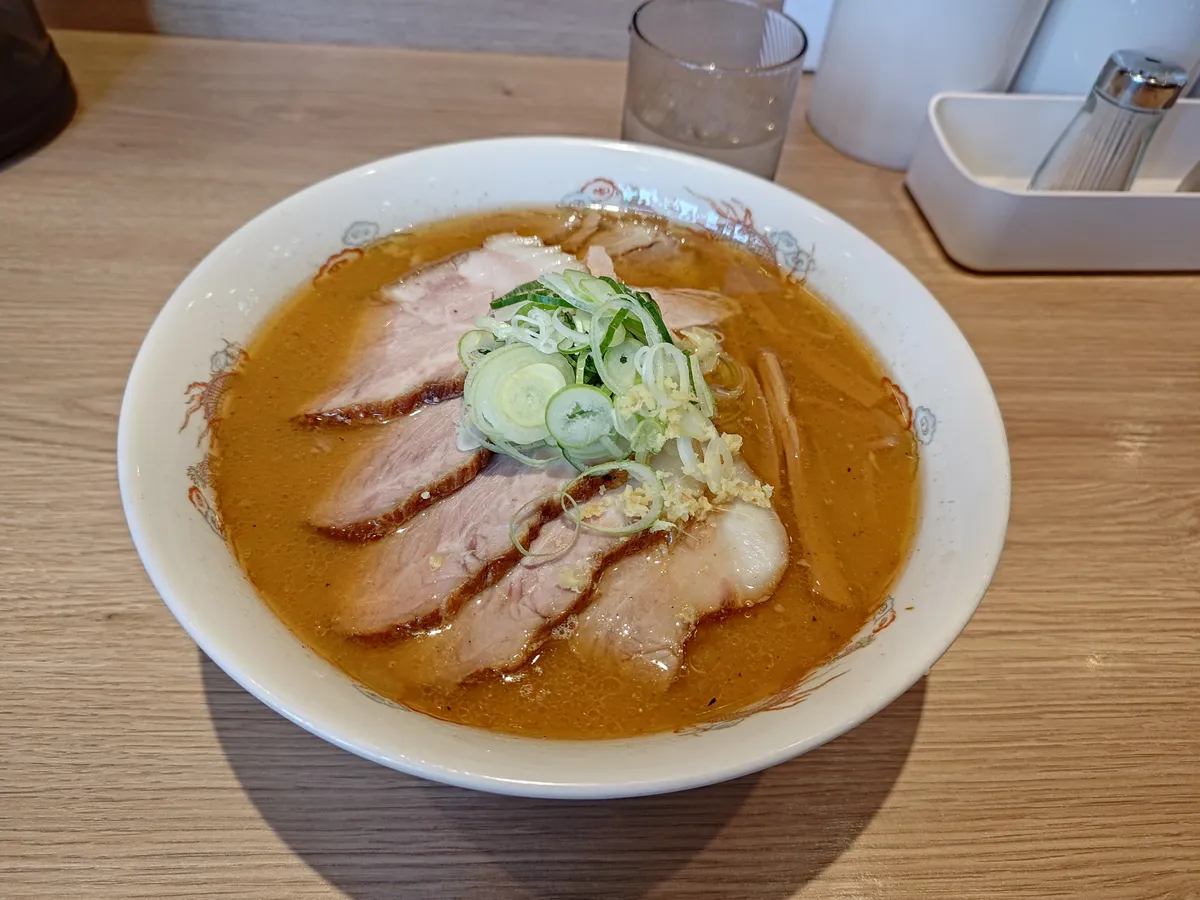
👉 See Sapporo Junren Sapporo Branch Shop Information
Visited & Verified by Our Team
Our editorial team actually visited and experienced everything from operating the ticket machine and waiting in line for about 40 minutes to tasting the ramen. For a detailed report, see the Spotlight article below.
👑Pilgrimage Site 2: Menya Saimi (★2, Miso / Ginger-style)
A 3-minute walk from Misono Station (Toho Line). A perennial Tabelog Top 100 Ramen Shop, this established shop is lauded as Hokkaido's No. 1 Miso Ramen. A distinctive feature is the use of ginger in their Miso Ramen, and dissolving the ginger provided on the table partway through your meal changes the flavor profile. 'Karamiso Ramen' (spicy miso) and 'Shio Ramen' (salt) are also available, and you can purchase souvenir raw noodles. Its excellent accessibility, a direct 10-minute subway ride from Odori on the Toho Line, makes it a realistic choice for a pilgrimage.
👉 See Menya Saimi Shop Information
🐟Pilgrimage Site 3: MEN-EIJI HIRAGISHI BASE (★2, Gyokai Tonkotsu Shoyu/Miso)
A 5-minute walk from Minami-Hiragishi Station. Its signature is 'Gyokai Tonkotsu Shoyu' (seafood pork bone soy sauce) for 1,100 yen, a modern famous shop offering free large portions and a yuzu jelly for flavor change mid-meal. The light shoyu (soy sauce) from its early days and the Shiraou beef sukiyaki rice side dish are also popular. They also offer miso, allowing you to experience 'Sapporo's light modernity,' different from Junren-style's super-richness.
👉 See MEN-EIJI HIRAGISHI BASE Shop Information
🥋Pilgrimage Site 4: Ramen Yoshi (★3 🥷🥋, Gyokai Tonkotsu Shoyu)
About a 1-minute walk from Tsukisamu-Chuo Station. A 'Dojo' style shop that sticks to a simple menu of four items (Ramen 900 yen / Ajitama Ramen 1,000 yen / Rice / Large portion) and focuses solely on the soup. Their signature 'Ajitama Ramen' (ramen with flavored egg) is classic, and the owner's thorough approach attracts regulars. It has a hidden gem atmosphere with an understated exterior, a 'Ninja' element. A shop that symbolizes Sapporo's 'merit-based' ramen scene.
👉 See Ramen Yoshi Shop Information
Dr. Hiro
Junren (Sumikawa) and Saimi (Misono) are on different subway lines (Namboku Line and Toho Line), so visiting both in one day is a bit tight time-wise. A plan of one pilgrimage site per day, split over two days, is more manageable. MEN-EIJI and Saimi are connected by the Toho Line, making them easier to combine.
🌅Zone D: Eastern / Suburban — Higashi Ward / Shiroishi Ward (3 Shops)
15-40 minutes from central Sapporo by subway or JR. While off the main tourist path, these three shops cater to advanced ramen eaters looking to expand their culinary horizons.
🐟Men Shouki (★2, Seabura Niboshi / Kombusui Tsukemen)
A 5-minute walk from Kita 24-jo Station (Namboku Line). This shop is in the northern area, about a 10-minute subway ride from the Snow Festival venue (Odori). Its two main attractions are 'Seabura Niboshi' (back fat dried sardine) and 'Hokkaido's Three Great Kombusui Tsukemen.' Kombusui Tsukemen, where noodles are steeped in cold water made from Hokkaido kombu, is a representative evolution of recent Hokkaido style. Recommended for niboshi lovers and those who want to try a new Hokkaido style.
👉 See Men Shouki Shop Information
☔Ame wa Yasashiku (★3, Shirakimo Niboshi Miso)
About a 20-minute walk from Shiroishi Station, access is a bit inconvenient. Their signature 'Shirakimo Niboshi Miso' is an unconventional style where you dissolve a liver paste, served with the bowl, into the soup to change the flavor. They also offer 'Tanrei' (light shio) and 'SAPPORO Miso' (classic), presenting a hybrid lineup of both unconventional and classic styles. Here, you can witness Sapporo's 'challenge beyond the boundaries of miso.'
👉 See Ame wa Yasashiku Shop Information
🐓Menya Nanabei Honten (★2, Toripaitan Shio)
About a 15-minute walk from JR Chitose Line 'Heiwa' Station. A perennial Tabelog Top 100 Ramen Shop, its signature is 'Toripaitan Shio Ramen' for 1,100 yen. It's a rare toripaitan (chicken paitan) style in miso-centric Sapporo, offering shio and shoyu based on jidori (local chicken) chintan (clear soup), homemade shrimp wontons, and a limited 20-serving Kujo green onion topping. Highly recommended for visitors who are 'tired of miso.'
👉 See Menya Nanabei Honten Shop Information
🌲Zone E: Western — Hassamu (2 Shops)
15-25 minutes from Sapporo Station via JR Sassho Line or Tozai Subway Line. The Hassamu area is a residential district, but it's a hidden gem with two strong miso ramen shops. Since it's off the main tourist routes, the queues are shorter than in the city center, making it an option when you want to enjoy your meal leisurely.
🫚Sapporo Menya Mitsuba (★2, Miso / Ginger)
A 5-minute walk from Hassamu-Chuo Station (JR) North Exit. Their 'Miso' (1,200 yen) is the most popular, a ginger-rich miso close to the Saimi lineage. They also offer Karamiso (spicy miso), Shio (salt), and Shoyu (soy sauce), and the 'Takikomi Gohan' (seasoned rice) for 400 yen (sells out quickly) is a popular side dish.
👉 See Sapporo Menya Mitsuba Shop Information
🪵Hachinoki (★3, Miso)
A 7-minute walk from Hassamu Station. Their Miso Ramen can be enhanced with ginger for a flavor change, and their Shio Ramen is highly regarded by repeat customers, marking it as a capable shop. They sometimes offer a limited 20-serving Chuka Soba (Chinese-style ramen) at night, making it a hidden favorite among ramen connoisseurs.
👉 See Hachinoki Shop Information
🏞️Zone F: Northern Suburbs — Yurigahara (1 Shop)
About 15 minutes north from Sapporo Station via the JR Sassho Line. This is a suburban area on the border of residential neighborhoods and farmland, rarely visited by tourists. It's the kind of shop you'd stop at during a car trip or a Hokkaido road trip with a rental car.
🐔Menya Keserasera (★2, Toripaitan Shio/Shoyu/Miso)
A 5-minute walk from Yurigahara Station (JR). Its signature is the 'Shio Ramen' (980 yen), a rich and creamy toripaitan, and it offers a wide selection including Shoyu, Miso, Tsukemen, and Chashu Don (roast pork rice bowl). As it's far from the city center, it's more challenging for tourists primarily focused on sightseeing. It's recommended if you have time during a rental car trip or on your way to Otaru.
👉 See Menya Keserasera Shop Information
Regarding Access
Keserasera is about a 15-minute JR Sassho Line ride from Sapporo Station plus a walk. As it's off the central walking routes, it's more practical to prioritize other zones if sightseeing is your main focus.
🚇Inter-Zone Travel Guide — Travel Times from Sapporo Station
Estimated subway/JR travel times to each zone, starting from Sapporo Station or Odori Station. Use this as a reference when planning two ramen bowls in one day during your sightseeing.
| Destination | Line | Travel Time | Main Shops |
|---|---|---|---|
| Susukino Station | Subway Namboku Line (Sapporo ↔ Susukino) | Approx. 5 min | Keyaki / Yukikaze / Isono Kazuo |
| Sumikawa Station | Subway Namboku Line (Southbound) | Approx. 12 min | Sapporo Junren |
| Misono Station | Subway Toho Line | Approx. 10 min (from Odori) | Menya Saimi |
| Minami-Hiragishi Station | Subway Namboku Line | Approx. 15 min | MEN-EIJI |
| Tsukisamu-Chuo Station | Subway Toho Line | Approx. 13 min (from Odori) | Ramen Yoshi |
| Nijuyonken Station | Subway Tozai Line | Approx. 8 min (from Odori) | NOUILLES JAPONAISE Tokuichi |
| Kita 24-jo Station | Subway Namboku Line (Northbound) | Approx. 7 min | Men Shouki |
| Hassamu-Chuo Station | JR Hakodate Main Line | Approx. 12 min (from Sapporo) | Mitsuba / Hachinoki |
| Heiwa Station | JR Chitose Line | Approx. 15 min (from Sapporo) | Nanabei |
| Yurigahara Station | JR Sassho Line | Approx. 15 min (from Sapporo) | Keserasera |
Google Maps Trick to Avoid Getting Lost
Sapporo's subway has three lines: 🟢 Namboku Line, 🟠 Tozai Line, 🔵 Toho Line. If you pay attention to the line colors in Google Maps' route search, transfer decisions become more intuitive. In winter, you can also search for walking routes that include the underground passages connecting Sapporo Station, Odori, and Susukino.
🥢Choosing by Miso Intensity — Mapping 10 Sapporo Miso Shops
We've organized the 10 Miso-based shops featured on this site into three groups based on soup richness and unique characteristics. By combining two bowls from different groups in one day, you can quickly grasp the wide range of Sapporo Miso.
| Group | Relevant Shops | Characteristics |
|---|---|---|
| Super Rich / Ginger-style | Sapporo Junren / Menya Saimi / Sapporo Menya Mitsuba / Hachinoki | The pinnacle of Sapporo Miso, with richness and heat boosted by lard layers or ginger |
| Classic Balance | Keyaki / Aji no Sanpei / Okami Soup / MEN-EIJI | Not too rich, not too sweet; allows you to genuinely taste the mainstream of miso |
| Unconventional / Evolved Style | Menya Yukikaze (Toripaitan x Miso) / Ame wa Yasashiku (Shirakimo Niboshi x Miso) | A new generation expanding the boundaries of Sapporo Miso |
🌈Famous Shops Beyond Miso — 8 Options
If you want to dedicate one meal in Sapporo to something other than Miso, choose from these 8 shops based on your preference.
| Style | Shop | Quick Note |
|---|---|---|
| Sapporo Black | Isono Kazuo | Pitch-black rich soy sauce; flavor change with kombu/shrimp powder on table |
| Makibi Shoyu | NOUILLES JAPONAISE Tokuichi | Fragrant soup cooked over wood fire; inside Banzai Market |
| Toripaitan Shio | Menya Nanabei | Perennial Tabelog Top 100 shop; Jidori Chintan |
| Toripaitan Creamy | Menya Keserasera | Rich creamy shio; suburban |
| Niboshi Shoyu | Men Shouki | Dual mastery of Seabura Niboshi + Kombusui Tsukemen |
| Niboshi Tsukemen | Ramen Mokuyobi | Rich Niboshi 'Koini-bo'; flavor change with saba garlic powder on table |
| Gyokai Tonkotsu Shoyu | Ramen Yoshi | 4 menu items; focusing solely on soup |
| Jiro-style | Ramen Jiro Sapporo | Hokkaido's only direct branch; 'call' experience |
⭐Difficulty Level Guide
🟢★2 (Tourist-Friendly)
12 shops: Keyaki / Yukikaze / Sanpei / Okami Soup / NOUILLES JAPONAISE Tokuichi / Junren / Saimi / MEN-EIJI / Men Shouki / Nanabei / Mitsuba / Keserasera. This category is easy to combine with sightseeing.
🟡★3 (Intermediate)
4 shops: Isono Kazuo (Sapporo Black's flavor-changing rules) / Hachinoki / Ame wa Yasashiku (how to use shirakimo/white liver) / Ramen Yoshi (Dojo, hidden gem). A little preparation on ordering or flavor changes will enhance your enjoyment.
🔴★4 (Advanced)
2 shops: Ramen Jiro Sapporo ('call' system) / Ramen Mokuyobi (niboshi intensity, how to use table powders). It's safer to attempt these if you've experienced similar styles on Honshu or if you've prepared for the 'call' system and flavor changes.

Zack
For Jiro Sapporo, asking for 'ninniku sukuna-me' (less garlic) is a safe bet for first-timers. At Mokuyobi, order 'Karani-bo' or 'Koini-bo' and try the saba garlic powder and yuzu peel on the table. It's heaven for niboshi lovers.
🌸Seasonal Guide — Sapporo's Four Seasons and Ramen
❄️Winter (December-February) — Peak Season, Ramen at Its Best
Sapporo's peak season for international travelers is winter. Early February sees the Sapporo Snow Festival, skiing in Niseko and Rusutsu, and the Lunar New Year season all coincide. Temperatures are below freezing, often dropping below -10 degrees Celsius at night. This is precisely the season when a piping hot bowl of ramen truly warms you to the core.
The winter strategy has two main points: ① Maximize use of the underground passage system (Sapporo Station ~ Odori ~ Susukino, 2km underground connection), and ② For the pilgrimage zone, choose shops within a 5-minute walk from the subway station. Saimi (3-min walk from Misono Station), MEN-EIJI (5-min walk from Minami-Hiragishi Station), and Ramen Yoshi (1-min walk from Tsukisamu-Chuo Station) meet these conditions.
Expect Queues During Snow Festival
During the Snow Festival (early February), popular shops, including Sumire-style and Junren-style, tend to have longer queues than usual. From the Snow Festival venue (Odori Park), it's natural to transfer at Odori Station to the Namboku Line to reach Junren or Saimi.
☀️Summer (June-August) — Second Peak, Beer Gardens and Shime Ramen
June to August is another peak in Sapporo, with the Sapporo Odori Beer Garden at Odori Park, YOSAKOI Soran Festival, and summer festivals happening consecutively. Shime ramen enjoyed in the cool night breeze is a hidden pleasure of summer in Sapporo. Isono Kazuo and Yukikaze around Susukino are particularly good fits.
🍂Spring/Autumn (April-May, September-November) — Target for Avoiding Queues
The period immediately after the snow melts (April-May) and late October-November when the autumn leaves begin to fall are when the proportion of international travelers is lowest throughout the year. If you want to experience Junren or Saimi, which you might have wanted to visit during the Snow Festival, 'without queues,' this season is the most realistic. Aiming for autumn, avoiding the Hokkaido Marathon (last week of August), is a hidden gem.
🗓️Recommendations by Travel Plan
🦀Plan 1: Evening Ramen After a Seafood Lunch
Seafood bowl at Nijo Market/Curb Market in the morning → light lunch (or skip) → 1 bowl of ramen in the evening. This route leaves room in your stomach and allows you to fully enjoy the richness of miso. Keyaki / Sanpei / Okami Soup / Yukikaze in the city center are good fits.
🌙Plan 2: Shime Ramen (Late-Night Shops)
After drinking in Susukino, grab a bowl before heading back to your hotel. Isono Kazuo (Sapporo Black), Yukikaze, and Keyaki are open late into the night and are within walking distance of the entertainment district. This is a unique late-night food culture only experienced in Sapporo.
⛩️Plan 3: Day Trip Pilgrimage from Sapporo (Junren + Saimi)
If you plan to visit both pilgrimage sites in one day, be prepared for a tight schedule: Lunch at Junren (Sumikawa), which opens at 11 AM → Return to Odori by subway → Transfer to the Toho Line and head to Saimi in Misono in the early afternoon → Saimi as an early dinner. However, expect queues at both shops, so if you want to avoid stress, it's recommended to split it over two days.
🎪Plan 4: Shortest Route from Snow Festival / Beer Garden Venue
From the Odori venue: Aji no Sanpei (4F building) is within walking distance of Odori Station; one stop by Namboku Line plus a walk gets you to Susukino area (Keyaki / Sanpei / Isono Kazuo). For a pilgrimage, take the Namboku Line (Junren in Sumikawa) or Toho Line (Saimi in Misono) to escape the venue's hustle and enjoy a leisurely meal.
🌐Tourist-Friendly Feature — 4 Shops Safe for First-Time Visitors to Japan
For international travelers visiting Sapporo for the first time, or those uncomfortable with Japanese, we've carefully selected 4 shops from the 18 listed on this site based on four criteria: ① Accessible via tourist routes or a single subway line, ② Offers photo menus or multilingual guidance, ③ Difficulty level ★2 or below, and ④ Payment is unlikely to be problematic with cashless options or alternatives. We'll also highlight each shop's unique appeal.
| Shop | English Support | Photo Menu | Difficulty | Tourist Route |
|---|---|---|---|---|
| Keyaki Susukino Honten | Partial | ◎ | ★2 | 3-min walk from Susukino Sta. |
| Menya Yukikaze Susukino Branch | — | ◎ | ★2 | Within walking distance of Susukino |
| Menya Saimi | — | ◎ | ★2 | 3-min walk from Misono Sta. (direct Toho Line) |
| Menya Nanabei Honten | — | ◎ | ★2 | 15-min walk from JR Heiwa Sta. |
🍲Keyaki Susukino Honten — Greatest Common Denominator of Tourist Routes
A 3-minute walk from Susukino Station, its location halfway between the Ramen Yokocho (Ramen Alley) area and the subway station ensures it's always on the night-time tourist route. The blend of three types of miso has littleクセ (distinctive flavor/habit), making it a prime example of a 'fail-safe bowl' for your first Sapporo Miso. They also sell souvenir ramen sets in the shop, so you can combine your visit with purchasing gifts for home. Operating until late at night, it's a dual-purpose spot that also serves as a shime ramen option. Many staff are accustomed to serving international tourists, making point-and-order easy with photo menus.
👉 See Keyaki Susukino Honten Shop Information
🌶️Menya Yukikaze Susukino Branch — Modern Toripaitan x Miso Style
A 3-minute walk from Higashi-Honganji-Mae Station, slightly outside Susukino. Their 'Rich Miso Ramen' is a modern, unconventional style blending miso with a toripaitan (chicken paitan) base, offering a 'gentle richness' distinct from Junren-style's super-richness. Among the 18 shops listed on this site, it's one of the few confirmed to accept cashless payments, making it a less stressful option for travelers who prefer card/IC payment. Half-sizes are also available, making it suitable as a balancing meal after a light seafood dish.
👉 See Menya Yukikaze Susukino Branch Shop Information
👑Menya Saimi — A Shop That Justifies 'Coming to Sapporo Just to Eat This'
About a 10-minute ride from Odori Station on the Toho Subway Line, then a 3-minute walk from Misono Station. This established shop is hailed as Hokkaido's No. 1 Miso, a famous name frequently appearing in ramen media. While off the main tourist routes, it's one of the few shops that makes a 'purpose-driven visit to Sapporo just to eat Saimi' truly worthwhile. Its ginger-infused Miso Ramen has a universally appealing taste, with options for spicy miso or salt ramen. The excellent accessibility—a single subway ride plus a 3-minute walk—makes it an outstanding practical option for a ramen pilgrimage. Souvenir raw noodles are also available for purchase, serving well as gifts.
👉 See Menya Saimi Shop Information
🐓Menya Nanabei Honten — Toripaitan Shio When You're Tired of Miso
About a 15-minute walk from JR Heiwa Station, so access is a bit more effort, but this shop's consistent presence in the Tabelog Top 100 Ramen Shops overturns the 'Sapporo = Miso' image. Its signature 'Toripaitan Shio Ramen' (chicken paitan salt) is elegantly prepared with a jidori chintan (local chicken clear soup) base, making it perfect as a palate cleanser for travelers overwhelmed by miso's richness. It includes homemade shrimp wontons and seasonal elements like a limited 20-serving Kujo green onion topping. This is a top contender for when you want to dedicate one meal to non-miso during a 3-4 day stay in Sapporo.
👉 See Menya Nanabei Honten Shop Information
Boost Confidence by Preparing for Ordering
The ordering method at Japanese ramen shops is the biggest psychological hurdle for international travelers. Each shop page includes an 'Ordering Guide' (4 steps: before entering, purchasing tickets, seating, and others), so opening the relevant shop's page before your visit will help you avoid confusion on site.
🏨Walkable Area Guide by Accommodation Area
Accommodation options in Sapporo are concentrated in three central areas: Sapporo Station Front, Odori, and Susukino. We've organized shops that are easily accessible within walking distance from hotels in each area.
| Accommodation Area | Recommended Walkable Shops | Characteristics |
|---|---|---|
| Sapporo Station Front | Ramen Jiro Sapporo (8-min walk) | For your last bowl on arrival/departure day. Underground passage access available |
| Odori | Aji no Sanpei (3-min walk) / Isono Kazuo (walk + streetcar) | Central area most easily combined with sightseeing |
| Susukino | Keyaki (3-min walk) / Yukikaze (8-min walk) / Isono Kazuo (4-min walk) / Okami Soup (5-min walk) | Best compatibility with shime ramen culture |
🚉Station Information Quick Reference
Sapporo's railway system has 5 lines. We've summarized the combinations frequently used for sightseeing and shop access.
| Station | Line | Usage Scenario |
|---|---|---|
| 🟢 Sapporo | JR / Subway Namboku Line | Airport access, hotel base |
| 🟢 Odori | Namboku Line / 🟠 Tozai Line / 🔵 Toho Line | 3 lines intersect, sightseeing hub |
| 🟢 Susukino | Namboku Line | Entertainment district, shime ramen |
| 🟢 Nakajima-Koen | Namboku Line | Okami Soup, quiet area |
| 🟢 Sumikawa | Namboku Line | Junren pilgrimage site |
| 🟢 Minami-Hiragishi | Namboku Line | MEN-EIJI |
| 🟢 Kita 24-jo | Namboku Line | Men Shouki |
| 🔵 Misono | Toho Line | Saimi pilgrimage site |
| 🔵 Tsukisamu-Chuo | Toho Line | Ramen Yoshi |
| 🟠 Nijuyonken | Tozai Line | NOUILLES JAPONAISE Tokuichi |
| 🚋 Nishi 4-chome | Streetcar | Aji no Sanpei / Isono Kazuo area |
| 🟢 JR Heiwa | JR Chitose Line | Nanabei |
| 🟢 JR Hassamu-Chuo / Hassamu | JR Hakodate Main Line | Mitsuba / Hachinoki |
From New Chitose Airport to Sapporo Station
Fastest in 33 minutes by JR Rapid Airport, with special rapid services starting in 2025. 1,230 yen. If you have a lot of luggage, a reserved 'u-seat' (additional charge) is recommended. Buses run to Sapporo Station in about 77 minutes.
🧳Luggage Problem — Returning from Airport / Immediately After Arrival
When combining ramen visits with travel between Sapporo Station and New Chitose Airport, it's difficult to enter a ramen shop with large luggage. There are many coin lockers inside Sapporo Station, around Odori Station, and in the underground passages; depositing your luggage before moving is a practical solution.
| Scenario | Recommendation | Locker Guide |
|---|---|---|
| Immediately after arrival / Evening | Locker at Sapporo Station → Ramen in Susukino via underground passage | Sapporo Station East/West Ticket Gate Outside / Underground |
| Before departure / Last bowl | Hotel → Move luggage to Sapporo Station → Shop within walking distance of station | Inside Sapporo Station |
| Moving to Snow Festival venue | Locker around Odori Station → Sanpei or Subway pilgrimage | Odori Station Underground Passage |
❄️Practical Winter Information — Dealing with Snow and Icy Sidewalks
From December to March in Sapporo, nighttime temperatures drop below freezing, and melted snow from the day refreezes at night, covering sidewalks with an invisible layer of ice called 'black ice.' Icy sidewalks are such a serious tourism risk that Sapporo City even operates a 'Tsuru-Tsuru Forecast' (slippery forecast).
Anti-Slip Measures
Anti-slip spikes that attach to shoe soles can be purchased at convenience stores and 100-yen shops in Sapporo (around several hundred to one thousand yen). The basic walking technique is to lower your center of gravity and take small steps. Snow-melting pavement (heated pipes) is only found on major sidewalks in the city center, not everywhere, so don't rely on it completely.
Underground Passage Routes
The biggest trump card for avoiding walking stress in Sapporo's winter is the underground shopping arcade. By connecting 'Chikaho' (Sapporo Ekimae-dori Underground Walkway), 'Pole Town,' and 'Aurora Town,' you can walk approximately 2 km from Sapporo Station to Odori and Susukino without going above ground. Most central shops, other than those within Sapporo Station (Jiro-style is above ground), can be accessed via the underground passage plus a short stretch on the surface.
Cold Protection for Late-Night Shime Ramen
Having shime ramen after drinking in Susukino involves outdoor travel late at night. Always carry gloves, a hat, and a scarf in addition to your coat. Taxis tend to be harder to catch in winter, so it's reassuring to decide your destination and route in advance.
❓Frequently Asked Questions (FAQ)
QIs 'Sapporo Ramen Republic' still open?▼
It closed on August 31, 2023. It was a popular ramen theme park located on the 10th floor of JR Sapporo Station ESTA, but it ceased operations due to station redevelopment. As an alternative, if you want to eat Sapporo Miso ramen around JR Sapporo Station, 'Sumire Sapporo Station Front Branch' (Daimaru / JR Tower) or the group of Susukino shops mentioned in this article (5 minutes by subway) are practical options.
QWhich shops have English menus?▼
Tourist-oriented Ramen Yokocho (Ramen Alley) style shops and multi-branch brands like Keyaki, Yukikaze, and Saimi tend to have photo menus with multilingual support. The local famous shops featured in this article typically have Japanese menus, but practical ordering is usually not an issue thanks to ticket machines with photos (Junren) or tabletop menu photos (Keyaki, Yukikaze).
QCan I eat ramen after seafood?▼
Honestly, a rich miso ramen immediately after filling up on a kaisendon (seafood bowl) is tough. In Sapporo, separating time slots with 'seafood for breakfast/lunch, ramen for dinner' or 'ramen and seafood on separate days' is a natural and locally sensible approach. If you absolutely want to combine them on the same day, it's recommended to have a lighter seafood meal (e.g., a mini bowl or a few pieces of sushi) and choose a lighter ramen style (e.g., Nanabei, Tokuichi).
QHow can I avoid crowds during the Snow Festival?▼
During the Snow Festival (early February), ramen shops are more crowded than usual. Good times to aim for are ① right after opening (11 AM), ② after lunch around 2 PM, or ③ about an hour before closing. Pilgrimage-level shops (Junren, Saimi) are crowded all day, so if you want to avoid queues, consider visiting during the off-season, such as after April or in late October.
QHow can I get to shops in winter Sapporo while avoiding snow and cold?▼
The three stations — Sapporo Station, Odori, and Susukino — are connected by an underground shopping arcade and walkway system (Chikaho, Pole Town, and Aurora Town) spanning approximately 2 km. In winter, using these underground routes is significantly warmer than walking above ground, and there's no worry about snowfall or icy sidewalks ('black ice'). For shops around Odori and Susukino (such as Keyaki, Yukikaze, Isono Kazuo, Aji no Sanpei), underground access is the shortest route. The underground passages have numerous signs and maps, and Google Maps' walking directions can even include underground sections. Being able to move without taking off your coat is also an advantage, helping to reduce bulky luggage even in popular, compact shops.
QIs it possible to eat two bowls in one day?▼
Yes, it is possible. Sapporo ramen bowls are generally larger than the standard on Honshu, so some shops might offer half-ramen or smaller portions. Limiting your portion size for the first meal creates room for a second bowl (check shop pages or on-site for availability). Classic combinations include 'one central miso bowl + one pilgrimage miso bowl (of a different lineage)' or 'one miso bowl + one non-miso bowl (such as Tokuichi's Makibi Shoyu or Shouki's Niboshi ramen).'
🎯If You Can Only Choose One Bowl — Two Directions: Classic and Adventure
If you want to choose a classic Sapporo-style bowl, Menya Saimi, Sapporo Junren, and Aji no Sanpei are top contenders. These three shops offer distinct contexts of Miso Ramen: the modern pinnacle of Sapporo Miso, a lineage continuing since 1964, and the originating shop from around 1955, respectively.
On the other hand, for those who have already tried Miso Ramen or wish to explore Sapporo's diverse ramen culture, non-miso shops like NOUILLES JAPONAISE Tokuichi (Makibi Shoyu), Menya Nanabei (Toripaitan Shio), and Isono Kazuo (Sapporo Black) are highly recommended. You'll discover the depth of Sapporo as a ramen city, transcending the 'Sapporo = Miso' label.
If you're still undecided, the quickest way is to refer back to the 'Quick Picks by Scene' at the beginning of this article or use the 'Map of All 18 Shops' in the middle of the article to search geographically.
✅Verified by Real Humans
This article is created based on curation of official websites, social media, review sites, and partial on-site verification by the editorial team. For Sapporo Junren, our editorial team actually visited and recorded the queues, ticket machine operation, and tasting experience (link to the tasting report from the Junren section within the article). For the latest information on other shops, please check their official social media and reviews on each shop's page.
🎒Summary — To Sapporo, A City Beyond Just Miso
Sapporo ramen cannot be fully grasped by the label 'birthplace of miso' alone. From the rich miso of Junren and Saimi, the origin at Aji no Sanpei, Isono Kazuo's Sapporo Black, Tokuichi's Makibi Shoyu, Nanabei's Toripaitan Shio, to the challenge of Jiro Sapporo — each of the 18 shops offers a 'bowl that can only be experienced in Sapporo.' Consider the underground passage routes in winter, the shime ramen culture, the time slot separation with seafood, and the ramen pilgrimage. Incorporating these into a 2-3 night stay will reveal a more three-dimensional picture of Sapporo's food scene.
For Those Who Have Visited
If you have actually visited a ramen shop in Sapporo, please share your experiences regarding waiting times, ordering methods, English support, ease of using ticket machines, and in-store rules in the review reports on each shop's page. Your experience will help travelers visiting Sapporo next.
"We don't let AI eat ramen. We use AI to draw the coolest map so adventurers worldwide can find the real treasure hidden in Japan's back alleys."
Made in Japan — with local knowledge & AI assistance